Help Sitemap Home Skip Navigation Contact Us Disability Statement

Charles Stanley Logo

Pensioner is refused sight drugs – until he goes blind

View Video
Download Video

Video

See the world through Leslie Howard's eyes. Reporter: Jonathan Walton
Click on thumbnail to view image

Published Date:
24 April 2007
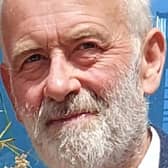
A RETIRED policeman is going blind – because a Yorkshire health trust will not pay for treatment that could save his sight.
Leslie Howard, also an ex-Royal Military policeman and former prison officer, suffers from a degenerative eye condition. The drugs needed to save his sight are available on the NHS in other parts of the country.

But Mr Howard, 76, has been told by health chiefs not to expect a penny of NHS treatment until he goes blind in one eye and starts losing sight in the other.

He fears that after a lifetime of public service the decision by North Yorkshire and York Primary Care Trust could plunge him into total blindness and leave him and his invalid wife Mary Ann, 70, housebound.

As his case led to a new row over NHS "health rationing", Mr Howard, of Acomb, York, said: "The problem is we have lived too long and are just pieces of meat now – a nuisance.

"I was advised to go private but was quoted £1,000 an injection for who knows how many injections. I can't afford that kind of money. I've paid tens of thousands of pounds in taxes and to know that I will now lose my sight because I can't afford private treatment is diabolical."

Mr Howard was diagnosed with wet age-related macular degeneration (AMD) in his right eye in November. It can cause sight loss in three months.

He says he was advised by the North Yorkshire and York PCT that it would only consider funding once he had gone blind in one eye and developed a similar condition in his second eye.

He added: "It is more than three months since I was diagnosed and it is getting worse by the day. Has the Government lost all sense of compassion as well as economics?"

The head of campaigns at the Royal National Institute of the Blind, Steve Winyard, said: "This is a desperate situation for Mr Howard. His care trust is leaving him to go blind in one eye even though sight-saving treatments are available on the NHS.

"We hear of more and more patients being forced to use retirement funds or life-savings to pay for sight-saving treatments that should be available readily on the NHS.

"In cases like Mr Howard's, where people can't afford private treatment, patients face the prospect of going blind unnecessarily."

The chief executive of the Macular Disease Society, Tom Bremridge, added: "The so-called 'second-eye' policy is wholly unacceptable on ethical and practical grounds."

Losing sight in one eye could affect a person's co-ordination and increase the risk of falls, while not treating the condition meant patients had a high risk of developing the problem in the second eye. Unsuccessful treatment in the second eye could then mean total blindness, Mr Bremridge said.

He added: "It also makes no economic sense to deny treatment. The cost of supporting people with sight loss far outweighs the cost of treatment."

AMD sufferer and former Halifax Labour MP Alice Mahon, who took legal action against her PCT and forced a U-turn over its refusal to provide similar injections on the NHS, said: "It is an obscene policy. It's outrageous.

"The whole fault is handing over all this funding to the PCTs, so it's a postcode lottery and not a national health service. I am particularly concerned there seems to be discrimination against older people who have paid into the NHS all their lives."

The North Yorkshire and York PCT said yesterday Department of Health guidelines were that, until the National Institute for Health and Clinical Excellence (NIHCE) published final guidance on new treatments, NHS bodies should continue local arrangements to manage their introduction.

There was no NIHCE guidance yet for the drugs Mr Howard wanted. So in agreement with other PCTs in the region, the trust was funding such treatments only in cases where there was evidence they would work.

If any patient felt they should be considered for treatment the PCT would examine their circumstances, a spokesman added.

  • Tell us what you think. Register to have your say on this story.


Page 1 of 1

  • Last Updated: 24 April 2007 10:54 AM
  • Source: n/a
  • Location: Yorkshire


Comment on this Story


In order to post comments you must Register or Sign In


Sister Newspapers:
Press Complaints Commission

This website and its associated newspaper adheres to the Press Complaints Commission’s Code of Practice. If you have a complaint about editorial content which relates to inaccuracy or intrusion, then contact the Editor by clicking here.

If you remain dissatisfied with the response provided then you can contact the PCC by clicking here.