
Yorkshire Building Society helpdesk employee working on cancer therapies at the University of Bradford
By day, Muhammad Shahid works on the helpdesk at Yorkshire Building Society. But after his shift ends, he is likely to be found in one of the laboratories at the University of Bradford, where he researches new cancer treatments.
Dr Muhammad Shahid - he gained his PhD in Breast Cancer Therapeutics last year - is part of a team that has developed a new treatment for breast cancer, one which has fewer side effects, although clinical trials are still to take place.
In addition, he was part of a team responsible for developing a more ethical method of research, by reducing the use of animals in early stage research of drug discovery.
His achievements are all the more impressive due to a significant number of other commitments, not least of which is that his seven-year-old son has a chronic lung condition, which often means he has to attend hospital on a weekly basis.
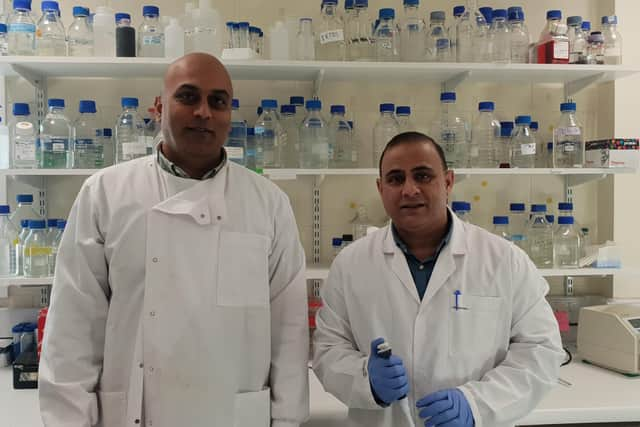

But commenting on his PhD award and recent research, the father-of-two said: “I always wanted to do something that made a contribution to society, especially in the field of cancer.
"However, it has been a struggle to work full time to support my family and find the time for scientific research. Some days, I would only get three or four hours’ sleep.
“The University of Bradford has been so supportive throughout my studies, I could not have done this without them. I am immensely grateful for the support and scientific guidance provided by my supervisors, especially Dr Kantamneni and Dr Mohammad Isreb.
"Their expertise, support and encouragement played a pivotal role in my success and served as a constant source of motivation.”
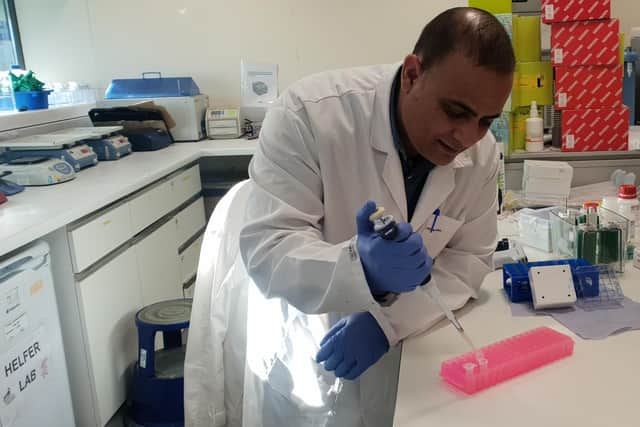
Part of the support offered was to ensure Muhammad – who also has a daughter, 12 – had access to laboratories and academic support, whenever he needed it.
Dr Sriharsha Kantamneni, who supervised Muhammad’s PhD, said: “We said to him we will work around his life to accommodate him, so we arranged for him to access the lab whenever it suited him - this flexible approach was part of our support.
"Muhammad came to me in December 2019 - the following February, the country went into full lockdown. He has had to deal with a lot in order to achieve his PhD and make the breakthroughs in research, which are remarkable.
"His project has contributed to the field by exploring new treatment strategies for breast cancer, a step closer to improving the lives of cancer patients.”
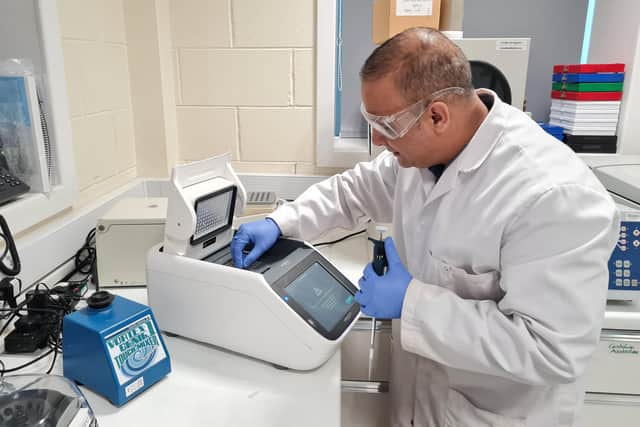
In his extensive research, Muhammad focused on investigating the anti-angiogenic and anti-cancer effects of Mebendazole (currently used as an anti-parasite drug).
Combining this drug with established chemotherapies such as Paclitaxel and Doxorubicin, he successfully reduced the required dosage concentration for effective therapy, says the university.
Doing so mitigates the side effects associated with chemotherapy but also contributes to reducing the overall cost of cancer treatments, adds the institution.
Another “significant breakthrough” in his work was the inhibition of a critical protein called Ran, a highly expressed factor in cancer patients that promotes cancer progression and drug resistance.
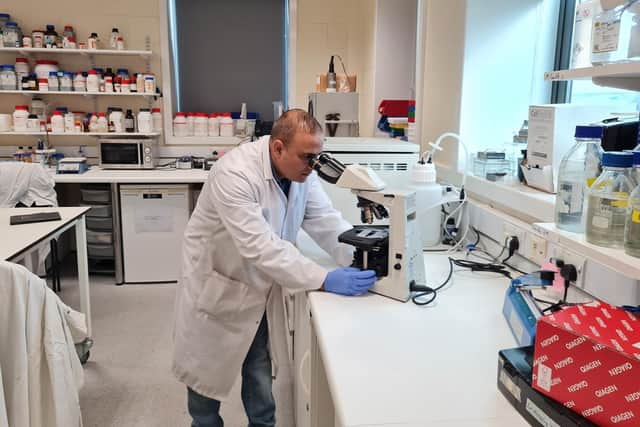
Muhammad's efforts to understand and counteract this protein signalling could pave the way for more effective treatment approaches.
Expanding his research, Muhammad screened more than 54 genes in search of new targets for Mebendazole and Ran as a potential cancer treatment.
Additionally, in collaboration with Al-Ahliyya Amman University in Jordan, he successfully replaced the traditional animal model with an innovative ‘in ova’ model. This alternative method proved to be less invasive, more cost-effective, and ethically superior, allowing for greater advancements in cancer research.
He worked under the expert guidance of Professor Mohamed El Tanani, from the University of Bradford, and Dr Abraheem Aldeeb, of Al-Ahliyya Amman University.
Muhammad, 45, who is originally from Pakistan and holds a bachelor’s degree in biology and two Master’s degrees in zoology and cancer pharmacology, said: “The University of Bradford holds a special place in my heart, as it provided me with access to state-of-the-art facilities at the Institute of Cancer Therapeutics and the School of Pharmacy and Medical Sciences.
"These invaluable resources enabled me to carry out this project with precision and excellence.”
The Institute of Cancer Therapeutics (ICT) is a multidisciplinary team of researchers at the University of Bradford working together to research, develop and commercialise new cancer treatments.
Pharmacy teaching at the University of Bradford dates back to 1927 but in January 2018, it became the School of Pharmacy and Medical Sciences after the Institute of Cancer Therapeutics and Clinical Sciences joined Bradford School of Pharmacy.
It has been recognised through the Collaborative Award in Teaching Excellence and is in the world top 250 departments of Pharmacy and Phamacology in the QS World University Rankings (2017).
Dr Kantamneni added: “Muhammad’s research will undoubtedly make a significant impact on breast cancer therapeutics, offering hope to countless patients worldwide.
"We celebrate his achievements, unwavering determination, resilience and dedication to advancing cancer research and treatment.
"We eagerly anticipate the bright future that lies ahead for this exceptional researcher.”