
Wharram Percy: The best-preserved ruin of a deserted medieval village in England
Arguably the most fascinating historical feature in the Yorkshire Wolds is this site maintained by English Heritage.
Wharram Percy has been described as the best-preserved ruin of a deserted medieval village in England.
The name “Wharram” was derived from the old Scandinavian hwerhamm, which means “at the bends” and refers to its position in the typical Yorkshire Wolds chalk valley of Deep Dale.
The suffix relates to the Percy family, who were lords of the manor in the Middle Ages.

However, the village had much earlier origins and there is evidence of at least one Iron Age (c.100 BC) dwelling on the site as well as a Roman farm or villa.
The population is thought to have grown with the arrival of Anglo-Saxon settlers and for three centuries it was a compact farming village with 30 households and around 150 residents.
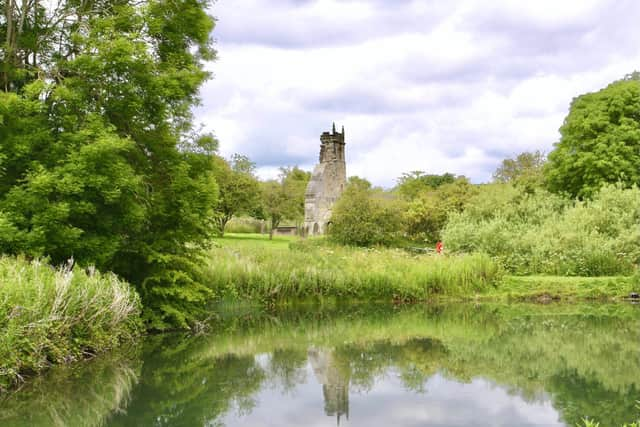
There was a church (pictured), a cemetery and a fish pond (now reconstructed).
It was originally thought that Wharram Percy’s demise resulted from the spread of the Black Death of 1348-49 but historians later decided that it was largely down to farming changes.
After the land had been sold by the Percy family, the new owners considered sheep rearing to be more profitable than cereal production, meaning fewer jobs for agricultural labourers.
The early 16th century saw the last villagers evicted in order to create more sheep pasture.
Today the most visible relic is St Martin’s Church, which contains much of its original 12th century stonework.