
Council tax equalisation in North Yorkshire is a necessity to achieve wider benefits - George Jabbour
As council tax bills are landing in North Yorkshire, this is the first time since the introduction of this charge in the early 1990s that every area in our county will start paying the same rate for the services provided by the former district and borough local authorities.
Until last March, there had been eight organisations in North Yorkshire: a county council that offered services such as highways, education, adult social care and libraries, and seven borough and district councils that collected bins, dealt with housing and considered planning and licensing applications.
Each of these entities had its own policies, officers and councillors, who had their own priorities and set the annual budget.
While the amount billed by North Yorkshire County Council for each council tax band across all areas was identical, each of the other local authorities levied a different sum. However, since the start of April 2023, all eight councils merged together to form North Yorkshire Council.

Because all localities of the new council must have the same council tax rate, the residents of the former councils that had charged the higher amounts, such as Harrogate and Scarborough, will face smaller increases to their bills as a result of equalising council tax levels.
I was appointed to the Council Tax Harmonisation Member Working Group, which comprised Councillors from several political parties.
The group was created shortly after the May 2022 local elections to agree the best strategy to equalise council tax across North Yorkshire.
After convening a number of meetings, exploring several alternatives and reviewing various modelling scenarios, we concluded that the levels of council tax would be harmonised over a two-year period.
The aim of our recommendation was to strike the right balance between smoothing the big jump in the payments made by the households of certain areas and mitigating the administrative complexities of operating multiple systems in tandem.
Our recommendation was approved unanimously by councillors representing all political parties in the November 2022 meeting of full council. No one wants to see the amount of tax that they pay climbs. So I completely understand how frustrating it is for some residents to experience surges in their council tax bills on top of the annual rise.
While this might seem unfair over the short term, the savings that have been identified due to local government reorganisation mean that households will benefit over the long term regardless of whether council tax equalisation has been advantageous to them or not.
Reducing the number of councillors and senior executives, decreasing the size of the property portfolio and finding efficiencies are a few examples.
When councils lose control of their finances, they have to make extremely difficult decisions about the services that their residents rely on.
We are fortunate in North Yorkshire that the prudent management of our budget and the opportunities seized because of the reforms that accompanied the transition to a unitary authority enabled us to weather the recent inflationary and cost pressures while keeping our finances robust.
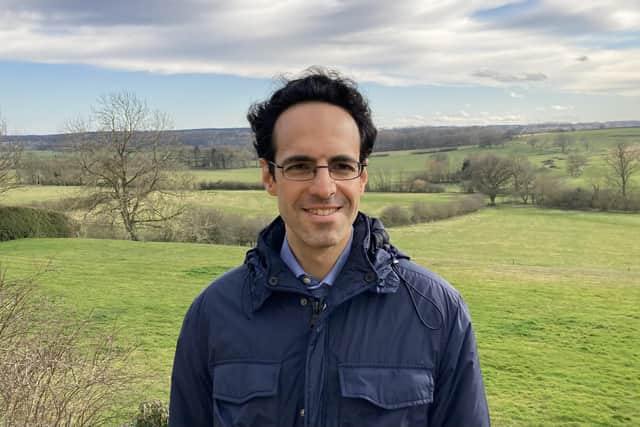
George Jabbour is the councillor for Helmsley & Sinnington.