
The tragic tales of Yorkshire's towns and village which vanished due to the sea
The coastline which is recognised today was formed at the end of the Ice Age about 10,000 years ago - although then it was about 12 miles east of its current position.

Its soft clay makes it particularly vulnerable.
At least 30 Holderness villages have been lost to the sea since Roman times as a direct result of coastal erosion.
The most complete account of Yorkshire’s lost towns and villages was written by Thomas Sheppard in 1912, who used old accounts and map drawings to figure out the rough locations of these settlements claimed by the sea.
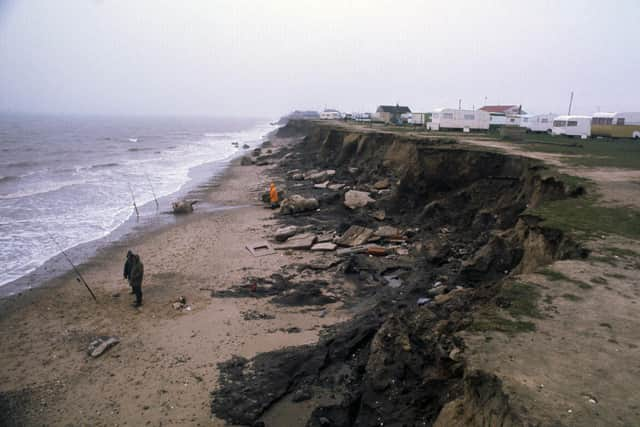

Some had once played important roles in the fishing, farming and trade industries of the region.
Ravenser Odd was a short-lived island in the mouth of the River Humber.
It rose from the sea in the early 13th century, became a thriving sea port, but had sunk beneath the waves again by 1360.
The history of a local abbey states that floods destroyed the foundations of the chapel on Ravenser Odd and the bodies of the dead had been washed out of their graves - a punishment from God for the islanders’ evildoing and piracy.
Then there was Auburn or Aborn, a small village within the civil parish of Barmston and Fraisthorpe that was abandoned in the 16th century.
Owthorne and Old Withernsea were destroyed by the encroaching sea, with a huge storm in 1816 dealing the final blow to Owthorne church, destroying it along with large chunks of the town, and reportedly casting bodies from the graveyard into the sea.
Southorpe, near Hornsea, contained 580 acres in 1786. “Now everything has been washed away,” wrote Sheppard.
Meanwhile the 14th century church at Aldborough contains relics from a previously existing Saxon church also lost to the sea.
Sheppard wrote: “As in the case of other Holderness villages it has travelled westwards as the sea has carried away its foundations.”