
Beyond The Visual: The ground-breaking new sculpture exhibition at the Henry Moore Institute in Leeds
The Henry Moore Institute has long been a pioneer in terms of innovative, ground-breaking research and exhibitions, and the organization’s latest show is a case in point.

Beyond the Visual – which has just opened at the Leeds gallery – is the UK’s first major sculpture exhibition in which blind and partially blind practitioners have been central to the curatorial process and make up the majority of exhibitors.
It brings together the work of both blind and sighted artists and is co-curated by Prof Ken Wilder artist and professor of aesthetics at University of the Arts London (UAL) and artist Dr Aaron McPeake, associate lecturer at Chelsea College of Arts, who is registered blind.
Both artists have artworks on display in the exhibition, which is the culmination of a three-year research project funded by the Arts and Humanities Research Council (AHRC).

“About four or five years ago we were contacted by Ken and Aaron who had got some funding to run a research network and we hosted one of the events,” explains Dr Clare O’Dowd, research curator at the Henry Moore Institute, who played a central curatorial role in the project.
“It brought together lots of people with an interest in blindness and the arts – across all different artforms including theatre, and dance as well as visual arts – and it was very revealing in the workshops how poor the provision was for blind and visually impaired artists and access for visitors in art galleries.
"Then a funding award for an inaugural exhibition came up and we realized that we had something that met all the criteria – it was collaborative and consultative and with strong public engagement.”
Having secured the funding they began the research process which included consulting with a range of people working in museums and galleries, with visitors and with local groups. They ran events including conferences and workshops exploring best practice and innovation.
“We asked people what they needed, what they felt worked and didn’t work and what they would like to experience,” says O’Dowd. “We asked about touch tours, audio description and object handling. That all fed into how we have modelled the exhibition and the curatorial approach we have taken.”
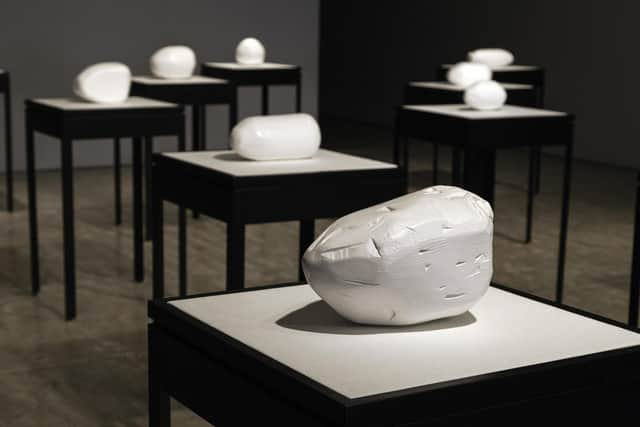
The show features contemporary sculpture designed to be experienced using multiple senses, encouraging people to engage with and appreciate artworks in a way that doesn’t depend entirely on the visual.
It showcases the historical and contemporary work of 16 international artists including Henry Moore, Barry Flanagan, Sam Metz, Serafina Min, Bryan Phillips, Collin van Uchelen, Lenka Clayton, Emilie Louise Gossiaux and Lucia Beijlsmit.
“There was a long selection process. Ken and Aaron have been working in this area for a long time and the network project produced a huge longlist of people who wanted to get involved,” says O’Dowd.
“We established a set of core principles – that the majority of work should be by blind and partially signed artists, all the artworks should be multi-sensory and that access should be embedded from the beginning.
"It has been a very different way of making an exhibition and a really interesting challenge, particularly in terms of visitor behaviour – people aren’t used to touching objects in a museum or gallery.”
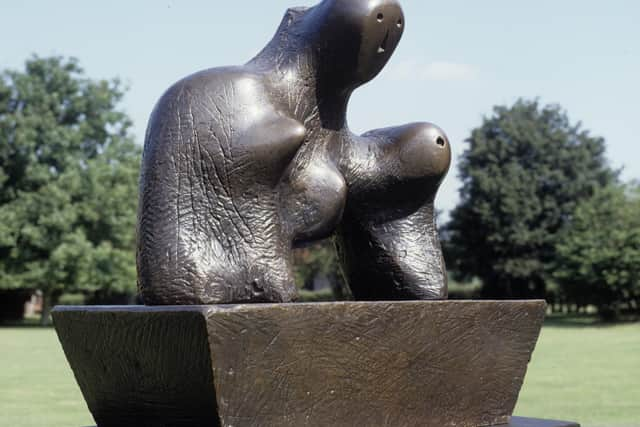
Henry Moore was a powerful advocate for tactile encounters with sculpture and was a keen supporter of early ‘touch’ exhibitions, and visitors to Beyond the Visual will have the rare opportunity to touch the artist’s Mother and Child: Arch 1959.
Seven new works have been commissioned for the exhibition. They include a new sound and video work by Fayen d’Evie, Hillary Goidell and Georgina Dleege, in collaboration with sound artist Bryan Phillips, entitled Wayfinding ‘Sequence’/Vibrational Re-Call 2025 which focusses on acclaimed blind writer Georgina Kleege as she interacts with a monumental steel sculpture, Sequence 2006, by Richard Serra.
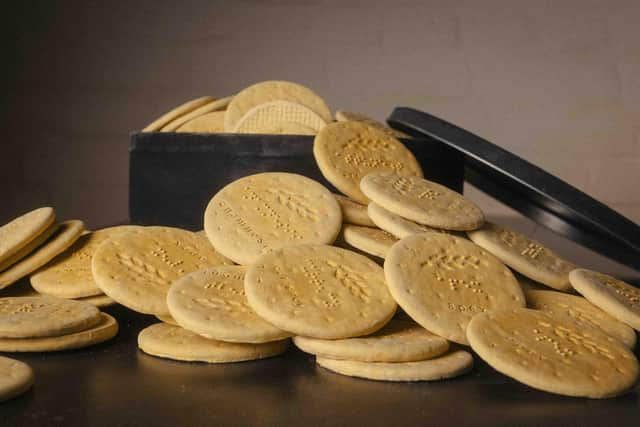
David Johnson has created multiple casts of digestive biscuits inscribed with Braille messages.
“That actually came out of one of the workshops,” says O’Dowd. “We were talking about what you get to take away from an exhibition, normally it is a booklet, and David thought it would be lovely to give a souvenir that was tactile. With some funding he has made 10,000 of them and we are giving some away in exchange for completing a visitor feedback form.
"It is such an ambitious and generous project. And Sam Metz, a local artist, has made a large-scale fidget spinner which rattles and is fun to play with. I really hope people will enjoy the exhibition and I also want to instill that idea of empathy, that has been the underlying principle through all of this.”
Beyond the Visual is at the Henry Moore Institute until April 19, 2026. henry-moore.org