
Exhibition celebrates the diverse talent and influence of York-born artist John Flaxman
As you enter York Art Gallery, you pass underneath a façade decorated with ceramic roundels commemorating creative figures associated with the city including architect John Carr, painter William Etty, and the sculptor John Flaxman. The latter is probably the least familiar name to most people today and a major new exhibition at the gallery seeks to bring him once again to wider attention.
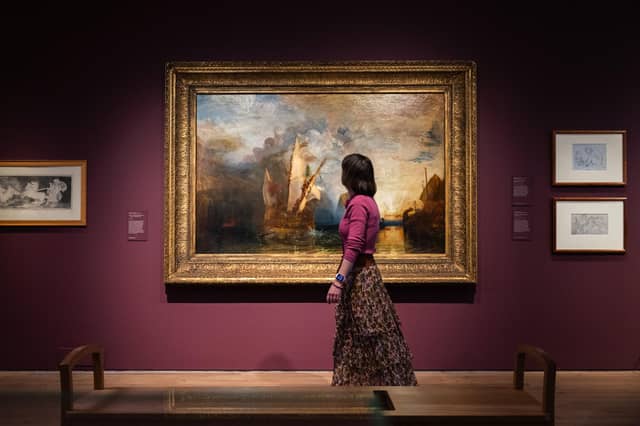


Turner, Wedgewood and Beyond: Inspired by Flaxman is an extensive show created in collaboration with the University of York’s History of Art department, to mark the 200th anniversary of Flaxman’s death and focusses not only on his own work but also demonstrates just how influential he was during his lifetime. Born in York in 1755, he was a renowned and accomplished draughtsman, designer and sculptor and his work had a profound influence on other artists of the time including J M W Turner, William Blake, Jean-August-Dominique Ingres and fellow York-born artist William Etty.
For 12 years Flaxman was a designer for the potter Josiah Wedgwood and his designs helped to shape some of the most recognisable works of British ceramic art, while his illustrations of the works of Homer and Dante, and other classical poets, brought him to the attention of and inspired many artists across Europe. It is a legacy that lives on to this day – some of Flaxman’s Homeric illustrations were featured in the marketing of the recent Christopher Nolan movie of The Odyssey.
Subscribe to the YP’s Lifestyle newsletter
“Flaxman is a really famous artist that people haven’t heard of,” says Dr Beatrice Bertram, senior curator at York Art Gallery. “Here at the gallery, we like to celebrate and shed light on York-born artists and we knew he was not a household name but we felt it was important to tell his story and to do it in an accessible way, demonstrating how influential he was. He is all around us.” Flaxman’s work features in the gallery’s own collection – including a group of drawings, some of which have not been seen before, ceramics and paintings – and are part of the exhibition. Those are supplemented by several major loans of his work and the work of other artists. “We have over a hundred objects on display of which around 80 are loans from 16 lenders across the UK,” says Bertram. “They include the V&A, the National Gallery, National Portrait Gallery and the Tate and regional galleries such as Leeds Art Gallery.”
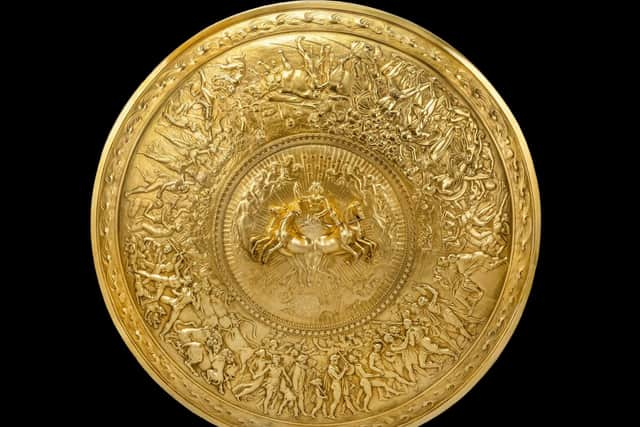
Highlights of the exhibition include sculpture by Flaxman, portraits, drawings, paintings and plaster works, and his monumental silver-gilt Shield of Achilles, one of only five in the world. Work by other artists include Turner canvases Ulysses deriding Polyphemus – Homer’s Odyssey and The Fall of Anarchy, William Blake’s Beatrice Addressing Dante from the Car, and Jean-Auguste-Dominique Ingres’s Paolo and Francesca, alongside Wedgwood jasperware and a chess set designed and modelled by Flaxman. “The pieces are inspired by contemporary actors such as Sarah Siddons, one of the greatest Shakespearean actors who appeared at York Theatre Royal before making her name in London; the Queen figure is inspired by her performances as Lady Macbeth,” says Bertram. “Because Flaxman’s creative practice was so wide-ranging, we really wanted a multi-media aspect to the show,” says Bertram. “We have works on paper, designs, huge canvases, large-scale sculptural works, ceramics and plasterworks. The range of media is more ambitious than anything we have done before.”
The way in which the exhibition is hung, with work by Flaxman that has directly inspired a piece placed alongside it, draws attention to the connections between the artists. “Although during his lifetime, Flaxman was one of Britain’s most celebrated artists, today his sculptures, monuments, illustrations and designs are often encountered without recognising the remarkable artist behind them,” says Bertram. “For example, there is a monument in Leeds Minster to two soldiers killed in the Peninsular War in 1809, and you might not know that Flaxman created that sculpture. And it is worth remembering that every artist in the 19th century would be looking to his illustrations if they were working in that Homeric mould.”
Bertram hopes that visitors to the exhibition will be inspired by it and appreciate Flaxman’s ongoing legacy. “It is a visually spectacular show, and his work is all around us in many ways,” she says. “We think it is time for Flaxman to be in the sun again.”
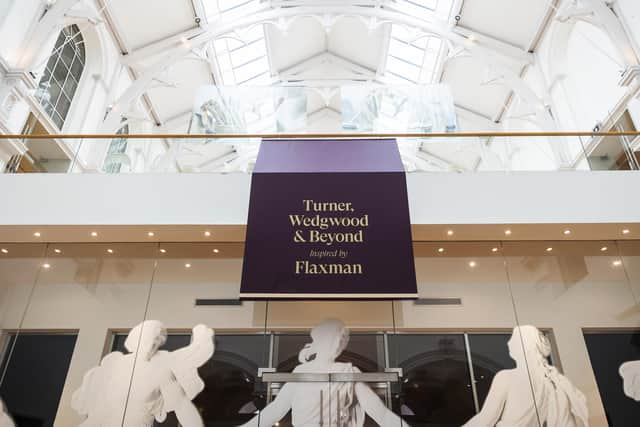
Turner, Wedgewood and Beyond: Inspired by Flaxman is at York Art Gallery until January 17, 2027 and is included in general admission to the gallery. The exhibition is accompanied by an academic publication.