
New portrait of Jane Austen character unveiled at Harewood House
In May an exhibition opened at Harewood House celebrating the 250th anniversaries of two of our most significant cultural figures – the novelist Jane Austen and the painter J M W Turner. Austen and Turner: A Country House Encounter, which runs until the autumn, brings the two together to explore the social and cultural life of the British country house from the 18th century onwards.
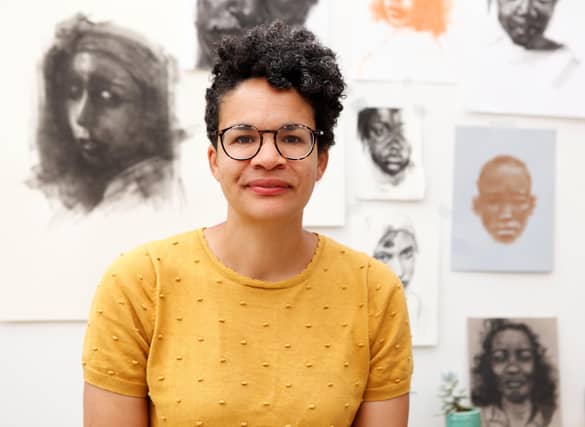


A key theme of the exhibition is a dialogue between past and present through the ongoing creative legacy of Austen and Turner. As part of that, two contemporary artists – visual artist Lela Harris and poet and performer Rommi Smith – were commissioned to create new work in response. Smith has written a series of poems exploring the exhibition’s invitation to consider a dialogue between Austen and Turner and visual artist Harris has created a portrait inspired by the literary world of Austen.
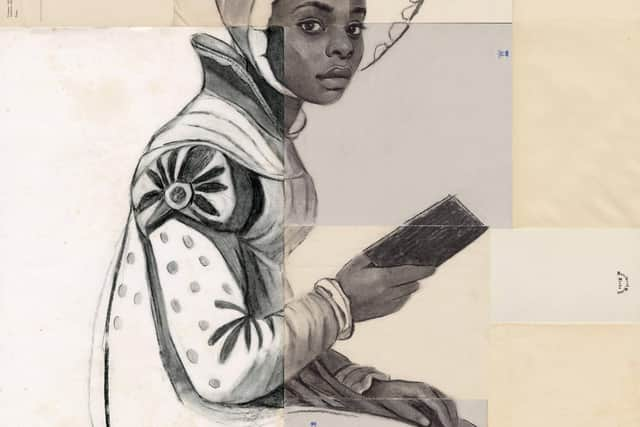
Following Harris’s preliminary works, which have been on display at Harewood since the exhibition’s opening, the portrait Miss Lambe, 2025 has now been unveiled. It depicts Miss Lambe, a character who appears in Austen’s final, unfinished novel Sanditon which she was working on at the time of her death. Miss Lambe is a wealthy young heiress with a great fortune and is unique in Austen’s work as a character of African heritage. For the preparatory collages on found paper and photographs, from which the final portrait has emerged, Harris used cut-outs from postcards, catalogues and archive photographs of Black Victorians and 20th century workers, to focus on an imagined visit to Harewood by Miss Lambe in 1817.
Made in Yorkshire by Yorkshire journalists - get the YP’s daily newsletter
“Once I had unpicked the world of Austen and what was happening in the real world and at Harewood House during that period, I started to think about what it might feel like for Miss Lambe – and also what it would feel like for me as a mixed-race woman – to turn up at Harewood at that time,” says Harris who read Sanditon as part of her research and was impressed by the way in which Austen introduced the character of Miss Lambe. “I really admired and appreciated how Austen introduces her with no othering or exoticization which was quite unusual at the time,” she says “There seems to be no over emphasis on her ethnicity especially with regards to her wealth and I found that really refreshing. There were Black people in this country in the Georgian era but in writing from that time that I have read previously there is a lot of exoticization or othering which Austen didn’t do.”
The portrait which is in charcoal on found paper remains deliberately unfinished. “I wanted it to reflect the unfinished nature of Austen’s novel, and we don’t know how Austen wanted her to develop as a character, but I also wanted to highlight the way in which women of colour have often been erased from historical archives,” says Harris. The found paper on which the portrait is drawn is pieced together using paper from the last century discovered in the store at Harewood. “Being able to use the 20th century papers from Harewood House’s stationery cupboard was a real joy,” says Harris. “I think the writing papers help to anchor the drawing in Harewood’s history and I very much enjoyed the challenge of the slight difference in the surfaces.”
In approaching the portrait, Harris thought about what Miss Lambe might be wearing and was inspired by a collection of 18th century fashion plates from the Lady Magazine. “I wanted her to fit in rather than stand out so she is wearing a fashionable Regency walking dress and bonnet,” says Harris. “I also thought a lot about her expression in the portrait and whether she would be sad or confrontational. Eventually I decided I very much wanted to embrace Austen’s description of her as ‘precious, chilly and tender’.”
Harewood House, like many similar British country houses of the 18th century, has a complex history with much of its wealth coming from investments in colonialism and plantations and enslaved labour. “Working on the project has opened my eyes to how one can navigate a country house,” says Harris. “You can go to visit and just absorb the beauty and the grandeur but now I will think about where the money came from and what stories are we being shown and what stories are we not being shown in the space. It’s been interesting to think around the issues and unpack all those things. I hope that the portrait will raise questions for people and encourage them to find out more.”
Miss Lambe, 2025 by Lela Harris is on display at Harewood House as part of the exhibition Austen and Turner: A Country House Encounter, running until October 19. Harewood.org