
Sheffield photography exhibition presents a window into other lives
As a visual art form, photography has the unique power to make an instant connection with the viewer and the capacity to communicate ideas in an inclusive and accessible way. These strengths are being celebrated in a new exhibition that has just opened at the Graves Gallery in Sheffield.


Lives in Focus – Photography in Sheffield’s Collection has at its heart a selection of recently acquired photographic works by Jyll Bradley, Joanne Coates, Rotimi Fani-Kayode, Sunil Gupta and Rene Matić. Informed by the artists’ own lived experiences, the images bring new perspectives on themes of identity, community and belonging.
“Photography can offer a window into who people are, how they live their lives and the places they call home,” says curator Elizabeth Lindley. “These new acquisitions are testament to how artists both embrace and subvert that power… encouraging us to question our understanding of established narratives.”
The new works came into the collection about a year ago. “We had the opportunity of funding to grow the city’s collection and we wanted to use that to develop the photography element,” says Lindley. “We looked into the existing collection to see where there were gaps and then researched contemporary artists working in photography who would make strong additions to the collection.”
On display alongside the new acquisitions is a selection of photographic works already in the collection by artists including Fay Godwin, David Hockney, Isaac Julien, Sam Taylor-Johnson and others. “There are some nice links between and some of the new works,” says Lindley. “For example, there is a lovely connection between a brilliant Taylor-Johnson portrait and some of Matić’s work especially where they are exploring self and how we represent self.”
The exhibition showcases how photographers use portraiture and place to both document and question the world around us, and how they use the medium to highlight stories that are overlooked or seldom told, giving voice to communities that are less visible or marginalized. “The exhibition is in two parts – firstly looking at identity from the perspective of portraiture and then looking at place, identity and community and how we engage with places where we live and work,” says Lindley. “There are a lot of crossovers in that but those are the two core themes.”
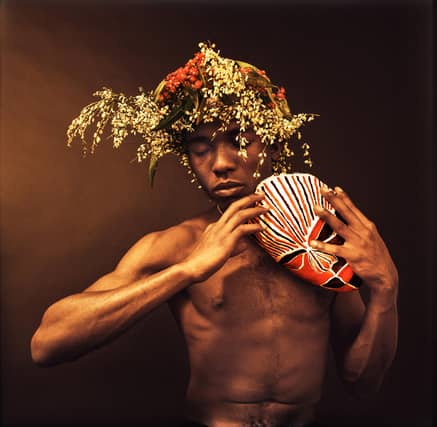
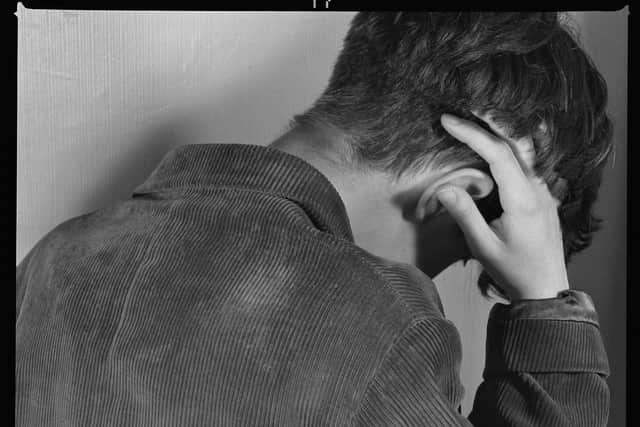
Jyll Bradley’s work Self-Portrait, corduroy jacket is a self-portrait with the artist shown partly turned away from the camera. “For this she has revisited a series of self-portraits that she initially did in the 1980s when she was a student at a time when she was exploring her sexuality,” says Lindley. “As a viewer you are invited into this quiet moment of personal reflection. There is a real level of care and intimacy in sharing that.” Rotimi Fani-Kayode’s work Adebiyi, showing a male figure holding a painted mask, draws on both Yoruba belief systems and Western artistic traditions. “It is such a striking image,” says Lindley. “There are so many layers reflecting on spirituality and identity and belonging.”
There are two works by Sunil Gupta – Lodhi Gardens from the series Exiles made in 1987 and Untitled #3 from 2008. The series of photographs Exiles were made at a time when homosexuality was still illegal in India. Gupta photographed gay men in front of well-known public landmarks in Delhi. For Untitled #3 Gupta draws on the visual art historical reference of Pre-Raphaelite painting, with a queer woman as the subject. In contrast to the earlier, necessarily more guarded, work this has an open, assertive and more celebratory form of queer visibility.
In Destination/Departure by Rene Matić, who was shortlisted for the Turner Prize last year, the artist is photographed with a tattoo on their back which reads ‘Born British, Die British’. “Their work explores aspects of Britishness, queerness, Blackness and mixed-race identity,” says Lindley. “It is layered, complex and thought-provoking.”
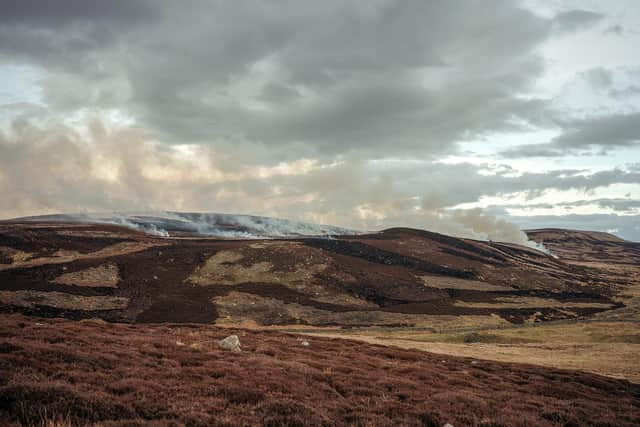
Joanne Coates’ evocative image Grouse Moor – Heather Burning is from her series Lie of the Land. “She is a brilliant socially engaged artist working particularly with working class rural communities,” says Lindley. Through her work Coates challenges romanticized notions about the countryside and focuses on the complexities of the landscape in terms of the challenges encountered by those trying to make a precarious living from it in the face of environmental and economic pressures.
The breadth of experience and diverse narratives explored in the images on display in the exhibition have the capacity to really draw in the viewer and foster greater empathy. “Hopefully the show conveys the idea that we are all connected,” says Lindley. “And that through seeing images of and thinking about different communities and identities, we might understand each other better.”
Lives in Focus is at the Graves Gallery Sheffield, until December 23. Free entry. sheffieldmuseums.org.uk