
Wuthering Heights: How Yorkshire remains the star of this Hollywood blockbuster
After featuring in some of the biggest movies in recent years, such as ‘28 Years Later’ and the ‘Harry Potter’ film series, Yorkshire once again takes centre stage as its dramatic moorlands play a starring role in one of the most hotly anticipated movies of 2026.
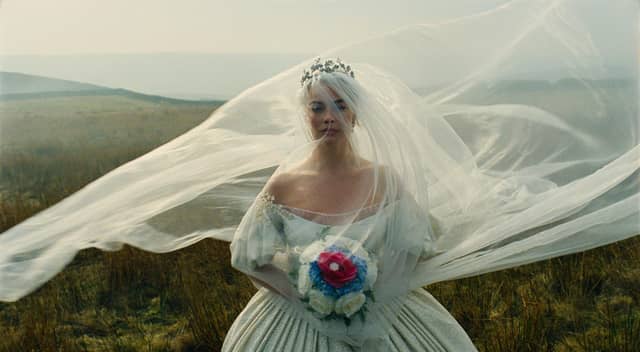

‘Wuthering Heights’ returns to its spiritual home of Yorkshire as Saltburn director Emerald Fennell puts her unique spin on Emily Brontë’s classic novel in cinemas next week starring Margot Robbie and Jacob Elordi.
Written in 1847, ‘Wuthering Heights’ has become synonymous with the Yorkshire Moors as the setting adds danger, surrealism and mystery to the Gothic novel.
Before delving into the upcoming adaptation and various film locations which bring the movie to life, it’s important to understand the significant connection between the Brontës and Yorkshire.
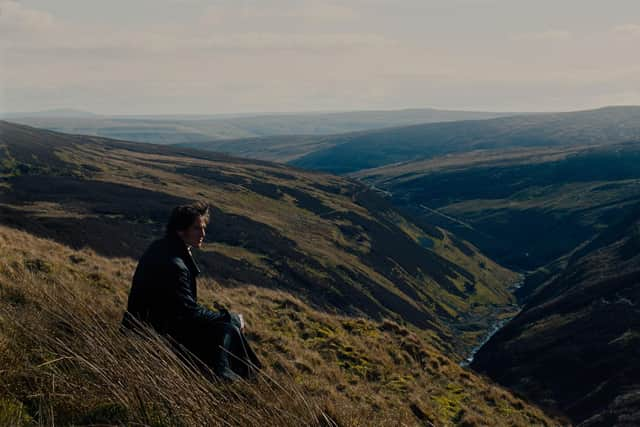
The Brontes lived in the Haworth Parsonage - eight miles west of Bradford - from 1820 and remained there until the death of the last surviving family member, Patrick Brontë, in 1861.
Located on the edge of the Yorkshire Moors, their life at the Parsonage had a profound impact on their literary works, particularly felt by Emily Brontë.
Charlotte Brontë wrote, “My sister Emily loved the moors. Flowers brighter than the rose bloomed in the blackest of the heath for her; out of a sullen hollow in a livid hillside her mind could make an Eden. She found in the bleak solitude many and dear delights; and not the least and best loved was – liberty.”
Emily Brontë was inspired by the real-life locations she would regularly come across whilst walking across the “wily, windy moors.”
For example, located just under three miles from Haworth Parsonage, the abandoned farmhouse, Top Withens, has a strong connection with the novel and is a popular pilgrimage site for literary tourists.
It has been associated with the inspiration for the Earnshaw home, but that has never been confirmed or verified. A commemorative plaque on the farmhouse states: “The buildings, even when complete, bore no resemblance to the house she described, but the situation may have been in her mind when she wrote of the moorland setting of the Heights.”
Written almost 180 years ago, Wuthering Heights has become an enduring figure in the pop culture zeitgeist with over 15 movie adaptations, many stage productions and a timeless music video from Kate Bush keeping the legacy of the novel alive and kicking.
Over the years, film productions have realised that one of the best ways to capture the mood and atmosphere which made Brontë’s novel so effective is to retrace the author’s footsteps and film in Yorkshire.

The first adaptation of ‘Wuthering Heights’ was directed by A.V. Bramble and filmed in Haworth in 1920. However, the silent movie was considered lost for many years, leading to an appeal by the Brontë Parsonage Museum in 2005 to trace the film.
Speaking with the BBC, the librarian at the time, Ann Dinsdale said: "The film's makers went to a lot of trouble to ensure the accuracy of the film, shooting it on location.”
Like many filmmakers before her, Emerald Fennell also saw the value of filming parts of ‘Wuthering Heights’ in its original setting. It was a big task and “huge responsibility” to bring her vision of Bronte’s novel to life and one she described as “an act of extreme masochism.”
Speaking at the Brontë Women's Writing Festival in Haworth, Fennell said: “It's a huge responsibility because I know that if somebody else made it, I'd be furious. It's very personal material for everyone. It's very illicit. The way we relate to the characters is very private, I think."
She added: “It has also felt like an act of extreme masochism to try and make a film of something that means this much to you. I've actually found it quite harrowing, in a really interesting way.”
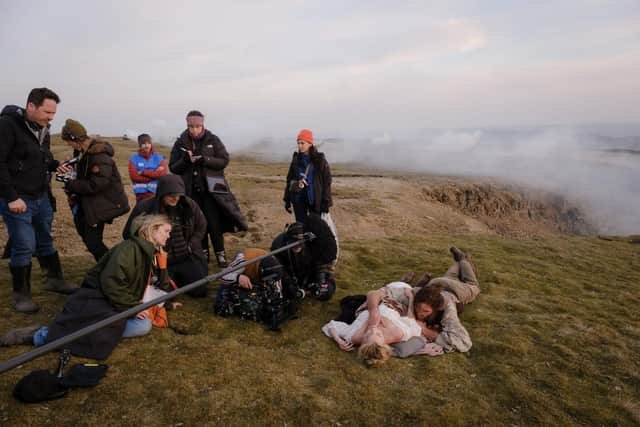
To capture the “misty and cold” atmosphere of the novel, Emerald Fennell shot her movie across various locations in Yorkshire, including Swaledale. Whilst in the North Yorkshire valley, filming took place at the ruins of the Old Gang Lead Mines, the Grade II listed Surrender Bridge and Melbecks Moor.
The cast and crew also spent time in Arkengarthdale as they filmed on Booze Moor and in Langthwaite Village.
Shazad Latif, who plays Edgar Linton in the upcoming adaptation, told the Yorkshire Post about his experiences filming in these dramatic locations.
“The set design created by Suzie Davies for the houses was unbelievable. Obviously, the moors were amazing. You can feel the echo of Cathy and Heathcliff’s spirit up there,” said Latif. “It’s a stunning place to be and it evokes the spirit of the story that’s been there for 200 years. And it’s bloody windy!”
Providing solace from the long and tiring days filming on the Moors, the cast and crew stayed at Simonstone Hall Hotel - a stately home renovated into an upscale hotel in the heart of the Yorkshire Dales National Park.
The cast also spent time in local pubs after they finished filming and were seen in The Punch Bowl Inn (Low Row), The CB Inn (Arkengarthdale) and Green Dragon Inn (Hardraw.)
“I didn’t have much filming to do [in Yorkshire], so I got to sit in the pub and wait for Jacob and Margot with Alison [Oliver] and Hong [Chau.] We would have drinks and play pool. It was great being stuck in there together. There were peacocks running about and a waterfall where they filmed Robin Hood: 'Prince of Thieves', five minutes across the farm, so it was just an amazing setting to be in.”
Over the years, literary tourism has drawn people from all over the world to Yorkshire as they get the opportunity to explore the natural beauty and unique charm of the region. As Wuthering Heights is released in cinemas across the country, there will inevitably be a renewed interest in the beauty and mystery of the Yorkshire Moors, with people hoping to retrace the steps of Emily Brontë, Catherine and Heathcliffe.
Wuthering Heights in cinemas from Friday February 13