
Holmfirth author's new novel inspired by festival celebrating the end of the Great Plague
This week sees the publication of The Village, a chilling suspense novel from author Lisa Rookes which explores dark folklore and long-buried secrets against the backdrop of a small close-knit community in Yorkshire.

The book was inspired by an unusual event that takes place in the village of Hepworth near Holmfirth where Rookes lives.
“It’s called the Hepworth Feast and it’s held every year on the last Monday of June,” she says. “I was intrigued when I found out about it.” The festival celebrates the end of the Great Plague of 1665-1666, a pandemic of bubonic plague which began in London and spread further afield.
According to local tradition the disease arrived in Hepworth on a piece of cloth and although 13 people died, by isolating those infected, most villagers survived. “There are various versions of the origins of the Feast – some say it started in 1666 – but it has been going for at least a hundred years,” says Rookes.
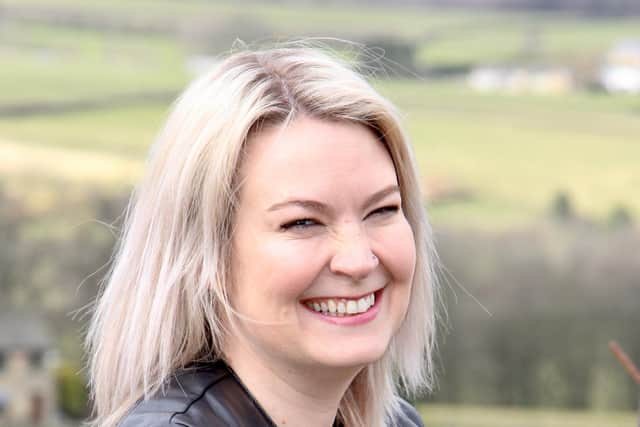

“Everybody in the village loves it – the school closes, there is a big parade, there are clowns and bands, stalls and entertainment.”
It was while Rookes was attending the festival a few years ago that the idea for the novel came to her. “I thought if someone was to go missing during this,” she says.
“I was watching a clown on stilts walking down the cobbled street and I thought 'he looks really sinister' and it occurred to me that this would be a great setting for a novel with a mystery at its heart.”
Set in the fictional Yorkshire village of Thistleswaite, The Village tells the story of what happens when popular local woman Joni Blackwood disappears after the annual festival, here renamed All Gallows Eve, where she has, for the fifth year running, been crowned queen of the festivities.
Her best friend Cass is concerned when the following morning she doesn’t respond to her messages and when she goes to her cottage, she finds the shower has been left running and there is no sign of Joni.
The narrative moves between two timeframes – the present as Cass and other friends of Joni attempt to find out what has happened to her, and the 1990s when they were teenagers. “That was a bit of a love letter to the 1990s for me, reliving my own teenage years,” says Rookes.
“I grew up in Harrogate and Cass and Joni are very much based on my best friend and myself. We spent our childhoods knocking about in the woods. I wanted to explore what it meant to be a teenager then and compare it to how it is today. And I liked the idea of these people who had never left the village they had grown up in.
"There is a bit of snobbery around that, but is it a bad thing to have never left your hometown? I also liked the idea of someone being wedded to their hometown for some darker reason.”
An award-winning former journalist, Rookes began her career as a crime reporter and news editor in regional newspapers before moving on to national publications and women’s magazines, she is now head of the undergraduate journalism programme at the University of Sheffield.
She is the author of two previous novels – Paper Dolls published in 2020 and The Lesson published in 2021, under her married name of Lisa Bradley (Rookes is her maiden name). Both books were loosely inspired by aspects of her own life.
“Paper Dolls is set in a newspaper office and was based on my own experiences of being a young news editor,” she says. “The Lesson explored the powerplay between staff and students at a university. They were both psychological thrillers with a moral dilemma at their centre.”
The Village is her folk horror debut and her second book in the genre, The Empty Cradle, will be published in August. “Folk horror and feminist horror are very popular at the moment,” she says. “I am really enjoying writing strong female protagonists and The Village, although dark, is also a celebration of female friendship.”
Rookes says that writing a novel was a long-held ambition. “It was a childhood dream, but I didn’t have the confidence, then I made my way into journalism which is a different kind of storytelling,” she says.
“Having lived by the journalist’s rule of ‘tell don’t show’ and paring back, having to do the opposite as a novelist I find really relaxing. I spend my days training young journalists of the future to hack everything down, then go home and have the freedom to write at length. I feel very grateful for the chance to do this.”
The Village is published by Orion on February 20. Lisa Rookes will be appearing at Huddersfield Waterstones on February 22 and at Huddersfield Literature Festival on May 10.