
'I wrote a novel about pop music in the year England won the World Cup - now it's being re-released 60 years on'
Robin Squire wrote a novel about the realities of the pop industry in the 1960s which became a classic. Chris Berry spoke to him as he reveals how he came to be the first Doctor Who monster in colour.
It’s a pretty fair bet that you won’t find many authors of a book written 60 years ago with such a sparkling personality at his mere 89 years as Robin Squire. Squire wrote Square One, arguably one of the best and grittiest novels about the realities of the pop music industry in the year when England won the World Cup in 1966 and it was released two years later by London publishers WH Allen & Co.
His career has also taken in being the first monster in colour in Doctor Who, as the debut appearance of an Auton, in Spearhead from Space in 1970 when Jon Pertwee was the Doctor; several other novels and script writing followed, but it is Square One that is his seminal work and that those who have ever been involved in the industry recognise as the authentic taste off its time – and it all started with The Beatles.
“I was crazy about The Beatles. I had all their LPs. I’d been hitchhiking in France, had joined up with a chap called Barry from Norfolk and we’d hooked up with a couple of American girls while in Marseille when we found, amazingly, that The Beatles were playing in Nice (Palais de Expositions, June 30, 1965) we just had to go.


“They were only on for about half an hour in this place that was like an enormous aircraft hangar, but this was when they were massive and I’d got to see my heroes.”
Square One is in no way about the ‘Fab Four,’ but seeing them had set Squire’s mind on writing a book about the pop music world and on his return to the UK and to London it was finding out about his fellow flat mate’s former job that set the seal on the kind of book it was going to be.
“I was one of about half a dozen guys sharing a house in Bayswater. One of the lads, David Booth, was a photographer and when we got drinking one night he said he used to run a pop group, which he said didn’t do too well.
“This was what I needed, someone with the knowledge of what it was really like and I asked him whether he’d be okay if I interviewed him. I said, ‘I’ll provide the beer, you just provide the answers, and we’ll see if we can get a book out of it’. He said, ‘Yeah, okay, I like beer.
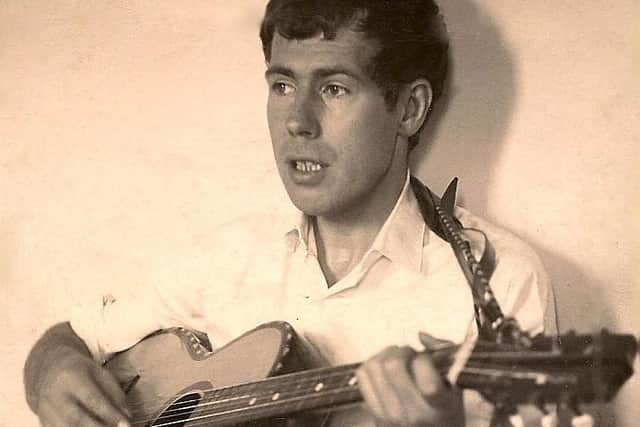
“I’ve still got those tapes, recorded on a Grundig tape recorder while David, who was from Yorkshire, supped cans of Watney’s Party Four. I transcribed the notes on a portable Adler Tipper typewriter.
“David told me exactly what happened and how it was, he wasn’t making anything up. I wrote it all down.
Then I manufactured the story, the group, three of them and not at all based on David’s group, but they were based on a trio who didn’t really succeed, which I called The Fancy Free. I’d decided that my book was not going to be about some fantastic triumph and the story is about what that world actually was, and still is, for most people who try to make it big.”
Squire also made his lead character the band’s manager, a photographer, like David, but that’s where the similarities with his interviewee ended.
“Tim Staines was my invention, as were the three band members Paul, Mike and Cornlow,’ says Robin who tells of Square One’s reception.
“I was interviewed about the book on the then new BBC Radio 1, by a young Terry Wogan, who said he loved it; and Time Out gave me an excellent review. I was sat alongside Jackie Collins at one of my publisher’s launches as she was with them too and had just released The World is Full of Married Men that became a film eleven years later.”
Squire had met film director Val Guest about turning Square One into a movie and they had talked about Guest’s neighbour singing the band’s single release The Sighing Game for the film.
“Val wanted to make the film and he was going to get Paul McCartney (his neighbour) to sing the title song, but he ended up directing a very different movie about the music world that combined science fiction called Toomorow and starring Olivia Newton John.
“I’d had in mind that The Sighing Game would have been somewhere along the lines of Yesterday and Here, There and Everywhere which had first been released on The Beatles Help! in 1965 and Revolver in 1966.”
A decade ago, Square One was back in the public eye when Robin was interviewed by Mike Stax, editor of an American retro rock magazine. “Mike was very complimentary. He said Square One was ‘a superior book in the genre’ and that I had created ‘one of the most enjoyable and authentic examples of British beat group fiction’. It was great to see that it still captures readers’ interest. I had a ball writing it.”
While the movie never came about Robin found his own way on to the screen through an unlikely passage that started in the same year that Square One was released, that saw him dressed head to toe in plastic.
"My first daughter, Natalie, was born in Charing Cross Hospital and another mother having a baby there turned out to be the wife of Terrance Dicks who was then script editor of Doctor Who. We got together in the pub where Ruth Ellis shot her lover. It turned out we lived very close to each other, in Hampstead.
“Terrance had read Square One had liked it and asked whether I’d like to join the BBC for six months as they were looking to train script editors.
"I ended up playing the first monster in colour in Doctor Who. An Auton. I had this pink plastic membrane over my face that enclosed my mouth completely, so I couldn’t have a cup of tea when everybody did, so I never said a word. I’m now in Doctor Who history and enjoy going to the conventions. I wrote a book about my role The Life and Times of a Doctor Who Dummy.”
Squire says his literary output was curtailed a little during the ‘80s, because of a very good reason that he would never look to have changed.
“I’d met a girl who worked for the BBC. When she left me, I brought up our daughter Kelly from six years old. It was a lovely time for a fella to bring up your own kid, a lovely experience. Kelly was born in 1972. I’ve just been abroad with her and my sister to the south of France. What that meant in the 80s was that I wasn’t able to write anything of any significance while bringing up a teenager, but I wouldn’t have changed it for the world.”
Squire has just finished his latest novel Jack-a-Dandy and is delighted that Square One is rereleased for the first time since the 60s this weekend (published by APS Books) and that he will be appearing at its relaunch as guest speaker at Aberford Literature Festival tomorrow, June 21.
www.robinsquire.com/