
John Boyne: "I wanted to reimagine what would have happened if Oscar Wilde had turned the other cheek," says the Boy in the Striped Pyjamas author of his new book ahead of appearing Whitby
Author John Boyne always knew he would be a writer. He never wanted to be anything else and says he worked hard to achieve his dream. He had his first works published while still a teenager, and his Holocaust novel The Boy in the Striped Pyjamas, published 20 years ago, became an international bestseller.

“It is something that was in me from very young childhood – from seven or eight – I’ve always said reading and writing were always connected to me – I couldn’t do one without the other. My mum would bring us (he has three siblings) to the library all the time, and I would write stories about characters I’d read about. I was very focused; I was certain this was what I wanted to do, and I worked hard at it. I spent a lot of time in my teens writing short stories and sending them out to publishers, and by the end of my teens, I was getting things published.
“I was one of those lucky people who knew early on what I wanted to do, although there was a part of me that didn’t know if I was good enough.” After studying English at Trinity College, Dublin, he subsequently obtained an MA in Creative Writing from the University of East Anglia. While trying to establish himself as a writer, he worked at Waterstones, during which time he had three books published.
He decided to take a chance and leave work, which is when he wrote The Boy in the Striped Pyjamas. “I’d been a student of the Holocaust since I was about 17. It was one of those subjects that I was really interested in and had read a lot about.
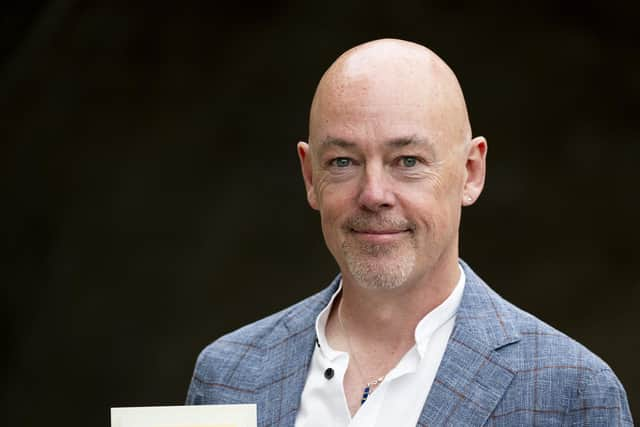

“I didn’t think I would ever write about it, but then I got this very simple image of two boys sitting either side of the fence. It just poured out of me – I wrote the first draft in just three days.”
Did he realise that it would be the phenomenon it has become? “In the year leading up to the publication, I knew it would be a hit and much bigger than the previous three. I didn’t think that 20 years later I’d still be talking about it.”
During Covid he wrote the sequel, All The Broken Pieces, which follows the story of Gretel and was once again a bestseller. “I always knew I wanted to write Gretel’s story, but I thought it would be the last book I would write, but when Covid hit, it just seemed to be the right time.”
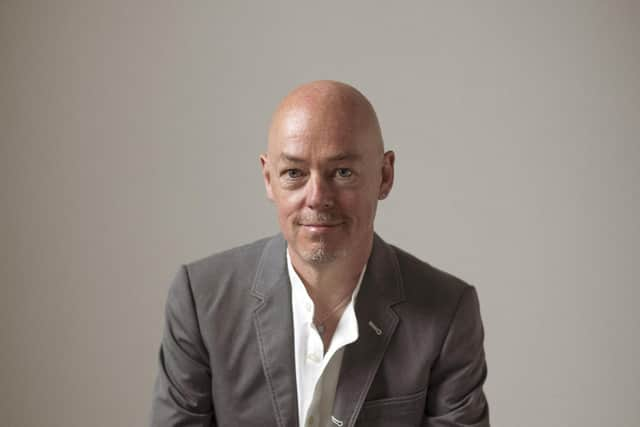
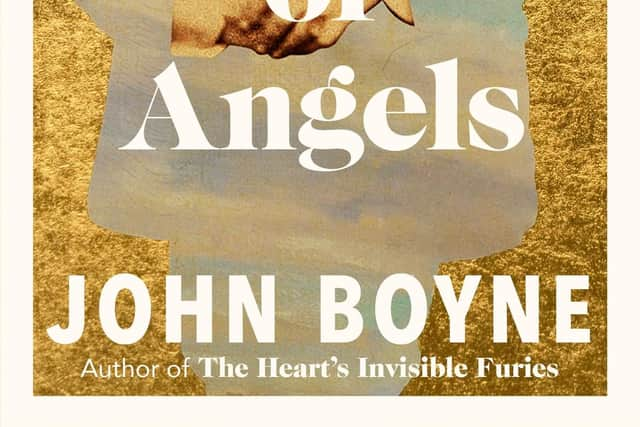
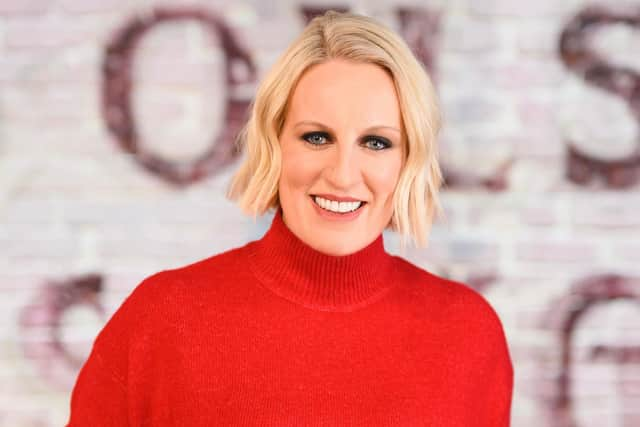
Now Boyne has turned his attention to writer and playwright Oscar Wilde in his new novel published this week. He will be discussing The Weight of Angels in conversation with Steph McGovern at the Whitby Lit Fest in November. “It’s an idea I’ve had in my head for a number of years. Sometimes I find when I am finishing a novel the idea for the next one comes quite quickly, and sometimes it is an idea I have had for a long time, and it feels like it’s a moment to write it. And that’s what it was with this,” says 55-year-old Boyne. “I’ve always loved Oscar Wilde’s work since I was a teenager. We have things in common – we both went to Trinity College, we are both from Dublin, and we are both gay and both published quite young. I always had this idea about what his life would have been if it wasn’t cut short by the one mistake he made, which was suing when he should have turned the other cheek.”
When the Marquis of Queensberry left his calling card at the Albermale Club in February 1895, it bore only his name and five words: ‘For Oscar Wilde, posing Somdomite’. Wilde famously sued for libel, which led to his arrest, criminal prosecution and ultimately prison. From then, his gilded existence spiralled into public disgrace, humiliation and an early death. “But what if he had simply ignored the insult? What direction might his life have taken?” says Boyne. “It gave me a good scope of history to look at and to decide who he might have met if he had lived until he was 99 and what decisions he might have made. I do like to reimagine things.”
Boyne also felt he was ready to add some humour to his work as the previous four books had been quite dark and sad. Between 2023 and 2025, he published his acclaimed novella sequence, Water, Earth, Fire, and Air, which was subsequently collected into one volume, The Elements.
“To be able to write something with some jokes in it was really quite nice,” says Boyne, who spent about a year reading everything Oscar Wilde had ever written, not just the plays and books but the letters and poems. I really wanted to capture what my idea of him was.
“I spent a lot of time trying to think up what I call ‘Oscarisms’ and write them down. I ended up with dozens and dozens of them, and then I tried to find places where I could use them in the book where it would seem natural. A lot of the rewriting was trying to create that voice as much as possible. But I also didn’t want to make him a hero – I wanted to make him flawed and self-reflective.”
Through Wilde’s ‘new’ life, Boyne has him meet up with people and events through the early part of the 20th century. “I had two bookmarks,” he explains. “The funeral of Queen Victoria and the coronation of Queen Elizabeth 2nd – and the three kings in between.
“Because he was born in 1854, I could get him to 99. And then I looked at the eras he would have lived through, including two world wars, the suffragette movement, and the period when lots of writers were going to Hollywood. I then thought about who would be involved in those times and what writers would be around that he might feel connections with.
“I also wanted to bring in the gay rights movement, where some countries were starting to decriminalise but others, like Germany, were getting worse. But I wanted to do it gradually. I didn’t want to bring him out in the 1920s fighting for gay rights, which is one of the reasons I wanted him to meet Mrs Pankhurst.
“He promises to help the suffragettes, but he doesn’t really. It is only as he gets older and starts to look back on his life and realise the mistakes he’s made and the things he could’ve done that he didn’t, that he realises it is time.”
Boyne says he mapped it all out on a big piece of paper before he started the writing process. “I had a rough plan – I don’t like to do too much plotting in advance – but I knew how much I needed to write to get to each of the landmark events and also the plays he would write, which I invented.”
What does he think Oscar Wilde would have made of The Weight of Angels? “I’d like to think he would recognise himself in there somewhere. I wanted to give him successes and failures creatively, successes and failures personally, but that he would be someone who would be consistently learning and would get to the end of his life having figured out that he didn’t get everything right but he didn’t get everything wrong either – which is ultimately what we all want.”
John Boyne in conversation with Steph McGovern will be at Whitby Lit Fest 2026, Thursday 19 to Sunday 22 November. Other headliners include Downton Abbey star Hugh Bonneville, Number One Sunday Times bestseller Ann Cleeves and Chocolat author Joanne Harris. whitbylitfest.org.uk