
John Varley Roberts: Mytholmroyd's David Baker on the 'forgotten' Yorkshire composer
Professor David Baker talks about what inspired him to pen the life story of forgotten Yorkshire organist and choirmaster John Varley Roberts.
John Varley Roberts was among Victorian England’s most celebrated choral trainers. But he can also be considered one of Yorkshire’s forgotten composers.
Now his life has been captured in a new biography – and has inspired a murder mystery novel.
The biography, which is out now, chronicles the extraordinary life and achievements of Stanningley-born Roberts (1841- 1920), a working-class organist and choirmaster of Halifax Parish Church, as well as organist of Magdalen College, Oxford and a popular composer.
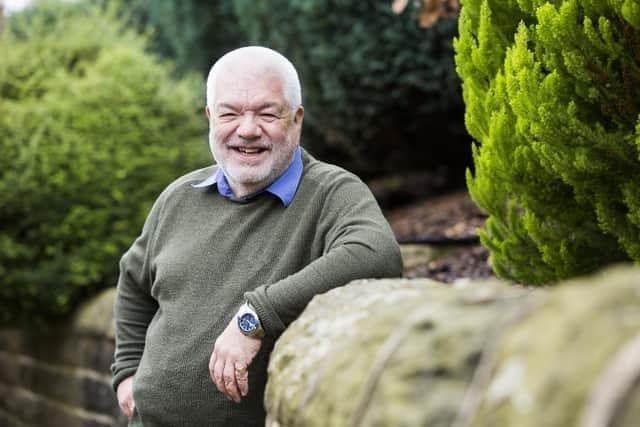

Its author is Bradford-born Professor David Baker, of Calderdale, who admits he has always had a fascination with Roberts, so much that while researching the book, he has also written Murder in the Cloisters, a detective story set in the 1800s, which is also out now.
“When I began my research into Roberts, I was surprised about how little remembered he was despite his legacy. His influence in the field of music was considerable and enduring at a time when church music was undergoing a significant transformation in Britain,” says Professor Baker, of Mytholmroyd, a renowned organist himself who is founder and director of the Halifax Organ Academy and an accredited tutor with the Royal College of Organists.
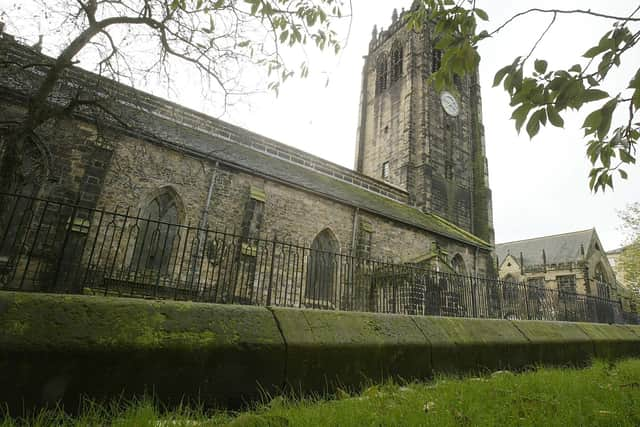
“Roberts influenced generations of choristers, musicians, and choir directors, sitting alongside John Stainer and Walter Parratt as one of the greats of his generation. After becoming organist and choirmaster at Halifax Parish Church in 1868, he transformed music there.
“He found the Snetzler organ in a terrible state on his arrival, and it was due to his efforts that fundraising began to repair it. The choir also increased under his guidance.
“During his long tenure of office at Magdalen (1883–1918), the choir was widely regarded as the very best in the country and beyond. He was a prolific and popular composer and wrote forty anthems, four complete services, organ solos, songs, part songs, and the cantata Jonah. His anthem ‘Seek ye the Lord’ remains popular internationally in countries as diverse as the USA and Japan. His compositions form a valuable indicator of taste and fashion, music making and publishing of the time.”
Prof Baker himself embarked on an academic journey that led him to acquire five degrees, including a PhD, and amass five fellowships.
His career culminated as the principal and chief executive of Plymouth Marjon University, from which he retired in 2009.
In the ensuing years, he has embraced a diverse portfolio career, engaging as a consultant, lecturer, teacher, writer, reviewer, editor, musician, and musicologist.
His academic contributions are substantial, boasting 21 non-fiction books and a substantial collection of published papers.
He also takes on editorial roles for two academic book series and an encyclopaedia. While his professional pursuits are steeped in academia, he turns to fiction for leisure and enjoyment.
Outside of his varied professional engagements, Prof Baker enjoys constructing model railways both indoors and outdoors.
While his cherished moments are spent with an expanding circle of grandchildren and great-grandchildren, he is the author some 20 plus non-fiction books on the subject of music as well as a significant body of published papers including in the Journal of the Royal College of Organists, and the Journal of the British Institute of Organ Studies.
He now also has detective fiction to his name, his first novel written during the Covid pandemic.
“Writing novels is a nice contrast to my non-fiction and when you’re researching a biography, it can be quite intense. That’s why I set out to write ‘Murder in the Cloisters’ as a bit of light relief. The characters are loosely based on Roberts and people with whom he would have associated,” he says.
He reveals that he first became aware of the work and life of John Varley Roberts while a student at Cambridge University in 1968.
“At the time I was organist at St Paul’s, Stanningley, Leeds. An elderly lady was a regular attender; she introduced herself as the niece of a famous choirmaster. I thought little of the encounter until 1972, when, for my dissertation, I was researching the music of Halifax Parish Church, discovering that Dr John Varley Roberts had been organist and choirmaster there, and the music had been second to none.
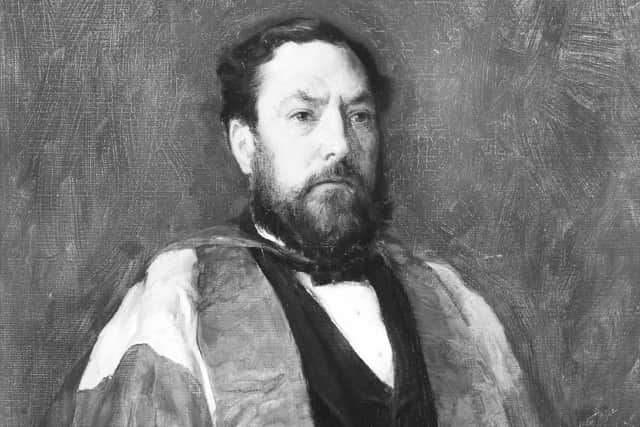
“I made the connection and sought out Edith Annie Roberts, the lady in question. As I walked into her front parlour, I saw a huge photograph hanging over the fireplace: Roberts in his Oxford DMus robes.
“I then thought little else of Roberts, apart from giving a talk to the Halifax Antiquarian Society, and then my interest in Roberts was rekindled when I moved back to Yorkshire in 2009 and because, so little was known about him, that’s when I began researching his time in Halifax.”
To mark the centenary of Roberts’ death in 2020, he edited all Roberts’ organ works for publication, as well as encouraging his choirs to perform his compositions.
“They all enjoyed doing so, and it became clear that Roberts’ rise from an upper working-class background in mid-nineteenth-century Leeds deserved further study as a contribution to the ever-developing rich interdisciplinary picture of music in nineteenth century Britain,” said Professor Baker.
Later this year, Prof Baker will host recitals and lectures both in Halifax and in Oxford to formally launch the biography.
‘John Varley Roberts and Religious Musical Life in Nineteenth-Century Britain’ by Professor David Baker is published by Taylor and Francis. Murder in The Cloisters, a follow up to The Organ Loft Murders, is published by Authorhouse.