
Kate Mosse: Autumn and Labyrinth author talks Raworths Harrogate Literature Festival, folklore and history
Autumn is author Kate Mosse’s favourite season – as her new book explains. She talks to John Blow before an appearance in ‘one of the great book towns of the UK’.

When the wind gets a chill and the leaves start to fall, it takes Kate Mosse back decades, to her childhood.
“I've never lost that back to school feeling. So I always feel that autumn is the season of new beginnings," she says.
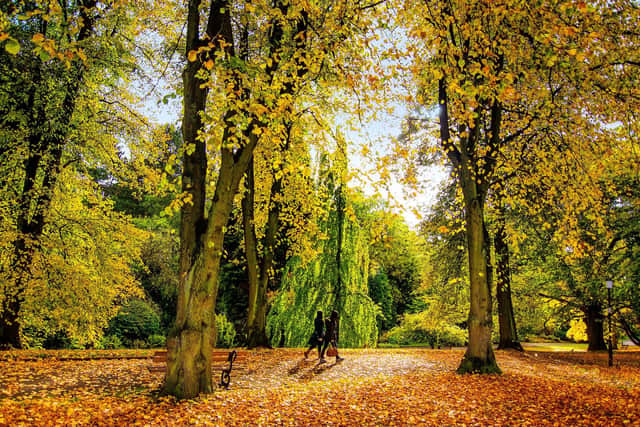
“You hit September and it's like, it's a clean slate,” she continues. “All things are possible. That real spike of adrenaline and excitement, and I feel that in September in a way that I never do on the first of January - that feels like a very arbitrary thing. And I love the colours of autumn. I love the fact that all the seasons seem to be contained in autumn. You have the heat and you have the wet, and then at the end of November, you have the kind of the promise of Christmas to come. So it just seems to me the most complete of the seasons.”
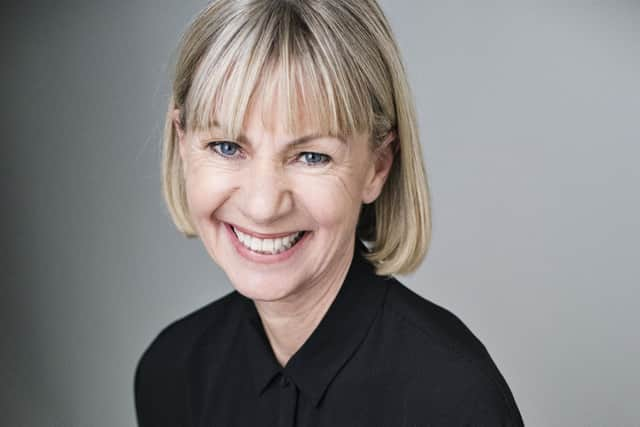

It is her favourite of the four and this love informs her new book, Autumn: The Story of a Season - part memoir, part nature writing and also part of a series of works alongside Michael Morpurgo’s Spring, Bernardine Evaristo’s Summer and Val McDermid’s Winter.
Penned from September 1 to November 30 last year, it pays homage to her native Sussex, its land and folklore, from the Fishbourne marshes of her childhood, the Ouse and the Lavant rivers and Bonfire Night revelry in Lewes.
“It is about reliving all of my autumns spent in Sussex, and I've lived here for 50 of my nearly 65 years. So that's a lot of autumns. But also, to explore the little bits that I don't know so well, and that's been a joy.
“What I hope is that although this is my love letter to Sussex, it is more fundamentally a love letter to autumn, and that what I hope is that everybody, when they read the book, will be putting their places - whether that's in Yorkshire, in Devon, in Cumbria, in Kent, wherever it is – that everybody who feels strongly about where they live will find echoes in my book about what they would feel.”
She will get the chance to discuss it with her readers from Yorkshire when she appears at the Raworths Harrogate Literature Festival on October 25.
Mosse enjoys visiting Harrogate because she loves locations, just like her own Chichester, “where the history of the place is very visible everywhere you walk,” says the Founder Director of Women’s Prize for Fiction and Women’s Prize for Non-Fiction. Also, she believes the festival has been pioneering, which “means that it is a book town – that you don't have to, when you sit on a platform, explain why books still matter so much, how they help us to stand in other people's shoes, how they show us the world and time and space.”
She adds: “Reading and writing and access to education is under attack because every tinpot tyrant knows that if you take away the ability to read, you take away people's freedom. So that sounds rather grand, but what I mean is, when you come to a beautiful place like Harrogate, that has all these festivals, you are there where people think that writing matters, that books matter, that hearing another point of view matters, and so I just love being in Harrogate. It's one of the great book towns, I would say, of the UK.”
Mosse, of Chichester, has written 13 works of fiction and Autumn is her seventh non-fiction. She is perhaps best known for Labyrinth, about the quest of two women to find the Holy Grail, from 2005, which became a Ridley Scott television series. It was set in Mosse’s beloved Carcassonne, southern France, where she used to live.
Now, she is finishing Borderlands, her first medieval/modern timeslip novel since Labyrinth, and will introduce readers to Le Mont-Saint-Michel on the eve of the Norman Conquest of England and the present day.
“That's been years of research and a huge, big piece of writing. Whereas Autumn feels like an utter pleasure,” she says.
The book includes a dedication to her son-in-law, Ollie Halladay, an arboriculturist who she says transformed her experience of woodlands.
“Particularly somewhere like Kingley Vale, which is the oldest yew forest in Sussex, possibly in the whole of England, and most of it survived by the Great Storm (of 1987). The oldest yew trees in the heart of the forest are many thousands of years old. The mythology is that the oldest ones sprung up where the Saxon warriors fell defending Sussex against the Viking invaders in the eighth century, you know, this wonderful thing. So these are very, very ancient trees. But when you walk through that woodland, and I say, ‘What's that one, Ollie?’ And he'll say, ‘Well, that's this, and actually, that really shouldn't be here, that was brought here back from explorers in the 18th century’. He brings a landscape to life with detail. So it changes it from this is a place that I've known all of my life, I've walked all of my life, ‘I just love the colours of this, but actually I only know 10 of the trees’ to... it's like going around an art gallery with an expert,” she says.
While family life and memories of childhood are referenced throughout the book, Sussex folklore – including that associated with the Devil's Dyke and chilling Chanctonbury Ring – also forms an important part.
"I've always loved folklore and mythology, and partly because I've always believed that is the history of women and the working class people and the real people that came from the land. That quite often history, as it is put in books, is just a terribly narrow band of society. The kings and the generals and the bishops, you know it's obviously very male, and there are a few queens and princesses that get a look in but essentially, it is a very particular way of recording what happens in a place. But mythology and folklore is the story of all of us, and the stories that we all told in order to make sense of the world around us.”
And as much as anything, it is nature that stands the test of time.
“The truth of a place lies in the land as well as in the history written about it – that when I walk up to the top of the trundle this Iron Age brow that's been there for millennia and obviously I look down on a landscape that is transformed because there's electricity and there's buildings and there's houses and all the rest of it, but at the same time, the ebb and the flow of the land, and the Fishbourne channel that I can see, and the sea beyond, the outline is what my ancestors would have seen 1,000 years ago, and I find that incredibly powerful.
"Because human beings are behaving pretty appallingly at the moment and I love the idea that the land goes on, That people come and go. Some people do wonderful things, some people do terrible things, but the stories of the people and the land on which the people live, endures, and I find that very reassuring, I think, in these times. And I think that that's why for many of us who don't live in cities, when you're feeling not so great about whatever it is, you just walk into the middle of the woods and you go, yeah, okay. The trees know.”
Autumn, published by Hodder & Stoughton, is out now. Kate Mosse is at the Crown Hotel, Harrogate, on October 25 from 12.30pm. Tickets: harrogateinternationalfestivals.com/event/autumn-with-kate-mosse