
Matt Haig: 'Why I set my latest book in 1960s Sheffield'
Matt Haig’s latest book, The Midnight Train, is his first love story. He spoke to Janet Christie about the novel’s themes and how he has learned to cope with his diagnosis of ADHD and autism.
The Sheffield-born author and journalist Matt Haig has multiple bestselling titles to his name, encompassing fiction, non-fiction and children’s books, and has recently published his latest, The Midnight Train.
There are nine novels, including The Midnight Library, The Humans, How to Stop Time and The Radleys, which was made into a 2024 British comedy horror film starring Damian Lewis and Kelly Macdonald, four non-fiction and nine children’s titles, of which A Boy Called Christmas became a major feature film in 2021 with Maggie Smith, Jim Broadbent, Sally Hawkins and Toby Jones.
There are film options on How to Stop Time, with Benedict Cumberbatch tipped to star, also The Humans and The Midnight Library.
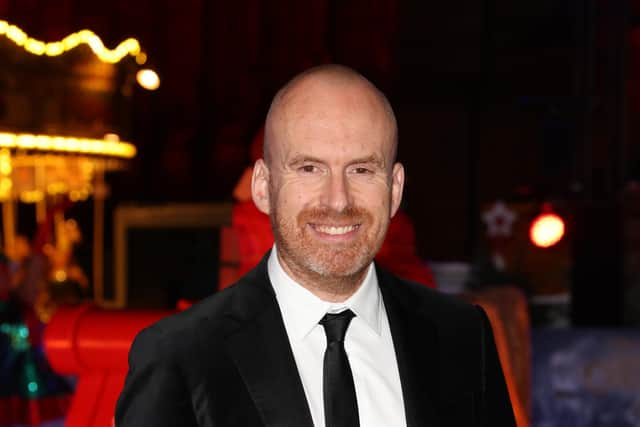

It’s 11 years since his non-fiction work, Reasons to Stay Alive, brought him plaudits for writing openly about his mental illness and experience with suicidal depression and anxiety which he explored further in The Comfort Book in 2021, and four years since he was diagnosed with ADHD and autism.
Today at 50, Haig lives in Brighton with wife Andrea, and their teenage son and daughter, and describes his life as “somehow just about sorted”.
Haig fans’ ears will prick up at the word ‘Midnight’ as 2020’s The Midnight Library is one of his most popular books but he didn’t set out to write a sequel.
“I see it as like a sibling and it’s related in terms of themes of regret and time and is existential,” he says, “but where The Midnight Library was going sideways because it was about parallel lives, this one is going forward and back because it’s one life through time. It’s intersecting.
“Also, I say sibling, because it's having a bit of an argument with The Midnight Library in the sense that that’s ultimately about accepting your own life and it’s a passive message.
"This is more active about how you would live differently if you had the perspective of your final days.”
The Midnight Train is also a departure because it’s the first time Haig has written a romance.
“I’ve never written a proper love story before so it fits that, and I’ve never written a proper time travel book before and that was fun. Compared to The Midnight Library, this is more of a character-based book.”
The characters in question include Wilbur, who as he is about to leave his life is given the chance to revisit the moments that meant most before he threw it away, such as his honeymoon in Venice with love of his life Maggie.
There’s his troubled brother Dougie and Agnes, a bookseller, who becomes Wilbur’s guide to the past.
“It’s kind of updating Christmas Carol themes. I wanted a Scrooge who wasn’t a villain but someone caught up in capitalism and the realistic way that happens.
"Getting Wilbur right, a multi-millionaire book chain owner, and making him this vulnerable, lost soul, was a risk I liked.”
The Midnight Train is set in 1960s Sheffield, where Haig’s parents’ own love story happened and he was born, and viewed “through my mum and my dad’s nostalgic eyes,” he says.
“They always wax lyrical about it. The narrative of the 1960s in the UK is that London was swinging and everywhere else was grim and northern and nothing much was happening.
“The way mum and dad talk about it, Sheffield was vibrant, quite multicultural for the time with a big Caribbean population, an art school, Malcolm X was there on tour, there were live bands, clubs, bookshops, political scenes and protests.
"So it was very much a swinging 60s narrative about a place that you don’t see represented.
“I love social history, researching that stuff. Sheffield is one of those northern towns that always punched above its weight culturally.”
What about the themes he often returns to in his books – loss, regret, the passage of time?
“A lot of it was tied to my own mental health struggles. I feel like not only did I lose my 20s, but also to some degree my partner lost her 20s looking after and dealing with me.
"So I have guilt tied to that and regret attached to my younger years. I was a very difficult teenager, arrested at 16 for shoplifting, drinking, taking drugs and had difficulty fitting in.
"I was told I had special needs at school in some subjects.
“Not for bad behaviour but for not being able to concentrate, never remembering anything, so I had this sense of not fitting in and that feeling is in my books.
"I’ve always been neurodiverse, but didn’t realise it until a few years ago.”
Haig also talks of his sense of gratitude that he recovered from depression and has learned to handle his neurodivergence.
“I feel gratitude because I was convinced as a young man that I would be dead at the age of 25. I was deeply suicidal at 24, was hospitalised and prescribed very strong pills that did not work for me.
"So anything beyond 25, I’ve had this sense of, right, life is fragile, I’m here, and I’m lucky to be here, so make the most of it.”
Four years on from his ADHD and later autism diagnosis, did that help?
“It made me more self-compassionate, more mindful, helped me stop drinking.
"When I had the ADHD diagnosis I realised those impulses were the justifications you do as an addict and that ties in with ADHD in that lack of impulse control.
"My son’s autistic as well so we can relate to each other, but I don’t think I’ll ever become a spokesman for it or write a book on it.”
The Midnight Train by Matt Haig is published by Canongate, £20.