
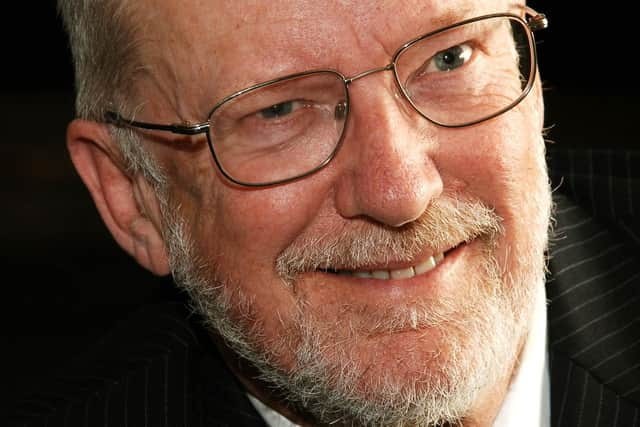
Tony Rossiter releases memoir of Diplomatic Adventures in Cold War Moscow, Pakistan and Perón’s Argentina
Tony Rossiter reflects on old Yorkshire pubs, a lifelong love of cricket, and his adventures as a young diplomat after the release of his memoir.
It’s one of my earliest memories: radio commentary on a test match against the Australians, with Hutton and Compton batting. It was the start of a lifelong love of cricket.
At nine years old, I became (and have remained) a keen supporter of Yorkshire County Cricket Club, as I followed the fortunes of Trueman, Close and other boyhood heroes. Those two were still playing when I was at Lord’s to see Yorkshire beat Surrey in the Gillette Cup Final of 1965.
That was a disappointingly one-sided game, as Surrey were skittled out by Trueman and Illingworth for a meagre 142 after Boycott had scored a magnificent 146, including – believe it or not – three sixes.

Another early memory was the red signage of Hammond’s brewery. After my grandfather left the woollen industry to become a publican, his daughters and their husbands followed him into the licensed trade. I spent my early childhood in Yorkshire pubs: the George Hotel, Brighouse, the Old Lane Inn and the Peacock, both in Halifax, and then the King’s Head in Bingley.
After leaving school I became a civil servant and then a diplomat. I was in Moscow during the Cold War, in Pakistan during a real war, and in Argentina when the Montoneros urban guerrillas were attacking Western targets. Interesting times – all recorded in my memoir.
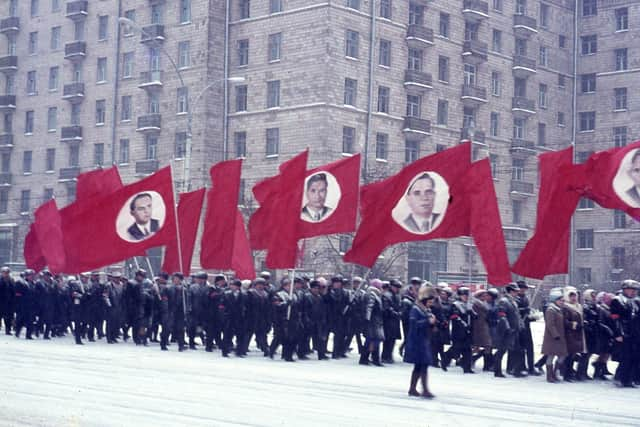
Oddly enough, it’s our time in Moscow, at the height of the Cold War, that both I and my wife Edna look back on most fondly. We arrived there with our four-month-old baby son in November 1968, not long after the boots of the Red Army had put an end to the Prague Spring. Relations between the British and Soviet governments were like the weather – cold and frosty. Western diplomats were kept under surveillance and their flats were bugged. We lived in one of the blocks reserved for diplomats and foreign correspondents, in a compound watched over by two militiamen who noted our comings and goings. If you wanted to drive out of the city, you had to apply for permission (not always granted) and say where you were going, why you were going there and which route you would take. Militiamen along the way would tick you off their list as you went by. If you went wrong, you would soon be put right. There was no danger of getting lost.
In 1968 Moscow was one of the safest cities in the world. Edna could walk down Gorky Street with our baby son at any time of day without any fear of harassment. The only encounters she ever had were with babushkas (old women) wanting to check that the baby was wrapped up warmly enough in the sub-zero temperatures.
Despite the constraints, there were interesting places you could visit in and around the city.
Towards the end of our first winter, we drove through a snowstorm to reach Zagorsk, some 80 miles north-east of the city, the only surviving monastery and seminary for orthodox priests in the Soviet Union. Inside the small Trinity cathedral, a packed congregation chanted responses to the priest, the chanting tuneful and very lovely. The atmosphere was peaceful and tranquil.
We took the overnight train to spend a few days in Leningrad (now St Petersburg). What I remember most vividly from that trip is a ballet at the Kirov theatre performed to the music of Shostakovich’s Leningrad Symphony, an unforgettable depiction of the 900-day siege of Leningrad. I can still see the dancers’ high goose-steps as they portrayed the German army’s onslaught on the city.
I enjoyed my work in Moscow, helping British businessmen to get to grips with the labyrinthine Soviet bureaucracy, and my wife enjoyed the culture, especially the Tretyakov Gallery and our regular visits to the Bolshoi.
From Moscow, we went to Karachi, a city delineated by sea and sand – Arabian Sea to the south and west, Sind Desert to the north and east. For a couple of months (December and January) the climate is like a good English summer, but for the rest of the year it’s very hot and very humid. We arrived there in June 1971, when Pakistani troops were in action against the ‘rebels’ in East Pakistan. Then war broke out and … let’s just say that HMG’s representatives in Karachi did not do very well. After a week of air attacks, and a bomb that narrowly missed our bungalow, women and children were belatedly evacuated.
In 1973 we were transferred to Buenos Aires. After the constraints of Moscow and the quasi-colonial lifestyle in Karachi, Buenos Aires felt wonderfully European. But it was out of the frying pan into the fire. I arrived there shortly after Perón’s reinstatement as president, when the Montoneros terrorists were stepping up their attacks. Kidnappings of Western businessmen were increasing and an American diplomat was assassinated. There were threats against the British Ambassador and armed bodyguards protected him twenty-four hours a day.
As a junior diplomat, I lived and worked in three cities that could hardly have been more different – and at a time of drama in all three countries.
In 1975 we decided that we’d had enough excitement and I returned to the home civil service. I took up village cricket and played for the same team, admittedly with more enthusiasm than skill, for 36 seasons. I returned to Yorkshire in 2012.
Since then, I have followed the county’s fortunes at Headingley, Scarborough and York. And at a time when many pubs are struggling to survive, I have done my bit to help. Cricket and beer have always gone together.
Tony Rossiter’s Diplomatic Adventures: Cold-War Moscow, War-torn Pakistan and Perón’s Argentina is published by Amberley.