
Vanessa Feltz bares her soul on body size, broken relationships and broadcasting
Radio presenter and author Vanessa Feltz is baring her soul about body size, broken relationships, broadcasting and her continuing search for the elusive Mr Right. She talks to Hannah Stephenson.
Radio host, broadcaster and columnist Vanessa Feltz confesses that she is still going out every night, more than 20 months after separating from singer Ben Ofoedu.
“What’s that? 600 nights? And I’m still doing it. I am exhausted. Of the whole 600 nights, or however many it is, I’ve possibly stayed in two or maybe three, maximum.
“I just don’t like the idea of staying here on my own for hours and hours looking at the wall. I put tremendous effort into leading a full and vivid life [being] single, but it really doesn’t come naturally to me.”
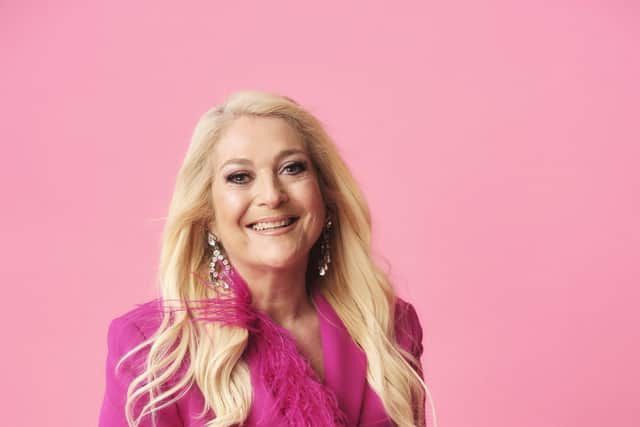

Outspoken, smart and eloquent, but also incredibly vulnerable, Feltz, 62, has long worn her heart on her sleeve, but never more so than in her memoir, Vanessa Bares All.
No stone is left unturned, from weight issues, bitter break-ups from the men she loved and her fear of being alone, to the ups and downs of her career, which at its height saw her interviewing celebrities on The Big Breakfast bed, presenting her own TV talk show and later drawing millions of listeners to her early morning Radio 2 slot before jumping ship in 2022 for TalkTV and now LBC.
But it’s the betrayals which run deep in the book, and in barbed tones she sarcastically refers to her ex-husband, orthopaedic surgeon Michael Kurer, with whom she has two daughters, as the ‘Good Doctor’ and to her other significant ex, singer Ben Ofoedu, as ‘One Hit Wonder’, OHW for short.
They were together – and engaged – for 16 years until February last year. She’s had some disastrous dates since she split from Ofoedu, appeared on Celebs Go Dating, and is praying that she finds true love again.
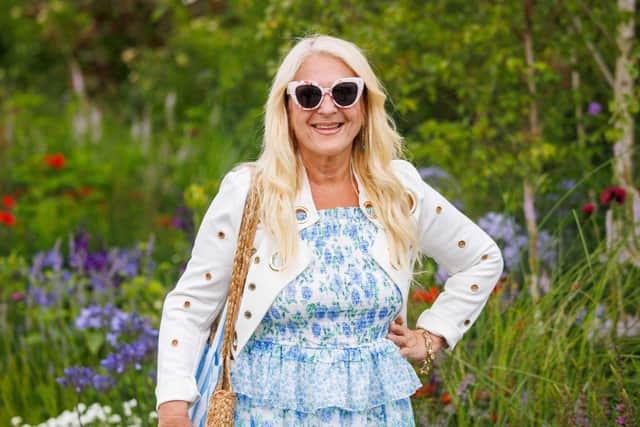
“I just want somebody nice. I’m not asking for miracles, but they’ve got to be a bit attractive. There has to be chemistry and fun. I’m not in despair or abject panic, but it would be very nice.”
Feltz agrees that her need to be with someone may stem from her Jewish upbringing.
Brought up in Totteridge, North London, the daughter of Norman, ‘the knicker king’, who owned a lingerie business, and mother Valerie, who Feltz says would comment on everything, from what she wore to when she should wash her hair, who she should call on and whether she should play tennis or bridge.
She says she was also subjected to pressure from her mother to be slimmer.
“All it made me do is want to eat more,” she recalls. “It definitely made me fatter than I would have been otherwise, because it made me feel shame about eating, and you had to conceal the fact that you were eating, but I could never feel full.
"It just made food a whole emotional thing. It made eating a dark and forbidden part of life. It made it very complicated.”
In later years, Feltz had a gastric band – which didn’t work – and a gastric bypass, which did.
“But if Ozempic had been invented before I had it, I would have had that, definitely.” Remaining single was frowned upon, she recalls.
“The thing I keep saying about being on the singles table at bar mitzvahs, you think it’s a joke as it’s written about amusingly. But it’s not a joke, it is absolutely true if you’re one of the unchosen. It’s a horrible stigma and an embarrassing, humiliating feeling.”
She remembers that when returning from university at 21 (she got a first in English Literature at Cambridge) her parents’ main concern was that she wasn’t yet married.
“No-one was saying that to my non-Jewish friends at university. At 21, if they’d have come back engaged their parents would have been horrified. But I was engaged at 22 and married at 23, and that was considered late.”
Her marriage to surgeon Kurer ended in 1999 when he asked for a divorce – citing her weight as a reason, she claims. When detailing the end of her marriage in her book, Feltz pens the most heart-rending passage.
A hard worker, for years Feltz made great efforts to downplay her own mammoth TV success to avoid emasculating her then husband, and was always careful to emphasise his achievements, she writes.
At the height of her fame in the mid-Nineties, they lived in a rock star mansion parallel to The Bishops Avenue in North West London – also known as ‘Billionaire’s Row’ – with 11 bathrooms, an indoor pool and a ballroom, which cost a fortune to renovate and landed them with a £1.6 million mortgage, she recalls. So she had to work.
“If I hadn‘t needed the money, I’d have stayed at home with my kids. I’d have only been too delighted to stay at home, have lots of babies and never work. I don’t think I’m a workaholic, just insecure about money,” Feltz says now.
She says she never suspected anything was wrong [within her and Kurer’s marriage] and was floored when he announced he wanted a divorce.
There followed a trial period in which she went on a crash diet and tried even harder to play the perfect wife. It didn’t work.
Within six weeks he left, and there’s a heart-rending scene which sees her holding on to Kurer’s ankles begging him to stay. Weeks later, she discovered he was in a relationship with a 26-year-old junior doctor, she writes.
Her grown-up daughters, Allegra and Saskia, from her marriage, have been a huge support. While her private life has had its catastrophes, work has also has its ups and downs.
She left the BBC in 2022 after presenting the early breakfast show on Radio 2 for 11 years, and the breakfast show on BBC Radio London for nearly 20 years. She soon found her feet work-wise, but privately, life has been difficult since she has been on her own, she admits.
She’s recently launched her own fashion line and is considering writing another book, but is there another ambition?
“Just to find true love and live happily ever after,” she says. “When I find someone nice to stay in with, I’ll stay in.”
Vanessa Bares All by Vanessa Feltz (Bantam, £22.)