
'We were warned relentlessly of stranger danger - How I drew on memories of Yorkshire for my thrillers'
One night in autumn 1980 my mum went to her friend’s for a cuppa, three doors up the road. She waited for my dad to get home from work so he could walk her round. An hour later, the phone tinkled twice — the signal Dad should go and collect her.
This wasn’t chivalry but a sign of how frightened women in Leeds were of being murdered. It could happen anywhere, in any neighbourhood and to any woman. Peter Sutcliffe, known as the Yorkshire Ripper, would soon murder his final victim. In the end he was convicted of killing thirteen women.
It all seemed very close to home. My dad, a phone engineer, had seen a man acting suspiciously outside the telephone exchange in Headingley the evening Dr Upadhya Bandara was attacked. Police came to our house to show him photofits. He said afterwards they kept drawing his attention to one of a man with a handlebar moustache.
A few months later, my dad saw Sutcliffe after he was arrested, at Armley Jail. Dad was fixing a fault in the governor’s office and happened to spot the murderer for a few seconds, being escorted by guards, looking “very small and very scared”.
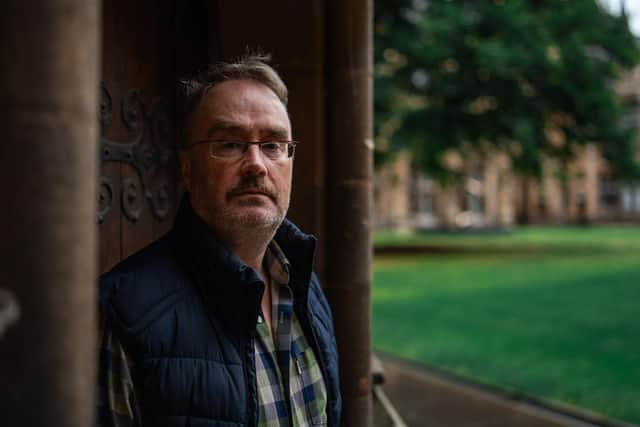

I wanted to write about the impact of crime on a community — attacks that go on for years, that become a kind of community terrorism. That make people scared to walk the streets. To put the bins out. I also wanted to write about children going missing, which seemed to be very common when I was growing up, in Yorkshire.
The possibility I or any of my friends might be taken seemed very real. We were warned relentlessly of ‘stranger danger’ but were otherwise on our own.
I set my first book in The Yorkshire Killings series, The Lollipop Man, in 1994, on the cusp of mobile communication, and invented a new killer, a sinister figure who wore a kindly disguise. Who would mistrust someone whose job was to help children cross the road safely?
The mid-1990s are very vivid in my mind. I can picture what we wore, how we communicated, what we did on nights out, and what we talked out. But how truly reliable is recent memory? I did a lot of research, talking to friends, googling and reading newspapers.
Some of my findings were startling: the fact the most ‘current’ news source was teletext, that if you wanted to make arrangements to meet, you had to stick to them and hope public transport got you there on time. There was simply no way to let people know you were running late, or to check on absent guests who hadn’t turned up.
I thought revisiting actual places might help jog memories. I spent several days visiting Bradford, Halifax and Hebden Bridge — all of which feature in The Lollipop Man. But everywhere had changed, some places utterly.
- Daniel Sellers’ second book in The Yorkshire Killings series The Devil's Smile is out now.