
Yorkshire playwright John Godber at 70: 'My writing is still for the underdogs'
As playwright John Godber passes his 70th birthday, his enthusiasm for writing is as strong as ever. He spoke to Chris Berry about his latest play, This Is The Life, the first time he has written about the theatre.
He is by far Yorkshire’s most prolifically performed playwright and, now turned seventy, just last month, Upton-born miner’s son John Godber shows no sign of letting up in adding to his seventy-plus dramas with his latest play This Is The Life set to make its try-out debut at East Riding Theatre in Beverley in a fortnight.
Godber has lived either in or near Hull since becoming artistic director at Hull Truck Theatre in 1984, a role he maintained for 25 years.
He’s now, arguably and despite his West Riding brogue, more synonymous with Hull than Wakefield, but says a question asked of him lately set him thinking about where it all started.
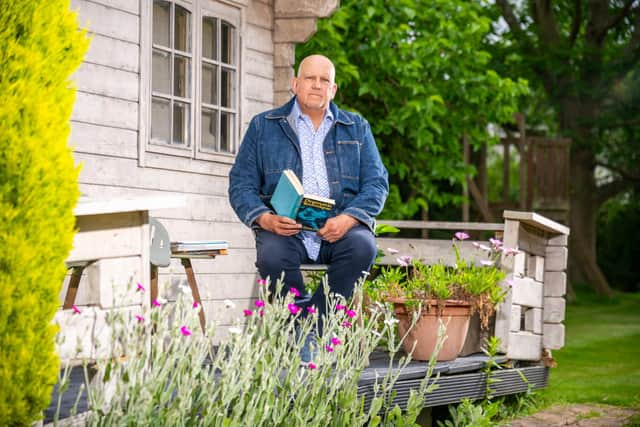

“I was talking to a friend of a friend of mine, a Yorkshire lass who ended up being very highly qualified, coming out of Oxford with a PhD, and she said ‘Are you still writing the plays that made you, while you lived in Upton?’ and I said that’s a strange thing to ask, but do you know what, I think you might be right.
“Because if you start writing plays about a bloke who’s 70 with an OBE and lives in Swanland, your life has probably been sorted out by then.
“That doesn’t mean to say there aren’t difficulties for all of us. I’ve just lost my dad, Jane’s parents are ageing and need care, we’re dealing with that as a reality, but my writing always seems to be drawn to the underdog.
“I suppose you go back to sport and to Up ‘n’ Under. I wrote about the underdog in rugby league. I guess everything I’ve written is about people who either have a lack of opportunities or people struggling, that’s where I see the drama is. Whilst ever there’ll be things that are unequal in the world there’ll be a lot to write about. That’s what attracts me."
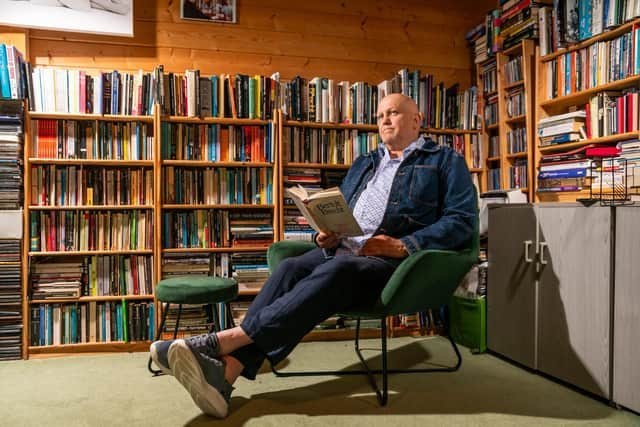
Godber is always candid about his work. It’s his Yorkshire trademark and he’s again fighting for the underdog with his new play.
“My favourite is always the one I’m writing at the moment. Bouncers haunts me in a good way. Do I love You has been fantastically successful and I love my more personal plays about my mam and dad and grandparents in Happy Families, September In The Rain and Happy Jack’ but the play I’m working on at the moment This Is The Life is different because it’s the first time I’ve written about theatre.
“I’m writing about it from the point of view of two stage managers. Again I’m coming at the subject matter from a pretty low starting point, two people who don’t get the kudos they deserve. They sit in the dark, servants to the people around the stage and the spotlight, not dissimilar to Bouncers or the servants in Black Tie Ball that toured last year, or an amateur rugby league team who can’t even get seven players.
“This Is The Life is about a little local theatre in danger of closing down. It comes from two starting points - the arts are under threat, and how highly do we value them?
“If you look at theatre pricing, tickets have gone through the roof. You can go and see a play in the West End for what we used to pay for a week’s holiday in Spain. I’ve got a couple of quid, but I resent paying that kind of money.
“That is elitist. I’ve always been about making theatre that anybody can go and see and maybe that’s been one of the drivers behind this piece of work. The theatre is closing because the town council have decided to sell the land to make way for some luxury flats. There you’ve got a narrative ‘we’re literally selling off the Crown Jewels’ to a certain extent. In the wider sense it’s a discussion about neoliberalism, about commercialisation.”
When it comes down to brass tacks, in true Godber spirit, it’s about the downtrodden, the underdog, just as it was in Up ‘n’ Under.
“The theme of the play is daring to dream, in a society where we’ve been cut back, had price rises, it’s about if you stop dreaming we really are in a poor position.”
Godber was influenced by George Steiner’s book The Death of Tragedy while studying for his PhD at the University of Leeds.
“I guess my cockeyed look at life is as Steiner talked about, us not being interested in the kings and queens anymore, we’re interested in what’s happening under the other side of the carpet in a woman’s house who’s not been out for four weeks. I guess that’s why I was attracted to Woyzech the play from the 1830s regarded as the first proletariat drama, which linked me through to Brecht and those kind of plays.”
He says that his writing is not as a result of some kind of harsh upbringing where his world was a mess before he’d even started.
“I had a great childhood. Fantastic, loving parents. I used to think I’d never be a writer because my parents weren’t cruel to me. Whenever I read biographies of other writers it was always like ‘from a broken home in Algeria’ and I loved my mam and dad. I got on well with them. My dad never hit me, my mam did, but it wasn’t the thing then, that you take exception to now. I was a big lad, I did daft things, I expected it in some ways.”
Fifty-eight years ago John Godber wrote his first 10-minute sketch at Upton Secondary Modern but he recalls it was the Reader’s Digest and his dad that had really opened his eyes to the power of words.
‘I’ve never thought about it before, but I’d always found great joy in words and my dad started getting Reader’s Digest, so from being about 10 I was reading it and there was a thing in it which said Improve Your Word Power. The only word I remember from all those years back was axiomatic, which means goes without saying.
“My dad was autodidact, which means self-taught, and was a very widely read member of the Labour party, became a magistrate, was on the Police committee and on the advocacy for Yorkshire Television but never went to university. His was the university of life. He’d worked as a miner.
“When I was doing my PhD I thought he was a bit thick until I’d actually grown a pair. I then realised that it was me who was a bit thick and that my dad knew a s*** load of things about things I’d never thought about.”
Godber’s daughters Elizabeth and Martha have followed him, and actress wife Jane, into the theatre.
Personally, Godber is as committed to his craft today, at 70 and 70-plus plays later, as he was at the start.
“I get up very early to work, then I go into the house. This morning I said to Jane ‘I’ve had a good morning’. She said ‘John, you’re an internationally renowned writer, why shouldn’t you have a good morning’. I’m still excited about the work, and fortunately it seems to be coming as easily now as it always has.”
John Godber will be speaking at Aberford Literature Festival on Friday June 19.