
Dame Penelope Keith obituary: The much-loved actress famed for her well-to-do roles
Dame Penelope Keith, who has died at 86, was one of the most popular TV actresses of the 1970s and 80s, first as the snobbish suburbanite Margo Leadbetter in The Good Life, and then as the widowed aristocrat Audrey fforbes-Hamilton in To The Manor Born.

Initially a stage and occasional film performer, she became a household name as Margo, the next-door neighbour and comic foil to Richard Briers in The Good Life, a role for which she won a Bafta in 1977.
The series followed Tom and Barbara Good, played by Briers and Felicity Kendal, as they try to escape the rat race without leaving their suburban house in Surbiton.
All four stars of the show – Paul Eddington as Margo’s husband Jerry completed the quartet – went on to significant television careers after the series took its final bow at Christmas 1977.
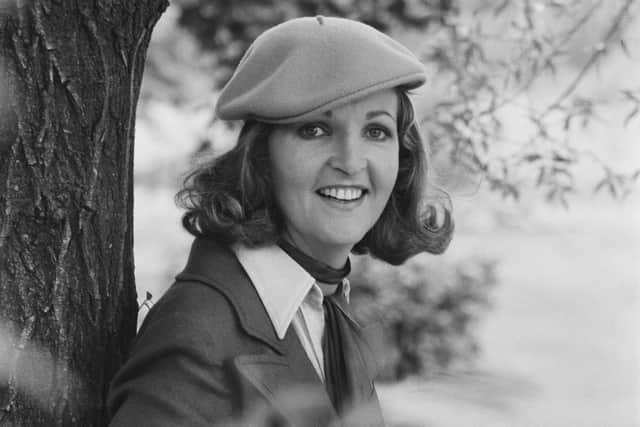

In Penelope’s case, the BBC developed To The Manor Born as a vehicle for her, exploiting the radiance of poshness she exuded in The Good Life, but this time without having the cash to back it up.
Her character had been forced to sell her vast country estate after the death of her husband and move into its modest lodge house while the nouveau riche supermarket millionaire Richard DeVere, played by Peter Bowles, took over into the main building.
The show ran for eight years and sparked a will-they-won’t-they romance between the main characters which for a while seemed to obsess the nation.
When it ended, Penelope appeared in the lead role in six other sitcoms, including ITV’s Executive Stress (which reunited her with Bowles) and starred in a TV adaptation of Agatha Christie’s Spider’s Web.
In 1978 she won a second BAFTA award as best actress for Alan Ayckbourn’s The Norman Conquests.
In recent years, she returned to the theatre, as Madame Arcati in Blithe Spirit, Lady Bracknell in The Importance Of Being Earnest, and in Sheridan’s The Rivals, with Bowles at her side once more.
She also made a number of factual programmes and succeeded Lord Olivier as president of the Actors’ Benevolent Fund after his death in 1989 – though her tenure ended in controversy when she and her supporters were replaced by a rival group. The coup led to years of legal action.
Penelope Anne Constance Hatfield was born in April 1940 in Sutton, Surrey.
Her father, an army officer who had reached the rank of Major by the end of the Second World War, left her mother, Connie, when Penelope was a baby, and she spent her early years in Clacton-on-Sea and Clapham.
When she was eight, her mother remarried and despite not getting on with her stepfather she adopted his surname, Keith.
Although not a Roman Catholic, she was sent at age six to a convent boarding school in the coastal town of Seaford, East Sussex, which was run by French nuns.
Her fellow pupils included the future actress Judy Cornwell and it was at this time that she took an interest in performing, attending frequent matinées in the West End with her mother.
She was rejected by the Central School of Speech and Drama on the grounds that, at 5ft 10in she was too tall.
However, she secured a place at the Webber Douglas Academy of Dramatic Art and spent two years there while working at a hotel in the evenings.
She began her career in repertory theatre in Lincoln, Manchester, and Salisbury, with early appearances in The Tunnel of Love, Gigi, and Flowering Cherry.
In 1963, she joined the Royal Shakespeare Company in Stratford and at the Aldwych Theatre in London.
She gained TV experience long before the medium made her famous.
Early appearances included such staples of the late 1950s and 1960s as The Army Game, Dixon of Dock Green, Wild, Wild Women and The Avengers.
Her film work, meanwhile, took in Marty Feldman’s advertising satire Every Home Should Have One and the John Cleese-scripted detective comedy, Rentadick.
The Good Life promoted her to star status but her role initially was secondary to that of the title characters, Tom and Barbara. In the first episode Margo was only an off-screen voice.
Her role was expanded when the writers, John Esmonde and Bob Larbey, saw that she was getting some of the biggest laughs and asked Briers if he minded bringing her more to the fore. He readily agreed.
Penelope described Margo as having a heart of gold but prone to saying “a lot of the things we’d like to say ourselves”.
For six years from its foundation in 1990 she sat on the Human Fertilisation and Embryology Authority, a position which gave her a role in some controversial decisions on fertility.
She was made a Dame in 2014 for services to the arts and charity.
In 1978 she married Rodney Timson, a policeman twice divorced and several years her junior, whom she met when she was in a play in Chichester and he was on duty outside the theatre.
After the wedding, he left the force to become her manager.
“Lots of people who said I was making a mistake have divorced in the time we’ve been married and we’re still very happy,” she said in 2007, adding that the secret to a successful marriage was “home-made marmalade”.
She is survived by Rodney and their adopted twin sons.