
Downton Abbey star Hugh Bonneville on BBC One’s The Gold by screenwriter Neil Forsyth
Hugh Bonneville talks to Yolanthe Fawehinmi about the second series of BBC One’s The Gold and why the stakes are so high.
There are many reasons why gold is a highly sought-after commodity that humans value as a stable and trusted asset.
For English actor Hugh Bonneville, 61, it’s the allure and mysterious nature of a metal that has survived various economic crashes, and embellished the bodies of people from all over the world.
But when a huge heist like the 1983 Brink’s-Mat robbery took place – where six men stole £26 million worth of gold bullion from a warehouse at the Heathrow International Trading Estate – gold was no longer just a display of luxury and wealth.

The crime sparked the imagination of Scottish author and screenwriter Neil Forsyth, who went on to create BBC series The Gold, inspired by the real-life story. The crime drama is set to return to BBC One and BBC iPlayer for its second series, to explore the decades-long chain of events that transpired.
In the first series, Downton Abbey star Bonneville says viewers learned about the process of smelting gold, bringing the proceeds to market, laundering the profits from the sale, and the impact of that money on both people and the economy.
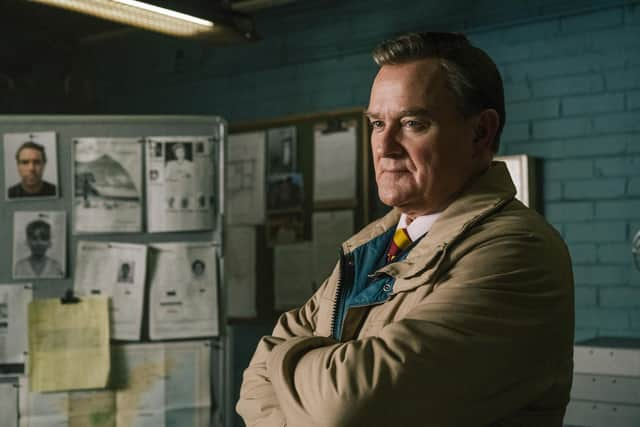
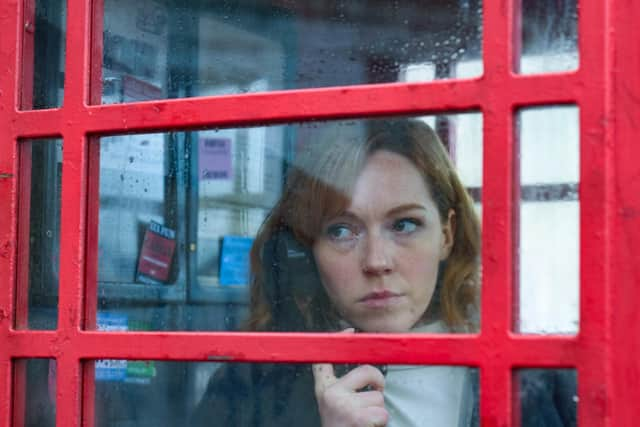
Now in the second series, DCI Brian Boyce, portrayed by Bonneville, and his team, including English actress Charlotte Spencer, 33, as DI Nicki Jennings, and Scottish actor Emun Elliott, 41, as DI Tony Brightwell, are going for gold.
But after they convict some of those involved in the robbery, and start to plan how they will handle the Brink’s-Mat gold, they discover that only half was stolen.
As the investigation starts to take shape, the police force progresses into the high-stakes territory of international money laundering and organised crime. And tensions become high as they desperately try to solve one of the longest and most expensive investigations in the history of the Metropolitan Police.
Bonneville, who also portrays Henry Brown across all of the Paddington franchise films, talks about what viewers should expect from the second series and how DCI Brian Boyce deals with hardship along the way.
What can you tell us about Brian Boyce and some of the trials and tribulations he experienced in series two?
Bonneville says: “In series two, we see the ripple effect of even more gold being smelted and even more money being laundered. Our principal characters return, and we see the effect the gold is having on them and the impact the proceeds of the robbery have around the world.
“Because the money is spreading so far and wide, it proves increasingly difficult for Boyce and his team to keep up, especially as their operation – already criticised for being the most expensive in police history – is facing pressure to scale back in the face of limited results. As far as his superiors are concerned, Boyce hasn’t put enough of the bad guys behind bars.
“In reality, the police investigation, extraditions and trials went on for a good ten years after the initial robbery, and within that time, Boyce was facing retirement.
“He so wanted to finish the job before retirement came, but it wasn’t to be. So that pressure underlies Boyce’s story, as does the pressure from ‘upstairs’ to produce results, as the perceived runaway costs of the investigation are weighed against the apparently diminishing returns. Dogged police work wins the day.”
This series is set in the 1990s. How doe the UK and the international scenes compare?
“In the Nineties in the UK, we’re entering a recession, it’s grey, gloomy, and everyone’s a bit down in the mouth. In contrast, you’ve got John Palmer and the others enjoying the Life of Riley in Tenerife and even further afield, living off the fat of their exploits. This provides a striking visual contrast: the bleak and drab world of Boyce’s operations centre, now a basement in the Tottenham Court Road, juxtaposed with Palmer’s sunshine villa in the Canary Islands. Where is justice? Does crime, in fact, pay?”
When it comes to the themes of this second outing, the word that springs to mind, for Bonneville, is consequences.
"The consequences of the gold having been stolen and the extraordinary ripple effect that it has, not only through the British economy but around the world. We see its impact in Tenerife, through John Palmer’s operations, we see how it is developing in Tortola in the Caribbean, and we also have the Russian mafia getting involved. The implications are huge, and the consequences of the actions of six men in a van really do have a worldwide impact.”
Can you explain the dynamic within the team?
The dynamic between Jennings and Boyce, in particular, is quite endearing, almost a father-daughter relationship. She’s sometimes like an enthusiastic puppy who needs bringing back into line.
Boyce often utilises his own brand of wry cynicism to remind her of her training and her place on the team. Brightwell is like a loyal, dogged place hound. He’s always on the case, firm, committed, and I love the dynamic that’s developed between Jennings and Brightwell. The operation to which they’re yoked, that was once very much in the public eye, has been downgraded. But they struggle on regardless, feeling for Boyce as he does battle with his superiors, who want results. Boyce’s reliance on his protégés, Jennings and Brightwell, becomes key.
But what really shifts the dynamic is the arrival of Tony Lundy on the team. He couldn’t be more different to Boyce. He gets results, put it that way. Boyce ends up having a grudging respect for him, too.”
The Gold returns to BBC One and BBC iPlayer on Sunday, June 8.