
Film Pick of the Week: Joy - review by Yvette Huddleston
Joy Netflix, review by Yvette Huddleston



In July 1978 a revolutionary medical breakthrough took place when Louise Brown the first ‘test-tube baby’ was born in the UK. It followed many years of research into the science around vitro fertilisation and this affecting drama from award-winning playwright and screenwriter Jack Thorne tells the story of the dedicated team whose hard work and commitment eventually brought joy to millions of childless couples.
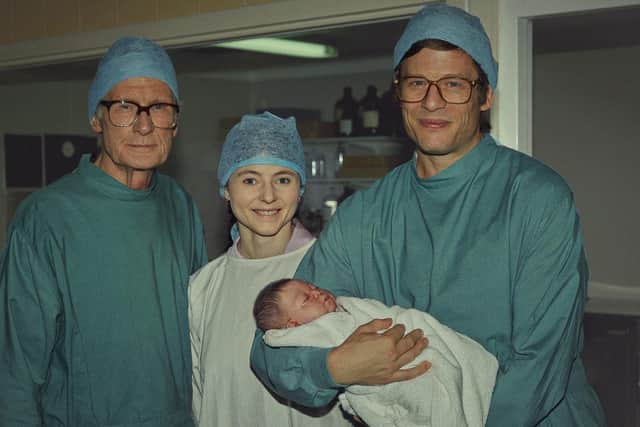
Directed by Ben Taylor, the film introduces us to Cambridge academic and pioneering biologist Robert Edwards (James Norton) – Ewards, incidentally, was born in Batley – and his work with obstetrics surgeon Patrick Steptoe (Bill Nighy) and research embryologist Jean Purdy (Thomasin McKenzie) from the late 1960s through to that first successful birth.
Opening with the appointment of young nurse and researcher Purdy by Edwards as his laboratory manager, the narrative then follows the two colleagues as they team up with Steptoe and manage to secure some space for their research in a disused outbuilding at the Oldham hospital where Steptoe works. Recruiting a number of would-be mothers, they begin along the long road of scientific experimentation and endeavour, commuting between Cambridge and London, battling underfunding, the apparent indifference of the British medical establishment and reams of negative press.
It takes its toll on them all, Purdy in particular, whose religious mother Gladys (Joanna Scanlon) disapproves of her daughter’s involvement in the research project, admonishing her with a steely: “you can’t play God”. Eventually Jean is banned from attending her church and Gladys tells her that she no longer wishes to see her if she continues with her work. It is an agonising decision for her but Jean chooses to keep her faith with her colleagues and with the women whose lives she hopes to change for the better.
Thorne’s screenplay – inspired by his own experiences with his wife Rachel Mason of going through IVF treatment – is sensitive, well-observed and, unsurprisingly, sympathetic to the would-be parents. While the script captures the spirit of close collaboration and team effort of such pioneering work, the focus is on Jean Purdy and it deserves to be as she became one of the many women whose contribution and achievements across a range of fields have been erased from history. It was not until 2015, thirty years after her death from cancer in 1985 aged 39, that Purdy's name was finally added to those of her male colleagues on a commemorative plaque at Oldham hospital.