
Food scientist Dr Chris van Tulleken: ‘It’s very, very hard to feed children healthily’
Food is one of the most important things in life – yet few of us understand exactly how it sustains us. We know it goes in one end and comes out very differently at the other, but what goes on in between is a mystery to many. And food scientist Dr Chris van Tulleken hopes to help change that a little.
The TV science presenter – who’s fronted shows including BBC Two’s recent Irresistible: Why We Can’t Stop Eating, and is the author of the best-selling book Ultra-Processed People – reveals how what we eat can have a massive effect on both our bodies and our brains through The Truth About Food programme, as part of BBC Four’s Royal Institution Christmas Lectures for children.
He brings science to life through the lectures’ trademark demos and self-experimentation – including taking young viewers on a journey to the centre of his gut by swallowing a camera-pill to unpack every step of the digestion process.
“We’re going to use cameras to get views inside the human body, and do lots of big experiments with kids about how the gut works and how your body breaks down and destroys food,” says van Tulleken. “And for some demonstrations, we shrink children down to the size of atoms and show exactly what’s happening inside cells and inside engines at an atomic level.”
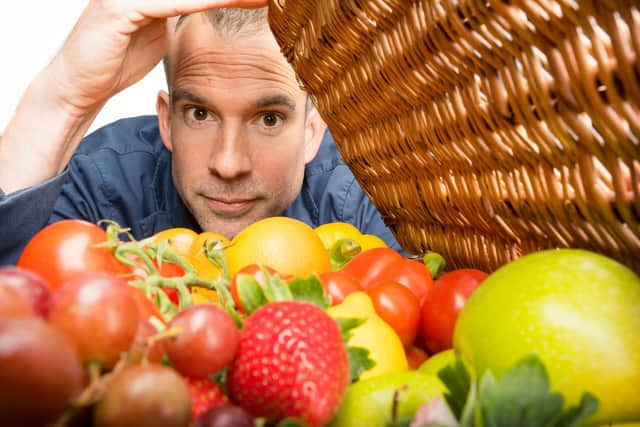

The presenter, who’s also a practising NHS infectious diseases doctor at the Hospital for Tropical Diseases in London, stresses that the aim of his lectures isn’t particularly to get children to change what they eat.
“That’s not my ambition,” he insists. “We really aren’t going to give anyone any advice – what we want is to give them information. Even if a child wants to eat different food, they don’t have a lot of control over it – they’re fed by the grown-ups who look after them.
"So we’re treading a very careful line here. Life is about turning food into movements and respiration and all the other things life does, and I think kids are profoundly curious about it.”
But their curiosity isn’t the only reason van Tulleken, who has three children aged seven, four and nine months, wants youngsters to understand more about how food affects their body.
He stresses: “Children in this country have been made very sick by our food system – a quarter of them live with diet-related disease, which is an obscenity. So children have a right to knowledge and good health, and part of these lectures is about helping them understand how the food they put in their bodies affects them.”
He explains that while children should know that when they don’t eat fibre, for example, they may end up constipated, he’s not going to tell them what they should and shouldn’t be eating.
“We’re not going to say you have to eat five portions of fruit and veg a day, and we want to be very careful warning about ultra-processed food (UPF). But we’re going to look at the science of it, and the proven effects on the body,” he explains.
He says it’s hard for parents to get rid of all UPFs in their children’s diet, and admits that even his children eat wholegrain UPF bread in their packed lunches, explaining: “Unless you make the bread yourself, or live near a bakery that sells real bread – which is up to 10 times more expensive than supermarket bread – it’s very hard to get rid of the final bit of UPF. So, no-one should panic – no-one’s saying you need to quit it entirely.”
And what about portion sizes? “Here’s a thing that amazes me,” he says. “A small bottle of fizzy pop is two servings. So you should drink one portion, then put the lid on and have the rest later. I don’t know anyone in the history of drinking fizzy pop that has ever put the lid back on and not finished it. The same is true with packets of crisps.”
“If a parent said to me, how can I read a pack and tell if something’s healthy or unhealthy – you kind of can’t. It’s very hard,” says van Tulleken ruefully.
But it is, of course, every parent’s choice what food they give to their kids, and he stresses: “I’m very wary of being another man with privilege telling the nation how to eat.
“I personally find it very, very hard feeding my children healthily – it’s a challenge. It takes time, money, energy and effort. And if people are struggling, the main thing I would say to them is that’s normal, and it’s very hard.”
The Royal Institution Christmas Lectures are available on BBC iPlayer.