
Leeds Palestinian Film Festival: West Bank olive oil farmers show resilience in Land of Canaan
Leeds Palestinian Film Festival will present Land of Canaan, a story of efforts to produce fair trade olive oil in the West Bank. John Blow hears from those involved.

Farmers and their children climb olive trees, some said to be thousands of years old, to happily pluck their fruits before enjoying a picnic in the orchard.
It’s not the image of Palestine that we usually see in the news, but this is how many farmers in the West Bank make their living, and, adverse though it has become, hope they can do so for generations more.
It is this pastoral side of life in Palestine, not necessarily the violence in the region – Foreign Secretary and Doncaster North MP Ed Miliband has spoken out against “settler terrorists” in the House of Commons – to which filmmaker Maggie Lemere was drawn when capturing her documentary Land of Canaan, a gentle exploration of the olive harvest around the northern West Bank.
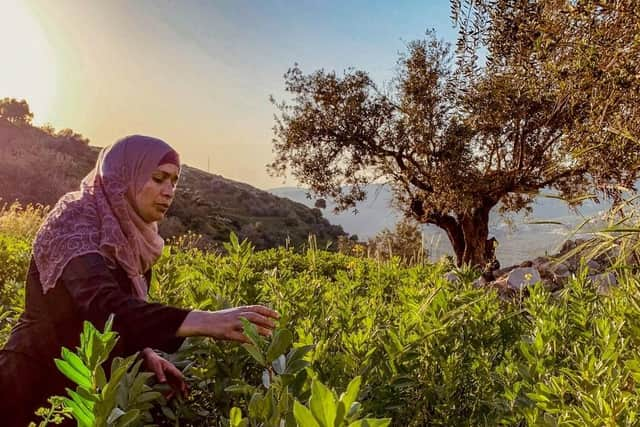

The film follows anthropologist Dr Nasser Abufarha, founder of the Canaan Palestine company and the Palestinian Fair Trade Association, which includes 2,400 farmers across more than 50 villages and produces the social enterprise Zaytoun’s olive oil products, which can be found on shelves in Yorkshire.
Nasser, speaking to The Yorkshire Post from the West Bank, says: “It was very interesting to engage and show the filmmakers our landscape, our community, and our culture. It was a lengthy process. They needed to observe and inhale and take in all of these cultural experiences and think about it, and at the same time, the farmers also needed to be relaxed in front of the camera and in front of the people.
“It was really a process of bridging cultures and understanding in the making of the film,” he says, which he hopes "portrayed our farmers’ lives and our cultural heritage in ways that also can bridge cultures across distanced peoples and shed more understanding of our life in Palestine and what’s so precious about it and why we are so contentious about not giving up on our beautiful life here, because it’s a pleasure. Basically, there’s a huge connection between our spirit and our land and our cultural heritage. It’s an ancient land, and we have an ancient culture that we are proud of, and that makes (us) who we are.”
A screening of Land of Canaan will take place at St Chad’s Parish Centre in Headingley as part of the Leeds Palestinian Film Festival, presented alongside SPARK Social Justice, on Friday evening.
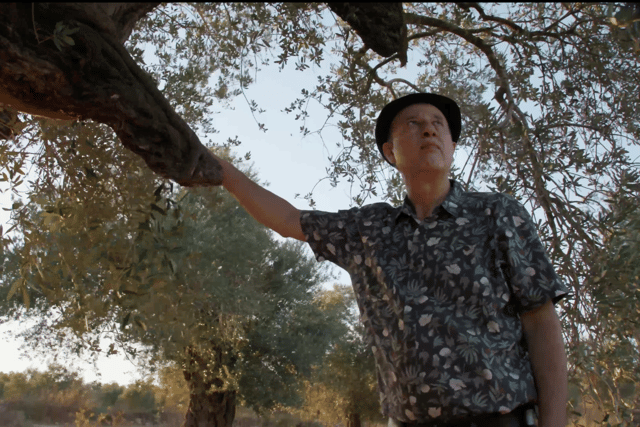
Maggie, speaking to the YP from home in Los Angeles, says she wanted to create a “visual tapestry of Palestine throughout the year” which allows viewers to “see people’s lives evolving as the project evolved”.
She filmed with a small team between 2019 and 2021, making several trips to document the olive harvest and speak to farmers about their heritage and way of life.
“I’m a National Geographic Explorer, which means that National Geographic has invested in me as a storyteller and a person,” she says. “But before I became a filmmaker, I was more involved in human rights and environmental work, and in a lot of that work, I found that the stories that we were telling while trying to help communities that were going through conflict often were very reductive, only focused on the worst things that had happened to them, and that we didn’t really understand why people loved their home or what they wanted for their future.
“And so, feeling a bit frustrated with some of the jobs that I’d had, as much as I loved them at the same time, I became really interested in oral history and what the stories are that people want to tell about themselves and not just where they come from and what’s happening, but what they dream of for their futures and where they want their communities to go or what they want their communities to be like.”
The documentary also recounts Nasser’s return from the USA, where he ventured to study and work, to his ancestral homeland, which was suffering from a crisis in the olive oil industry.
It charts the exploitation and struggles that farmers were suffering and Nasser’s efforts to set up the fair trade association.
Meanwhile, viewers meet the men, women and children who are together in the orchards, now benefitting from that support.
Nasser speaks to the YP at the peak of the harvest – a bountiful one this year, he says – which usually goes from the end of October until late November or even into December.
Despite the tense context of its production, the eventual experience of showcasing Palestinian food products to the world is “very peaceful,” he says. “It goes into your body; it’s from our soil. It’s a cultural experience beyond the nutrition.”
People who buy these fair trade products are, he says, “demonstrating a solidarity beyond the purchase and buying in, deeply buying in, to the Palestinian cause”.
He adds: “We will invest more into it and put more time and more thought and more resources into planting more and being more in the trees and protecting them as much as we can.”
While Palestinians have long lived and worked under the restrictions of Israeli occupation, the struggle to harvest has reportedly intensified since filming ended.
“Editing the film was heartbreaking because we were sitting with the footage of a place that I came to deeply love,” says Maggie.
“When people are in this conversation about the harvest, I hope that the film helps show a lens on what’s at stake, what exists, and these traditions that are really beautiful, and these relationships to old trees that are really beautiful, and just everyday people who are trying to live their lives.
“I hope it helps people connect from their hearts to what's happening in Palestine.”
Land of Canaan is on at St Chad’s Parish Centre, Leeds, on Friday. Doors open at 6.30pm. Tickets: leedspff.org.uk