
Sir David Attenborough: Celebrating centenarian’s career spanning eight decades
As veteran nature presenter and national treasure Sir David Attenborough reaches 100, Lynn Rusk looks at his series Life On Earth which ‘ took viewers to parts of the natural world they had never imagined’.
In the world of natural history, few figures have made an impact comparable to Sir David Attenborough.
The legendary broadcaster, historian and environmental activist celebrates his 100th birthday on May 8, marking a career that spans eight decades.
Sir David’s documentaries, including the BBC’s Life On Earth (1979), The Blue Planet (2001), Planet Earth (2006), Frozen Planet (2011) and Africa (2013), have educated and entertained millions.

To mark the milestone, the BBC will broadcast a week of special programming featuring both new and classic shows.
One of the new programmes, Making Life On Earth: Attenborough’s Greatest Adventure, goes behind the scenes of the landmark BBC One series first broadcast in 1979.
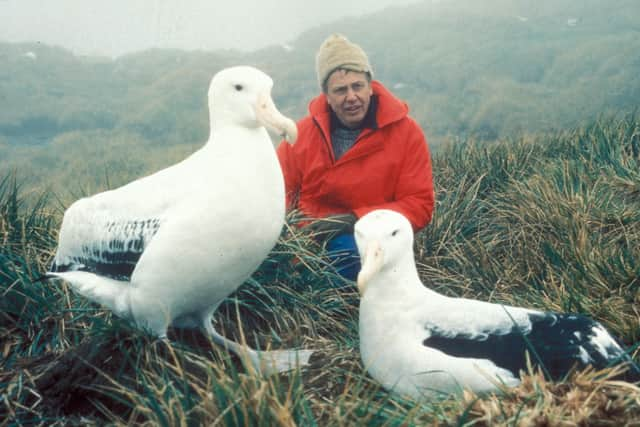
The original series followed Sir David as he travelled to 40 countries to film more than 600 species.
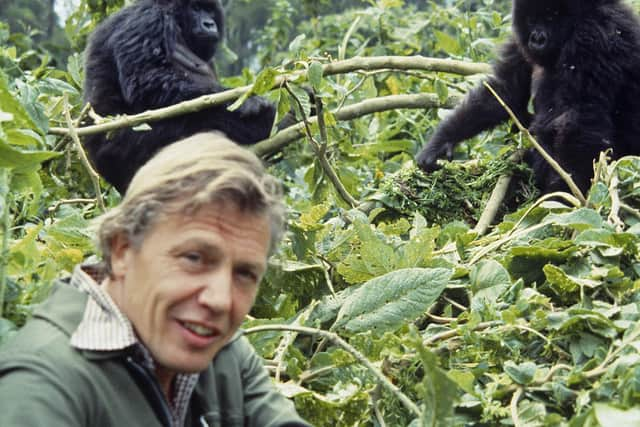
The new film features interviews with Attenborough and the original production team as they reflect on the making of Life On Earth and the challenges they faced, including a coup in the Comoros, coming under fire, and Sir David’s famous encounter with gorillas in Rwanda.
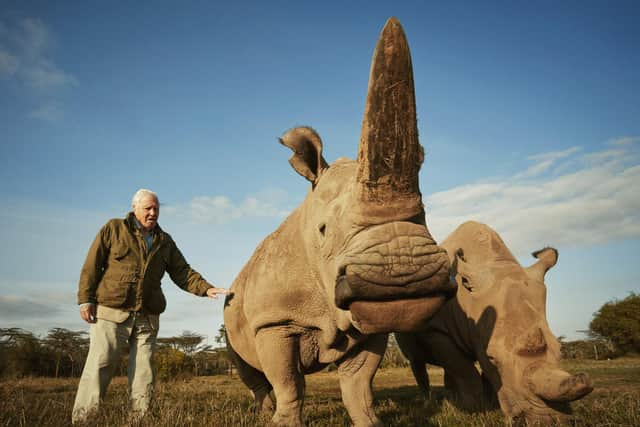
“I have been lucky enough to have had a long career making natural history programmes, but there was one series that changed everything: Life On Earth,” Sir David says in the opening sequence.
“It took viewers to parts of the natural world they had never imagined.
“From the South American rainforest, the richest and most varied assemblage of life on Earth, to remote and extreme environments, we set out to tell the greatest story on Earth.”
In the film, Sir David also reflects on his time on the BBC’s managerial ladder in the 1950s, admitting it “wasn’t much fun”.
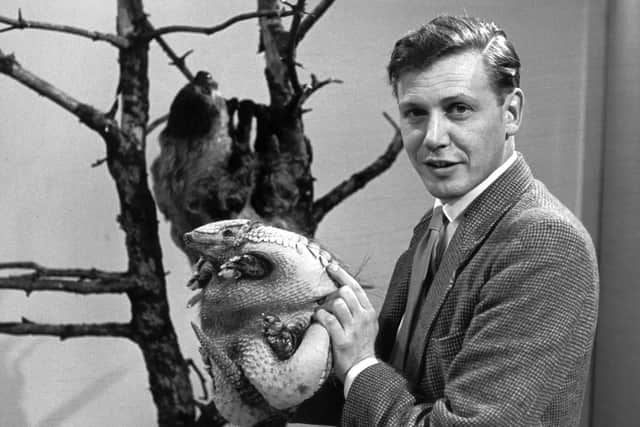
In 1965, he became controller of BBC Two, overseeing the advent of colour television, and later served as the BBC’s director of programming. The only higher role, director-general, was focused largely on finance and politics.
“The question was how I could step away from the BBC in order to make a series on a global scale,” he says.
“I wanted to create a series that would chart the history of life and evolution, starting with the simplest organisms and progressing all the way to monkeys, apes and humans.
“In between, you would explore birds, insects and more, each in their proper evolutionary order. I just yearned to do that, but I couldn’t get away.”
In 1973, he announced his resignation and requested to make a wildlife programme.
“That was the turning point in my life, really,” he says.
Mike Salisbury, a longtime collaborator, reflects on working with Sir David on Life On Earth.
“Sir David occupies a fairly rare position in public life where authority and warmth sit together,” says the 84-year-old documentary filmmaker.
“A lot of the emotional heft comes from consistency. People have grown up with his voice as a guide through the natural world, so there’s a sense of trust and continuity.
“At the same time, the quiet preparation, the ordinariness before he performs, and then the sudden focus on camera reinforce that he isn’t distant or theatrical.
“He feels grounded, methodical and human, which makes that authority more believable rather than less.”
Commenting on his work ethic, Salisbury says he has never met anyone with better time management skills.
“I don’t know anyone who uses their time as effectively as David. He is remarkably organised,” he says.
“When the rest of us are sitting around waiting for a couple of Land Rovers, chatting and passing the time, David is often sitting on a camera box writing in his diary or working on the next chapter of a book.
“But at the same time, if something goes wrong, if the Land Rovers aren’t coming and people suggest going for a beer, he’ll immediately say, ‘Oh yes, I’ll come too.’
“He can switch effortlessly between intense productivity and being part of the group. He really does use his time exceptionally well.”
Mike Davis, who produced Natural History Museum Alive, and directed BBC One’s Great Barrier Reef and Galapagos, says Life On Earth had an enormous impact on natural history filmmaking.
“I think some of David Attenborough’s work from the 1970s and 80s can blur together if you weren’t there at the time,” he says.
“You recognise the landmarks, Life On Earth, The Private Life of Plants, The Life Of Birds, but you don’t always appreciate how distinct and ambitious each one was.
“Going back and watching it in full, you really see the scale, this extraordinary 13-hour journey telling the history of life on Earth.
“It gives you a real appreciation of its ambition and the way it connects everything together. The gorilla sequence, for example, becomes part of a much larger narrative rather than a standalone moment.
“It’s easy to forget just how innovative it was, and that it effectively started the cycle of landmark natural history series, rather than simply being one of many.”
He adds: “People also often overlook the period when David stepped away from filmmaking to work as a controller.
“Most viewers don’t know much about that part of his life. So Life On Earth really represents a return, a moment when he wanted to get back into the field and tell this enormous story using new technology and an exceptional team.
“There was a lot of pressure. There had been major landmark series before, like Civilisation and The Ascent Of Man, but nothing quite like this in natural history. It felt like a huge responsibility.
“In the end, though, it was worth every minute, not just because of its popularity with audiences, but because it was also embraced by scientists and biologists, whose contributions were so important to making it what it was.”
Making Life On Earth: Attenborough’s Greatest Adventure airs on BBC One and BBC iPlayer on Sunday, May 3.