
Wakefield could cash in on district’s rise as a film and TV location
A new pricing policy for production companies wanting to use the Wakefield district as a filming location looks set to be introduced.
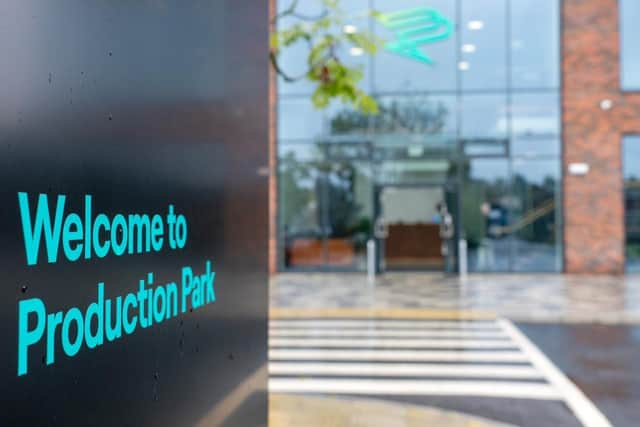
The district’s profile as a “potentially international filming destination” has risen since Netflix drama Adolescence was filmed at Production Park studios in South Kirkby, a report said.
Minsthorpe Community College also featured in the production, which aired in March 2025 and won four Golden Globes and seven Emmy awards.
Other notable recent productions in the district include the supernatural drama Faith, starring James McAvoy and Erin Doherty, which was mainly filmed in Normanton earlier this year.

The document also said location managers involved in the second series of “the highest grossing and most watched Channel 4 drama of 2026” have also made “a serious enquiry” into using Wakefield as its backdrop.
Wakefield Council has received 50 enquiries from production companies since establishing a film office in January this year.
Four months earlier, the local authority, in conjunction with other organisations including Production Park, launched Film Wakefield, an organisation which connects filmmakers, creatives and businesses with locations and resources.
The report, to be considered by senior councillors at a meeting on November 17, said the district had a “wealth of unique and versatile filming locations” that can attract a wide range of film, television, commercial and photographic productions.

“Locations include County Hall, Pontefract Castle, theatres, parks, historic buildings, libraries, civic spaces and town centres, alongside privately owned assets such as Production Park, industrial sites, warehouses, stately homes, heritage properties, rural landscapes, canals, former power stations and modern business parks.”
Cabinet members have been recommended to approve the introduction of a pricing policy to allow for a “consistent approach to the commercialisation of filming assets in Wakefield and income generation associated with the facilitation of filming activity.”
The report explained: “The district’s diversity of locations, combined with its excellent transport links and proximity to Leeds, Manchester and Sheffield, places Wakefield in a strong position to attract production companies.
“However, without a dedicated film office pricing policy we cannot recover costs to co-ordinate filming enquiries and provide a streamlined service to productions, many opportunities are lost to neighbouring authorities that already offer a professional and film-friendly approach.”
The creation of the film office was inspired by success in other local authority area, including Screen Staffordshire, Liverpool Film Office and Bradford Film Office.
Screen Staffordshire launched as a three- year pilot with a £300,000 investment from Staffordshire County Council and brought around £1m to the local economy in its first year.
The Liverpool Film Office has recorded record growth since 2019, with more than 1,600 productions investing £150m into the local economy, creating over 5,000 full-time equivalent jobs and supporting local businesses.
The council-run Bradford Film Office recorded having 151 filming days and 40 productions during 2024, which had an estimated economic impact of £7.3m.
The report also said: “The establishment of a dedicated Wakefield Film Office is essential if the district is to compete effectively with neighbouring local authorities that have already recognised the economic, cultural and reputational benefits of supporting film and television production.
“Filming is also widely known to generate film tourism footfall as people come from the UK and abroad to visit the scenes of their best-loved productions; an advantage of Wakefield being on screen locally, nationally, and internationally.”
Screen Yorkshire has also endorsed the creation of local authority film offices “to maximise opportunities for hosting filming productions and the economic benefit this offers.”
Senior council officers would formulate the new policy if the scheme is approved.
The final charging recommendations would then be returned to cabinet for further approval at a later date.