
A 'tough Budget for business' but MPs welcome new independent loan charge review
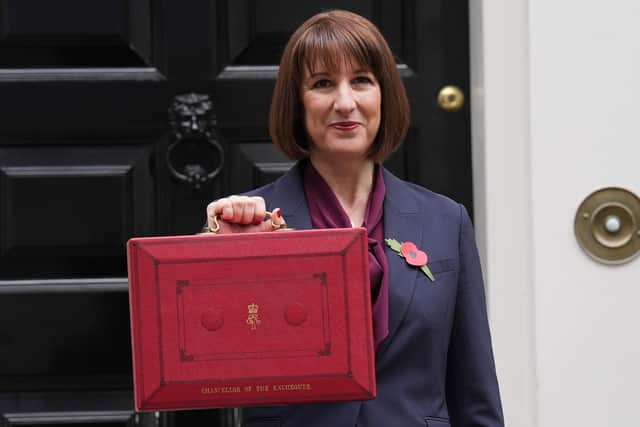
The Chancellor Rachel Reeves has delivered a “tough Budget for business”, according to a leading figure at the Confederation of British Industry (CBI).

However, Beckie Hart, CBI Regional Director, Yorkshire and the Humber, acknowledged that the Chancellor had difficult choices to make to deliver stability for the economy and public finances.
Ms Hart added: “A more balanced approach to our fiscal rules which prioritises capital investment should help to unlock private sector investment in our infrastructure and net zero transition over the long-term.”
“While the Corporation Tax Roadmap will help create much needed stability, the hike in National Insurance contributions alongside other increases to the employer cost base will increase the burden on business and hit the ability to invest and ultimately make it more expensive to hire people or give pay rises.

“Only the private sector can provide the scale of investment required to deliver the Government’s growth agenda.
Ms Hart added: "To achieve this shared mission of growing our economy sustainably, it’s vital that the Government doubles down on its partnership with business to unlock the investment that is needed to drive opportunity around the UK.”
Dr Roger Barker, Director of Policy at the Institute of Directors, added: “At first blush, there is precious little in the Government’s first Budget which offers anything other than short-term pain for the business community.
"The Government has chosen to impose a significant new tax burden on business as a means of achieving an immediate boost to its public sector spending priorities.
"The risk is that this will exert a negative impact on business confidence, with worrying implications for the economy’s future growth trajectory.
“On the positive side, the Government has made changes to its fiscal rules, in order to accommodate borrowing for the purposes of investment, and published a Corporate Tax Roadmap, both of which we called for in our Budget submission.
"The protection of public spending on R&D and the announcement of various transport infrastructure projects are also welcome.
"The role of the National Wealth Fund in directing investment towards the industries of the future will hopefully make a positive contribution to the economy’s long-term growth prospects.”
However, the financial advisory and asset management firm deVere Group said the Chancellor had “fired the starting gun” on a potential wealth, talent and investment exodus from the UK in Budget.
Nigel Green, CEO of deVere Group, said: “The Budget has delivered a stark message: tax hard, balance the books – but brace for an economic scar as talent and investment flood out.
“These new measures are a clear disincentive to live, work, and invest in the UK. We’re already seeing a surge in interest as individuals and families look to secure their financial futures elsewhere.”
The company said the Government’s tax reforms had targeted those it saw as “low hanging fruit” for revenue, imposing higher levies on capital gains, inheritance, and pension savings.
Tom Dundas, head of treasury at financial institution Reward Funding, said that freezing fuel duty until next year would be seen as a positive move for business owners and consumers. He said: “The Chancellor’s decision to freeze the duty will do a lot to maintain stability.”
He added: “The rise in Capital Gains Tax is a setback for entrepreneurs and business owners, which could prompt many to fast-track their business exit plans, potentially creating a busy period for deal advisors and corporate finance firms. Additionally, the increase in Employer National Insurance contributions could be challenging for SMEs to absorb, which could slow hiring or lead to job cuts.
"However, maintaining corporation tax rates and business rates relief will go a long way to help with market stability.”
In the documents relating to the Budget, the Government revealed it will commission an independent review of the controversial loan charge “to help bring the matter to a close for those affected whilst ensuring fairness for all taxpayers”.
Campaigners, including a large number of MPs, have denounced the tax policy as flawed and punitive. In a statement, the Loan Charge and Taxpayer Fairness All Party Parliamentary Group (APPG) described this development as “very positive news and something the APPG has been consistently calling for”.
In a statement on social media site X, it said: “The review must be genuinely independent and must look at the whole loan charge scandal.”
Dave Chaplin, chief executive of contracting authority ContractorCalculator, said the announcement of the review was most welcome, adding: “The human cost of this heavy-handed and poorly implemented policy cannot be overstated."