
Above-inflation minimum wage hikes 'could affect interest rate cuts in 2026', says Handelsbanken economist
Above-inflation increases in the minimum wage could reduce the chances of further interest rate cuts next year, a leading economist has suggested.
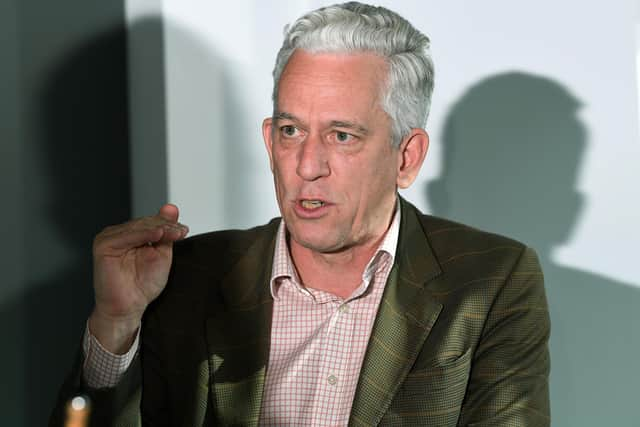
James Sproule, chief economist of relationship bank Handelsbanken, told The Yorkshire Post he currently forecasts that there will be two further interest rate cuts in 2026 in addition to a 0.25 per cent cut by the Bank of England next week to the current four per cent level.
But he said interest rate decisions next year are likely to be impacted by wage rises for millions of lower-paid workers coming into force from April feeding into the wider economy and keeping inflation higher.
Inflation is currently 3.6 per cent, well below the 11.1 per cent peak of October 2022 but still above the Bank of England’s two per cent target which is not forecast to be met until 2027.

Chancellor Rachel Reeves has announced a six per cent increase in the minimum wage for 16 and 17-year-olds from April to £8 an hour. There is an 8.5 per cent increase to £10.85 per hour for 18 to 20-year-olds and a 4.1 per cent increase for those over 21 to £12.71 per hour.
Mr Sproule, a former business adviser to Boris Johnson when he was Prime Minister and a past Chief Economist and Director of Policy at the Institute of Directors, said while he currently anticipates further interest rate cuts in spring and autumn 2026, “that depends a lot on what happens with inflation”.
“Right now inflation is looking a lot stickier than people had anticipated,” he said.
"The moving of the National Living Wage is inflationary, it was well above inflation. I think we’re going to see thay being rippled through the economy as a whole and I don’t think that’s going to be particularly positive.”
He was speaking prior to Bank of England deputy governor Clare Lombardelli saying this week that Budget measures such as freezing fuel duty and rail fares could reduce inflation by up to 0.5 per cent.
The Office for Budget Responsibility has said risks around inflation “remain elevated” thanks in part to “uncertainty about how far wage growth will moderate in the coming year, as well as the risk that higher inflation expectations will keep inflation higher for longer”.
The OBR also noted that real wage growth has outstripped productivity growth and added that it anticipates that trend to continue into 2026.
It has downgraded its productivity forecasts for the UK by 0.3 per cent and said the revised forecast could have lowered revenues by around £16bn by 2029/30. But it added that a boost to receipts from higher inflation and changes to the composition of nominal GDP growth had “more than offset this”.
Mr Sproule said while he understands why productivity forecasts have been downgraded, the figure is “really hard to measure” and could well improve in the medium-term.
"Productivity sort of stalled in 2007 and went nowhere from there. I think one of the big factors that people have not explained enough is the super low interest rates we had. If you keep the cost of money very very cheap, people use too much money in any investment and the result is they get very low returning projects or low productivity.
"In the medium term, productivity may start to increase because interest rates have increased so people have to be much more careful and driven about what investments they look at. Productivity is probably going to increase but that’s not something the government can put in its forecast right now."
He said the Chancellor’s Budget strategy appears to indicate she is also anticipating improved growth in coming years.
"If you look at the tax and spend portion of the Budget, she’s got the spending all frontloaded and the tax is all backloaded. So according to this plan, she’s planning to increase taxes in the run-up to the general election. I’m not sure that is particularly viable.
"All I can really think is she is planning on growth coming to the rescue. If we get good growth of 2.1 or 2.2 per cent, then everything becomes easier and she can go into the next election with potentially no more tax rises and maybe even some tax reductions and some spending increases.
"She’d look great and that would help her immensely. But she’s not set up for it just yet because the OBR set out a pretty dour 1.5 per cent growth."
After £66bn worth of tax rises in the last two Budgets, Mr Sproule said businesses fear the Chancellor “is going to come back for more”. He said she should “stand up” to the left-wing of the Labour party and introduce pro-business policies to help SMEs “because right now they are nervous".
Student housing market in Leeds ‘doing pretty well’
The Yorkshire student housing market is proving resilient despite economic uncertainty for investors, a Handelsbanken branch manager in Leeds has said.
Andy Lowther said the bank’s clients in North Leeds who own properties which are rented out to students are doing “pretty well”.
He said: "We do lots in student property. A great deal of money in recent years has gone into these kind of moden blocks in the centre of cities which tends to be first-year accommodation. Our clients run second, third and subsequent year housing and are doing pretty well.
"Rents have gone up and are showing no signs of reducing really.
"There’s a degree of confidence there in the student market but there is that level of general uncertainty about the Government. We’re constantly supporting our clients to reinvest in the product that they know delivers but not so much transformative stuff at the moment.”