
‘Care home fees should be capped to ensure fairness’
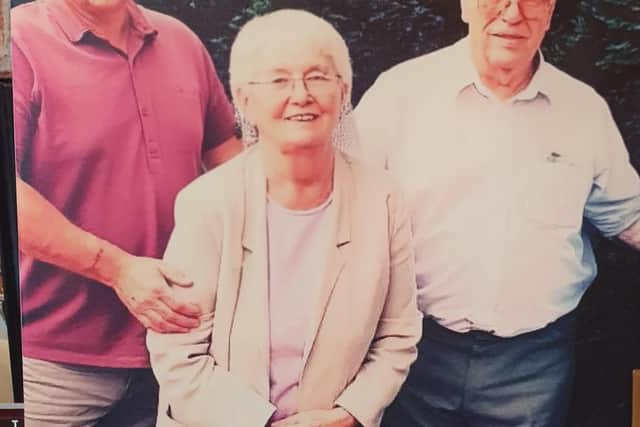
Patrica Devitt, a retired self-employed hairdresser, was diagnosed with dementia in 2014 and was looked after at home by husband, Joe until he was diagnosed with the same degenerative disease in 2018.

In October 2020, and in the middle of Covid her son, Mark and his two brothers took the tough decision to move both parents into care as they could no longer look after them. Sadly, Joe died on New Year’s Eve in December 2020 after contracting COVID and developing a blood clot. Patricia died in November 2024 having spent well over half the money she and her husband of 62 years had accumulated and saved throughout a lifetime.
Patricia was given an initial screening assessment for CHC funding, known as the Checklist, which showed she required a full, multi-disciplinary assessment of eligibility, but this was incorrectly interpreted and was marked as failed, according to her family. The family said Patricia never received the full eligibility assessment she was entitled to, and subsequent “light touch” reviews did not pick up on substantial deterioration in her needs as time went on.
Mark Devitt, who is a client of the Leeds-based law firm Winstons, is an advocate for people taking into account the potential for illness and care costs when planning for their retirement and that everyone is “properly educated” as to the different kinds of funding available.

Mark Devitt, who lives in Hornchurch, east London, said: “During COVID, it was difficult to get independent advice. I didn’t really know what my options were, so I followed the advice of the professionals involved and signed the house over to help pay for my mum and dad’s care.
“My dad didn’t live for too long after he went into care, but Mum stayed there for four years. It cost around £60,000 a year to pay for Mum’s care. We’ve now found out that the assessment they use, which involves a point scale, should have progressed to the next stage for Mum in 2021. That stage would have assessed her eligibility for free NHS Continuing Healthcare Funding, but that never happened.
“It is such an unfair system. There should at least be a cap of some kind. We knew that if the money ran out for Mum’s care, she would be moved to a cheaper care home paid for by social services and it could be a long way away from me.
“I paid £223,000 when I sold the house to pay for Mum’s care. Overall, close to £250,000 has been spent looking after mum. What I really want the Government to do is cap care home fees to ensure a fairer system.”
A spokesman for NHS North East London said it did not wish to comment on this individual case and referred The Yorkshire Post to NHS England. NHS England referred the paper to the Department of Health and Social Care, where a spokesperson there stressed that local Integrated Care Boards are responsible for decisions about providing funding for NHS Continuing Healthcare.
The spokesman said that any measures to manage cost pressures should not impact someone’s eligibility to access NHS Continuing Healthcare.
“NHS England provides detailed assurance and oversight of Integrated Care Boards, including comparing NHS Continuing Healthcare eligibility and referral rates, as well as investigating outliers for drivers of unwarranted variation.”