
Cost of saving final steel blast furnaces revealed
The Government spent £377 million to prevent the closure of the country’s last two blast furnaces in the steel industry, according to a new report.
The Department for Business and Trade (DBT) quickly intervened to save British Steel’s Scunthorpe blast furnaces from closure, preventing job losses and serious impact on industry, said the National Audit Office (NAO).
The £377 million was spent between April 2025 and January 2026, with the money classified as a loan.
Spending could exceed £1.5 billion in 2028, the NAO estimated.
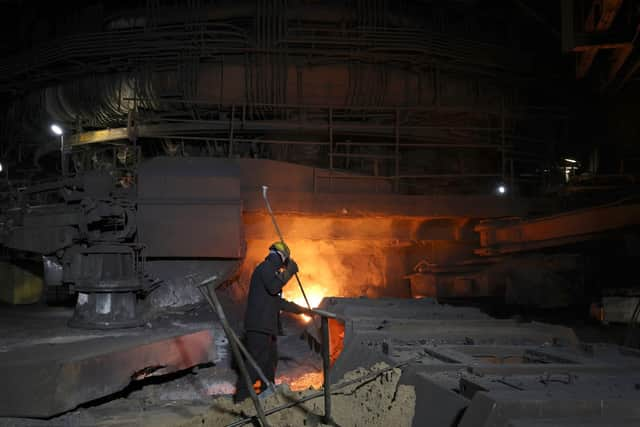

Ongoing operations are costing around £1.3 million a day, with no set budget, repayment schedule, or end date, said the NAO.
Jingye, the owner of British Steel, and DBT had been in talks around transitioning to electric arc furnaces between 2022 and 2025, but had not reached an agreement.
In March 2025, Jingye announced it was losing £700,000 a day due to challenging market conditions, tariffs, and high environmental costs, and was considering the closure of the blast furnaces.
This would have led to a large number of job losses at Scunthorpe and affected customers in the supply chain, such as Network Rail, said the report.
Emergency legislation was passed to allow DBT to issue formal instructions to British Steel to continue operating its blast furnaces, and the NAO said the Government department acted quickly to mobilise a team on site and secure raw materials.
As well as the £377 million to keep British Steel operating, £15 million was spent on advisers and £359 million to the company for operating activities such as paying for raw materials, payroll, and other costs.
Spending is expected to reach £615 million by June and if it continues at current rates, it could exceed £1.5 billion in 2028, said the NAO.
DBT has no repayment schedule in place, and it is not apparent that British Steel will be able to repay the loan, said the report.
Gareth Davies, head of the NAO, said: “DBT was able to act quickly to save British Steel’s Scunthorpe furnaces from closure, avoiding heavy job losses and serious impacts on major UK infrastructure and construction projects.
“However, the trade-off is the significant cost of maintaining operations, and uncertainty over how long this will continue.
“DBT should learn from this experience to be better prepared for future interventions.”
Alasdair McDiarmid, assistant general secretary of the Community union said: “The Labour Government took decisive action to secure the blast furnaces at Scunthorpe, saving thousands of jobs in the process.
“Following years of neglect, Labour are investing to protect our steelmaking capabilities and to start rebuilding our strategically important industry.
“Should the Government have sat on its hands and allowed British Steel to collapse, the financial and social impacts would have been catastrophic.
“The Government made the right decision to invest now because local economies would have been decimated, our nation would have been less secure and we would have seen a massive and long-term increase to the welfare bill.”