
Developers report 'sea change' over devolution, Turner & Townsend roundtable told
Regional developers have reported a “sea change” in Government policy over devolution since Andy Burnham became Prime Minister, but are still facing delays in getting some infrastructure projects off the ground, a major business event was told.

The challenges and opportunities confronting the public and private sectors were analysed at a roundtable in Leeds, which was hosted by The Yorkshire Post and professional services firm Turner & Townsend.
Adam Varley, development director at Scarborough Group, told the event: “We’ve done some fantastic things in Sheffield, having completed the Digital Campus, and we continue to work alongside the council on the Olympic Legacy Park as their development partner on what will be a truly game-changing life sciences innovation opportunity for the city and the region. We also have a significant footprint in Leeds with Thorpe Park, which is one of the group’s best- known regional projects. It’s a 30-year development that is probably halfway through its journey and is a significant contributor to the Leeds economy. It complements the office stock within the city centre whilst providing a different offering and choice for businesses looking for workspace in the city.
“We're in the process of submitting an initial planning application at Flaxby Park, the site of the former golf course near Harrogate, for a significant employment-led phase of development. We’re also redeveloping the Brunswick Shopping Centre in Scarborough, part of the Mayor’s first Development Zone
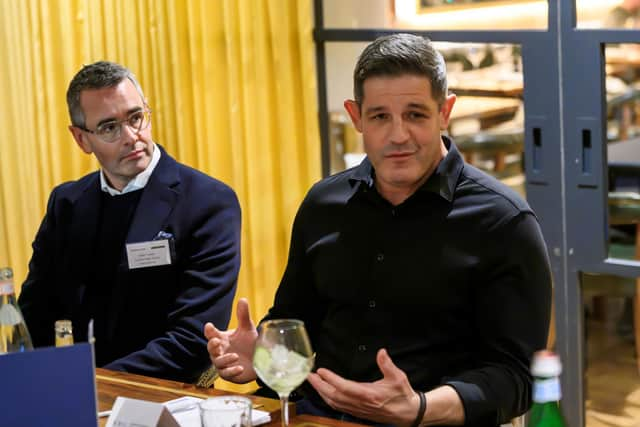

“The impetus we’re now starting to feel on the ground (since Andy Burnham became PM) is encouraging. There are the hallmarks of a sea change in Government policy. The sector continues to deal with many headwinds, but significant responsibility is increasing with combined authorities. While appropriate checks and balances are necessary, progress still doesn’t happen as quickly as the project requires. Markets shift, development costs continue to fluctuate and trying to navigate that in the decision-making process to align with the project’s success is quite difficult.
“The retention of business rates and the responsibility that then places on the combined authority to see through development has a massive attraction from our perspective. You share the same common objectives.”
Dan Hyde, the regional development director at MEPC, said the success of Manchester city centre is feeding demand for commercial and residential accommodation in well-connected towns like Stockport, Bolton and Wigan.
"Unlike Greater Manchester, the other combined authorities may have more of a challenge on their hands as their catchments are not centred around one place for investment which acts as a catalyst for investment and demand over time,’’ he said. “Connectivity has been key to Manchester’s success; connecting all the West Yorkshire towns and cities, and the north generally, will be central to unlocking the economic potential of the region . However, all the combined authorities will be presented with different challenges which need to be overcome in a fair and equitable way.
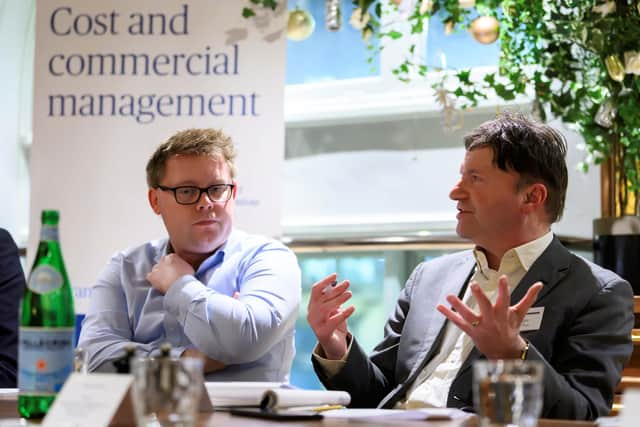
"But providing more power to the combined authorities has got to be welcomed, it's more power for people on the ground. It's local people understanding where funding needs to be delivered in the most impactful way. The practicalities of getting a project off the ground are still really challenging even though the public and private markets are working closer than ever before."