
'Devolved spending allows us to focus on what's important': KPMG's Phil Murden sees great opportunities for Yorkshire
These are heady days for believers in devolution, with Andy Burnham’s administration poised to provide regional mayors with new powers which could provide rocket-fuel for the North of England’s economy.

Mayors will receive 20 per cent of business rates next year and a share of income tax in 2028 under a “roadmap to fiscal devolution” set out by John Healey in the Budget. The Chancellor said 100 per cent of business rates will be retained locally by the end of the decade while mayors and strategic authorities will have powers to introduce an overnight visitor levy from 2028. The Treasury has also confirmed that 10 new devolution agreements are in their final stages, with the aim of achieving full devolution coverage by 2028.
The professional services firm KPMG, which employs around 1,000 staff in Yorkshire, is keen to play its role in trumpeting a host of positive economic developments, including the growth of a “Northern Square Mile” in Leeds. The Bank of England and the Financial Conduct Authority have both recently pledged to significantly increase the scale of their operations in Leeds, proving that you don’t need to move to the City to carve out careers with national institutions.
Phil Murden, Leeds Office Senior Partner at KPMG UK, who was once part of the senior management team at UKFI, which managed HM Treasury's investments in RBS, Lloyds, Bradford & Bingley and Northern Rock, believes Yorkshire needs to shout louder.
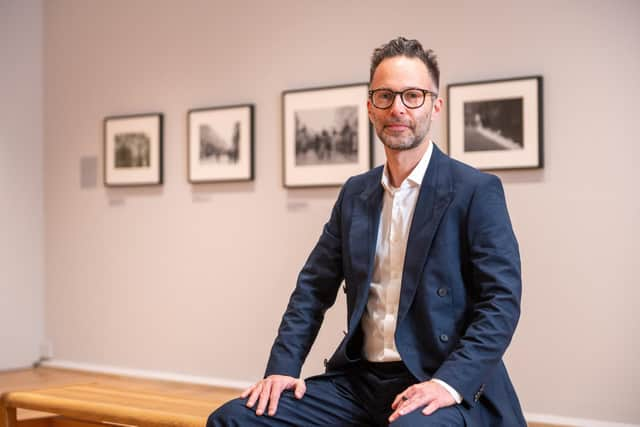

“Coining the phrase Northern Square mile brings more attention to the region and provides confidence,’’ he said.
"If you look at Manchester, we can see successes brought about by devolved powers. There's real confidence in Manchester. Yorkshire people are fantastic but perhaps we're a little bit more reserved,’’ Mr Murden added.
The University of Sheffield management school graduate also spent time sourcing and making investments for a private equity firm earlier in his career, which gives him a global perspective.
"Overseas investors look across the North of England as a whole,’’ he said. “Some of the Government’s funding in transport benefits the whole of the North such as the £11bn funding into the Trans-Pennine Express route upgrade.
"There's a further £45bn into the Northern rail system, announced this year, that provides benefits from west to east.
"Having a mayor with significant powers is really important. The whole premise of devolution is that if you have a mayor and a team that know the region better than Whitehall, you will get a better outcome for the people.”
But he doesn’t want Yorkshire to simply become a small London with devolved powers.
"I want us to have our own identity, and having that devolved spending allows us to focus on what's most important,’’ he added.
"The UK is one of the most centralised fiscal economies in the developed world. Something like 95 per cent of tax receipts go straight into HM Treasury. If you compare that with other countries, the equivalent figure for the US is about 35 per cent, Canada is about 47 per cent, and Germany is 33 per cent, so they are all lower.
"The concept of having people who are closer to what really matters on the ground being able to make spending decisions is really powerful.
"It was (former Tory Chancellor) George Osborne who first kicked off the concept of devolution and he believed this should start in the major cities.
"If you look at what's happening now, devolution has had a positive impact in the Midlands and in Manchester. It's now the turn of other regions to benefit. The opportunities for Yorkshire are huge. We need the right level of investment in the organisations running these mini economies. It's also important to have partnerships with the private sector. If you look at some of the specifics that WYCA (West Yorkshire Mayoral Combined Authority) is driving around mass transit and bus franchising and spending on skills; there are lots of private sector organisations that have an opportunity to play a role in that.”
"Overall if you look at the UK, 84 per cent of Yorkshire businesses that we surveyed during our mid-year pulse feel optimistic about growth. That's up by 3 per cent since we surveyed them at the beginning of the year but it's also ahead of the national average which is about 80 per cent. The UK is a stable, resilient economy compared with other European countries."
Mr Murden, who has been with KPMG for 12 years, is overseeing a period of growth.
"Overall many professional services firms in the UK are growing at a ballpark one to 2 per cent a year, they roughly follow GDP,’’ he added.
"But in Yorkshire and the North East, at KPMG, we’ve experienced stronger growth in our business and in our teams – for example we’re growing in technology, data and AI. Cyber continues to be a huge area for us. One of the many things that comes out of our latest chief executive outlook is that cyber security is back at the top of UK CEOs' agendas.
"Recent cyber attacks have made many CEOs worry that this type of an event could happen to them. Resilience is a massive area, including cyber and supply chain. You're not just accountable for protecting your business but also for your suppliers and stakeholders. The recent Government announcements on personal resilience, stocking up and ensuring you're prepared if there's a UK infrastructure challenge focused on people doing the right thing for their families and homes but it also made people think about wider organisational responsibilities. If you speak to any CEO, they want to be able to plan a number of years ahead. The corridor of potential outcomes surrounding some of the geopolitical threats is so wide now that you can't rely on just one planning scenario.