
Doncaster Sheffield Airport: Leeds Bradford Airport 'copy-paste' criticism over airspace plan revealed as response issued
Officials behind plans to reopen Doncaster Sheffield Airport have responded to stinging criticism by Leeds Bradford Airport, saying the region will benefit from having both "fantastic airports".
LBA described initial proposals for reinstatement of airspace at DSA, which Doncaster Council is seeking to reopen after it closed in November 2022, as "fundamentally deficient", described its passenger number forecasts as “inaccurate” and called for them to be "downsized" to more “realistic” levels. It followed an initial forecast that 2.5m passengers a year could be using DSA within a decade of it reopening.
LBA described DSA’s proposal to reinstate the pre-closure airspace arrangements as “neither proportionate to the forecast demand nor aligned with modern airspace design principles” and highlighted the airport’s previous record year had been 1.4m passengers.
It said: “The proposal is a 'copy-paste' of a historical design which was designed to accommodate a hugely optimistic figure of 18,000 air transport movements (ATMs) per year. We consider that this proposal is not one proportionately scaled to the actual, near-term need. This could unnecessarily restrict other airspace users for marginal safety benefit.”
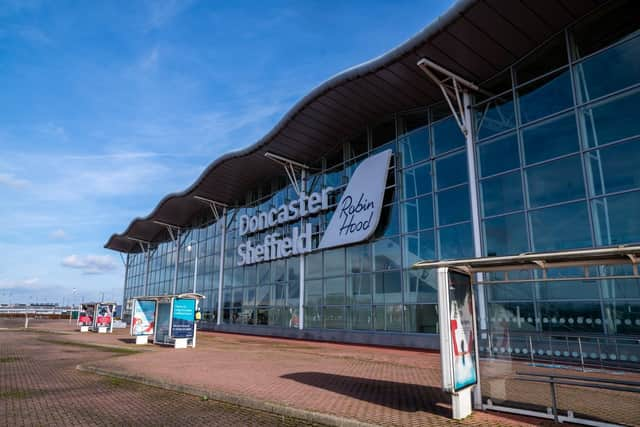

Other feedback given to the council’s original plan to reinstate the airspace included NATS (formerly National Air Traffic Services) - which is currently involved in an ongoing process of making major amendments to how UK airspace operates - saying it was “unfortunately” unable to support reinstating the previous arrangements.
It said doing so “would be at odds with the work already undertaken and create conflict” with the future airspace strategy for the North of England which is set to be in place from 2030.
The initial forecast for 2.5m passengers a year has subsequently been reduced to estimates of just 1.1m a year and under 12,400 ATMs by 2037 under revised airspace proposals put forward to the Civil Aviation Authority (CAA). DSA officials have said the changes are to comply with CAA policy based on controlled airspace being of “the smallest volume necessary to support the operation”. It has planning consent for almost 57,000 ATMs – meaning DSA could potentially handle higher demand in future.
The CAA is due to make a final decision on DSA’s airspace next year following an ongoing multi-stage process.
DSA told organisations which had submitted feedback about the initial plans, including LBA and NATS, that it has created alternative options “as a result of stakeholder feedback such as yours”.
It said in specific response to LBA that its new submissions include “in-depth justification for controlled airspace which is not predicated on reaching any specific level of forecast ATMs, but is to enable the safe and efficient operation of scheduled commercial air transport within a busy and complex section of UK airspace, close to other large commercial air transport airports and significant general aviation activity”.
It also claimed that LBA appeared to be “confusing” initial engagement materials with more formal submissions which have now been made.
When asked by The Yorkshire Post about LBA’s remarks, a DSA project spokesperson said: “The Airspace Change Process is an important step towards gaining recertification of airspace for the airport, which will allow the site to deliver upon its potential.
"The principle of consulting with a wide cross-section of stakeholders in a full and meaningful way is fundamental to this process, and we were pleased to see a range of responses from different organisations.
“When this airport fully reopens, the region will benefit from having the choice of two fantastic airports, which will support jobs, inward investment and economic growth in the surrounding areas.”
A spokesperson for LBA said it was aware of the amended airspace options which have now been proposed and will respond as part of the ongoing CAA process.