
Douglas Adams's Babel Fish is moving from fiction to reality - with profound consequences: David Richards
I never enjoyed French. Our middle school teacher was far more passionate about her horses than about verbs or grammar. I disliked the subject so much that I once aimed for a zero in a French exam.
Somehow I still ended up with 17 per cent. They must have awarded marks for getting your name right.
All of which makes it striking that I am now sitting in a small coffee bar in a town just outside Málaga, listening to Spanish conversations that no longer feel completely out of reach. The rapid chatter drifts around the room. Today is different.
When we lived in California and undertook a major building project, most of the contractors were Mexican, and the man running the team had one key qualification. He spoke English.
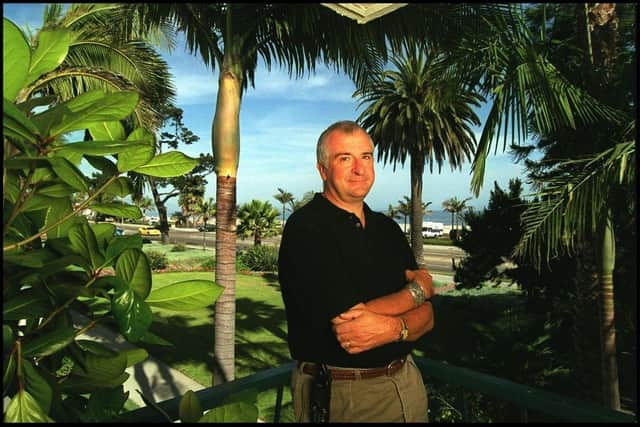

Each morning they would walk past our kitchen window chatting in rapid Spanish. On more than one occasion a friend translated what they were saying, which made their later reaction even better. I eventually told the team that every word had been understood. The look on their faces was priceless.
There was one part of the language world that did captivate me. I am not a big science fiction fan, but I loved The Hitchhiker’s Guide to the Galaxy and its idea of the Babel fish, a tiny yellow creature you put in your ear. It feeds on brainwave frequencies and excretes a telepathic translation of whatever is being said around you, so Arthur Dent, the bewildered protagonist, can suddenly understand aliens.
Douglas Adams added a philosophical flourish. Because the Babel fish is so improbably useful, some characters argue that its existence is proof that God does not exist, and God promptly disappears in a puff of logic. A translation device so perfect that it undoes theology.
For years, I assumed nothing like it would exist outside fiction.
Fast forward to Spain. Whenever we come here, I make an effort to speak Spanish. My intentions are good, my results inconsistent. When a waiter fires a rapid question at me, my dependable fallback is a confident “Si,” often delivered without the faintest idea what I have agreed to. On one memorable occasion, when left to my own devices, I managed to order enough food to feed about 20 people. It was only me at the table.
This week I tried something different. Apple has begun rolling out real-time Live Translation for AirPods Pro, powered by Apple Intelligence and running largely on the device. It is still in beta, but I decided to test it properly here in Málaga. You press the stem, speak, listen to the reply, and the translated English arrives in your ear. To my surprise, I found myself having short but meaningful conversations with locals and understanding far more than I usually would.
These tools are early versions and do not claim to be flawless, but even now they are useful.
Only months ago this feature did not exist. In a short span of time, systems like this will support almost every kind of everyday conversation.
This is about more than holiday convenience. Language barriers create social friction. They shrink confidence and make you feel like an outsider even when people are friendly. I saw this in California when the building firm relied entirely on the owner simply because he spoke English. When technology begins to soften barriers like that, even slightly, the effect is liberating. You take part. You risk mistakes. You feel included.
Sitting here, listening to the translation whisper into my ear as people chat about the day’s plans, I find myself returning to that French exam. My reward for scoring 17 per cent was private French lessons on Saturday mornings. Back then, the Babel fish was nothing more than a playful idea from a book.
Today, in a small café on the Costa del Sol, it feels far less like a joke. It turns out the Babel fish did not need to evolve. It just needed engineers, silicon and a pair of AirPods.
David Richards is managing partner of Yorkshire AI Labs