
Electric vehicles will save lives by improving air quality, Climate Change Summit is told
Encouraging greater use of electric vehicles will save lives by improving air quality, delegates to the climate change summit were told.

The debate, which had the title “Accelerating the change to more electric journeys” was chaired by Chris Burn, The Yorkshire Post’s Business Editor, and featured leading figures from the worlds of academia, business and politics.
The speakers included Andy Gwilliam, product manager EV charging, at First Bus, which sponsored the event. At First Bus his projects have included the Leicester, Bramley and York electrification projects, which added nearly 200 zero-emission buses and associated infrastructure to its services. His role is focused on opportunities to support the wider bus and road transport sectors on their own decarbonisation journey, by sharing UK-wide charging infrastructure.
During the debate, Mr Gwilliam said First Bus was keen to share its progress with other sectors.
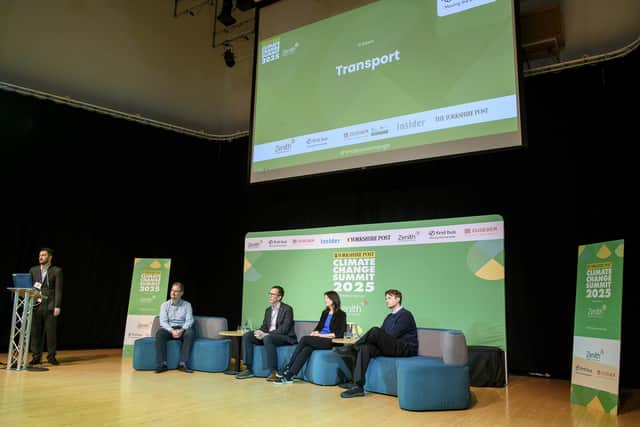

“We’ve actually made inroads with truck charging..With this level of public investment it’s only right that we offer high scale, ultra rapid charging with high availability and high reliability. We feel bus depots should be the commercial charging hubs for the towns and the cities they serve. That goes a long way to solving some of the infrastructure challenges.”
Professor Greg Marsden, Professor of Transport Governance, Institute for Transport Studies, at the University of Leeds, said the First Bus initiatives were great in terms of making EV charging infrastructure available. Professor Marsden has researched issues surrounding the design and implementation of new policies for more than 20 years. He is an expert in climate and energy policy in the transport sector and the governance of smart mobility.
He told the conference: “The challenge is a national one in terms of electrification. We are buying fewer cars, every year, as a nation than we used to.
“We’re not turning over the electric vehicles as fast as we first imagined, that creates a gap in the carbon budget that we need to address.
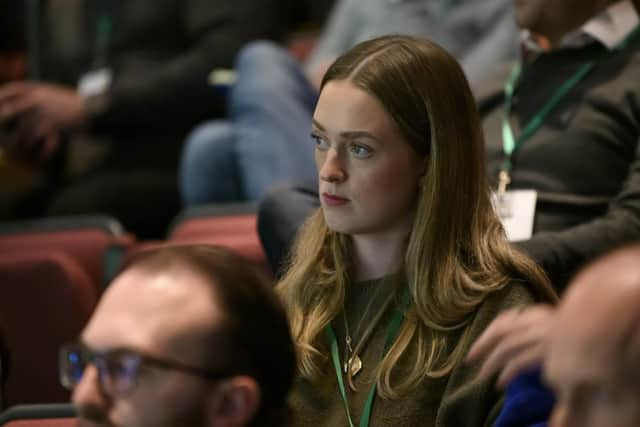
“There are a lot of great ideas in terms of creating better transport systems..this is happening quite slowly though.
“There is a real need to work with communities and say, ‘Look, just turning our petrol vehicles into electric vehicles isn’t enough’. What can we build that will actually be a better alternative?”
Coun Jenny Kent, City of York Council Executive Member for the Environment and Climate Emergency, said that York had taken bold steps in terms of promoting electric vehicles. The York Public EV Charging Strategy was launched in March 2020, setting out the next phase of the delivery of York’s EV charging network.
Delivery of the strategy is well underway, supporting the provision of an EV charging network across York.
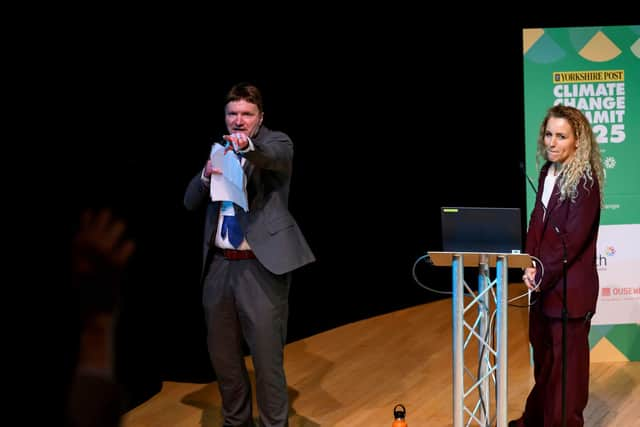
Ms Kent added: “We’re also incentivising people to take up electric vehicles. We’ve got a steady trajectory in improving air quality which I’m really proud of. That shows real life benefits to people. Meeting those air quality targets on the back of electrifying transport is huge. It is literally saving lives.”
David Waters, Principal Policy Officer for decarbonisation and technology at Transport for the North, who previously worked at the Department for Transport on low carbon fuel policy, added: “Some of the biggest gaps in the North are around EV charging infrastructure..What we found was that the North has a higher proportion versus the national average of residential properties that don’t have an off street space where they could have an EV charger.
“A big challenge is making sure we address that and, where there is funding available, we are using it.”