
E.ON's £500m expansion of Sheffield's district heating network 'will bring wider benefits to city'
A planned £500m expansion of Sheffield’s district heating network can bring wider benefits to the city as well as assisting with ambitious national targets to get to net zero emissions from electricity generation by 2030.
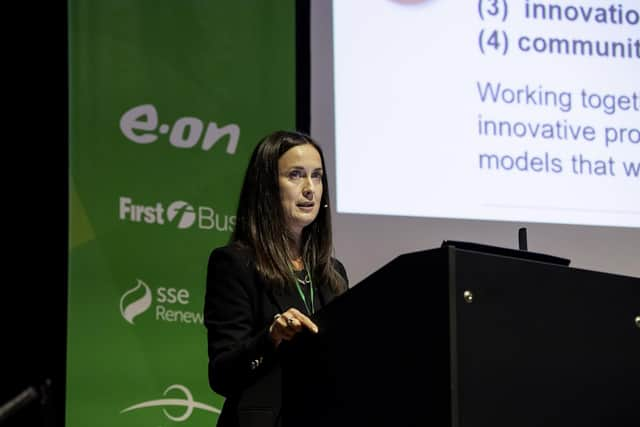
Natalie Robinson, Head of New City Partnerships for E.ON, told the Climate Change Summit that plans to more than double the renewable energy coverage to the city provided by the company’s Blackburn Meadows plant also offer exciting opportunities to make other improvements in Sheffield.
She said construction work that will be required for the expanded rollout of the network opens the door to flood mitigation, tree-planting and active travel schemes.
Ms Robinson said: "There will be roads that we need to dig up to put pipework in the ground but while we are doing that we are looking at how to be smarter and more integrated and the needs of Sheffield.

"Flooding is a problem in Sheffield, particularly the Lower Don Valley where we are based.
"We are looking at the drainage issues and can we do something to resolve those, can we plant more trees and also create cycleways to make it a healthier city too.”
The Blackburn Meadows renewable energy plant uses biomass to provide a source of heating to connected buildings in the Lower Don Valley through an 8km-long network of pipes.
It is planned that a further 10km of pipeline would be created around the Don Valley area to connect new customers and potentially tap new sources of low carbon heating that might otherwise go to waste.
It is intended that construction would begin towards the end of 2025 and continue until the end of 2028.
Heat networks are a more efficient and more cost-effective way of providing heat to built-up areas by producing and distributing heat from a central source instead of individual boilers in each property.
Ms Robinson said district heating networks such as the one in Sheffield will be an important part of the national strategy to get to net zero emissions from electricity generation by 2030 and the wider national net zero target by 2050.
She said: “District heating is a critical part of how we achieve net zero. At the moment, something like three per cent of our heating demands comes from district heat networks but that is set to rise to 20 per cent in the next 25 years. It is a key part of making net zero a reality.
"Cities like Sheffield are ideally placed in terms of the high density of urban areas and industrial areas.
"We are looking at how can we recycle the waste heat that already exists in Sheffield.
"In Sheffield itself there’s actually more heat already [than needed] to heat this proposed zone. We are looking how we can tap into that waste heat as a starting point. This is a massive project, if fully rolled out it is a £500m investment creating hundreds and hundreds of jobs.”