
Great Northern Conference: Quickline boss calls for VAT cut for 'lifeline utility' of broadband
The Government should consider reducing VAT on broadband services to reflect its increasingly important role as an essential utility for households, the boss of Quickline Communications has argued.
Sean Royce, CEO of the Willerby-based internet service provider, told a session on Digital Connectivity at the Great Northern Conference that broadband should be viewed in the same way as other essential services such as water, gas and electricity.
While gas and electricity have a five per cent VAT rate and water is exempt from it, broadband is charged at the standard 20 per cent rate.
Mr Royce said he believes that should be reconsidered.
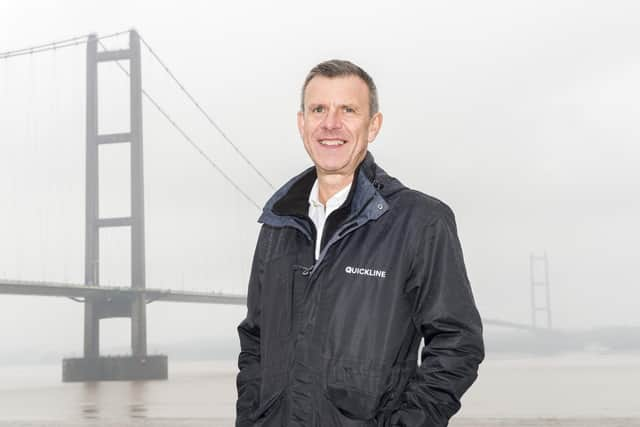

"VAT on broadband is 20 per cent but what is the difference? Why are we paying more for a utility service? Broadband is the best value utility service we all use compared to water, gas and electricity.”
Quickline is in the process of rolling out full fibre broadband to 360,000 rural homes and businesses after being awarded all Yorkshire contracts plus the majority of Lincolnshire’s for the Government’s Project Gigabit scheme.
The £5bn programme is designed to help “hard-to-reach communities" to access fast and reliable broadband services. It targets homes and businesses that are not included in broadband suppliers’ commercial plans.
The government’s target is for next-generation, gigabit broadband to be available to 85 per cent of the UK by 2025 and nationwide by 2030 – a figure Mr Royce admitted is an “ambitious goal”.
He said that Project Gigabit is vital because while rolling out services in rural areas is considerable more expensive than in cities and towns, the benefit from the service is more pronounced.
"Broadband is not just a luxury, it is a lifeline,” he said.
"There are no banks, no GPs, no shops in some of these areas. Our goal is very simple – to provide the same quality of service as those in urban areas.”
He said rolling out fast broadband to rural areas is particularly important in the North where there are many village communities.
"If you want the North to prosper, you must ensure the connectivity is as good as other areas in the UK.”
Mr Royce cited a recent study from the Centre for Economics and Business Research and Virgin Media O2 which suggested improved rural connectivity could deliver a £65bn boost to the economy.
"It means £5bn for Project Gigabit is a very sensible use of taxpayers’ money,” he said.
Mr Royce said many villages are enthusiastic about being connected to better internet services, with many places having “broadband champions” desperate to help with getting connections improved.
He was joined on the panel by Ali Young, associate director for local public services at techUK. She highlighted that the trade association has just published its Local Digital Index for 2024 which has made eight key recommendations to boost the economy.
Its suggestions include creating an enhanced digital support programme for rural communities, as well as introducing localised digital inclusion strategies.
She said techUK was “putting our money where our mouth is” to identify the challenges restricting the growth of the digital economy across the country and coming up with potential solutions to them.
"There is a lot more focus on London and the South-East and we know that needs to change,” she said.
"The North has some fantastic USPs and things to offer and some real opportunities. It is about how we can support that.”
Also on the panel was Tina Swann, who is community engagement manager at the Hull-based organisation Centres for Digital Innovation. The body describes itself as a group of incubators that help tech companies grow and traditional businesses innovate.
She said it is vital that everyone not only has reliable internet access but also the ability to make best use of it – highlighting the increasing number of jobs that are advertised online on sites like LinkedIn rather than through more traditional mediums like newspapers.
"If you are digitally excluded, where do you find jobs? It is limiting opportunities and possibilities.
"It is a journey we are on and no one should be left behind.”