
Grooming scandal: National inquiry would uncover institutional failings, says leading lawyer
A leading lawyer believes a full national inquiry is needed to “stitch together” the institutional failings which cause child sexual exploitation (CSE) on a vast scale.

Henry Bermingham, who was the solicitor who set up the Telford inquiry into child sexual abuse, argues that while local inquiries into CSE offer some value, they lack the power and scope to hold all relevant agencies accountable.
Mr Bermingham, who is a partner at the law firm Weightmans, said that CSE is a national, multi-agency issue, spanning policing, education, healthcare, and the justice system. Without a full statutory inquiry, we’re unlikely to uncover the cross-regional patterns and institutional failings that have enabled this crisis, according to Mr Bermingham. He is calling for a “principled shift” - from “fragmented localism and political point- scoring” - to the structural accountability survivors need.
He said: “This is child abuse on a very large scale. There should be nothing political about that. The gangs that do it sometimes do it for slightly different motives and in slightly different ways. We’ve had a situation where, since Alexis Jay’s report on the Rotherham scandal in 2014, there have been lots of local authorities carrying out management reviews, Safeguarding Partnerships and carrying out serious case reviews; what we’ve had is a lot of local authorities looking hard at themselves and producing reports.
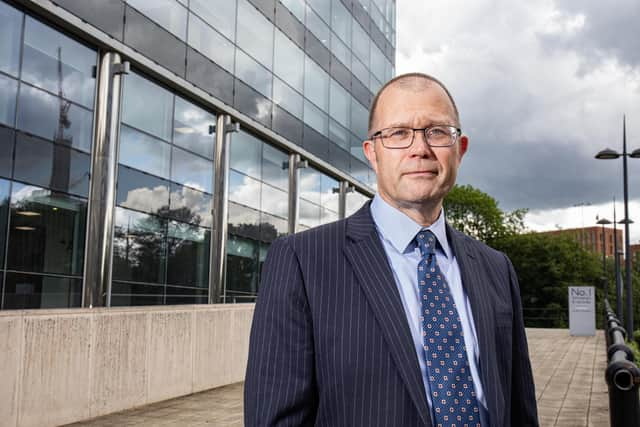

“Those reports are dotted around all over the country. There are some commonalities of theme between them and there are some differences between them. It needs stitching together; it needs bringing together so we can take the learning out of what is an everywhere problem. A national inquiry on a statutory basis has the capability of stitching all of that learning together.”
Where CSE has been prevalent there are identifiable failings by lots of different agencies, said Mr Bermingham
“Those agencies are usually the local authority, schools, child mental health services, health providers and sexual health services. Sometimes questions need to be asked of private companies that have not run proper safeguarding checks on prospective employees, and you see that particularly around the night time economy. You see problems in policing and problems around how prosecutions are brought or problems about the decision to prosecute. All of those agencies are usually involved in some way and at some level. A local inquiry, a non-statutory inquiry, is about a local authority looking at what’s going on within its own area. This form of inquiry does not have the power to force anybody to give evidence. A national inquiry - and COVID-19 being a very good example of that - has the capacity to compel any organisation it thinks has evidence to provide that evidence in the form of documents, it has the capacity to call witnesses, it has the capacity to make people give evidence to it. That means that a national inquiry can look at the whole nation; it can look at every single agency that’s involved and every single agency that receives a call from a national inquiry has to co-operate with it. That’s how you knit it together.”
He added: “If you look at the process of learning around CSE, we’ve done the local work, the dots are all over the map. We now need to draw this together in an integrated approach. That’ s the way forward.”
He said the “rapid” audit, led by Baroness Louise Casey looking at the scale of grooming gangs across England and Wales, would be a very useful piece of information for a national inquiry. Any inquiry chair must be somebody who had earned the trust of abuse survivors, he added.
“Their experience of CSE all the way through has been about them being let down. One survivor described it as, ‘Being let down by people in suits’. However, some lawyers are very good at establishing a rapport with survivors. If you look at allegations of failure by local authorities, there are alleged failures for different reasons, some of these are political, some are financial, some are due to resources. That’s why drawing it together is so important.
“Why police force A investigates more thoroughly than police force B is a matter of policy and resource allocation. Unless you compare them, and understand the nature of those forces, you get into a position where you can’t actually see what good practice looks like.”
A Government spokesman referred The Yorkshire Post to a statement made by Home Office minister Jess Phillips last month. In this speech, Ms Phillips said that Baroness Casey’s three month National Audit on Group-based Child Sexual Exploitation and Abuse is ongoing. She added: “It is building a comprehensive national picture of what is known about child sexual exploitation, identifying local and national trends, assessing the quality of the data, looking at the ethnicity issues faced for example by cases involving Pakistani heritage gangs, and reviewing police and wider agency understanding.
"We are developing a new best practice framework to support local authorities which want to undertake victim-centred local inquiries, or related work, drawing on the lessons from local independent inquiries like Telford, Rotherham and Greater Manchester. Alongside this we will set out the process through which local authorities can access the £5m national fund to support locally-led work on grooming gangs. Following feedback from local authorities, the fund will adopt a flexible approach to support both full independent local inquiries and more bespoke work, including local victims’ panels or locally led audits into the handling of historic cases.”
The Government will establish a Child Protection Authority, to improve national oversight of child protection practice, the Minister added. The Government is also ordering the Criminal Justice Joint Inspectorates to carry out a targeted inspection on the experiences of victims of child sexual abuse in the criminal justice system.