
Historian, travel agent and concierge - How AI transformed my trip to Boston for the World Cup: David Richards
Two weeks ago I found myself in Boston with a free afternoon, which in 30 years of visiting the city on business had never once happened.
I was there for the World Cup, ahead of England’s goalless draw with Ghana at Foxborough, and this is the 250th anniversary year of American independence. So I finally did the thing I had always skipped: I walked the Freedom Trail.
A quick aside. During my 23 years in California, someone would ask me almost every July whether we celebrate the Fourth of July in Britain. My answer never varied: of course we do, we call it Loss of Colony Day.
Rather than buy a guidebook or surrender to Google, I built my own tour guide. I gave an AI a role: an elite Harvard historian specialising in the American Revolution, acting as my private guide in real time. Keep each stop under 250 words. Never jump ahead. Skip the textbook summaries in favour of gritty realities, human flaws and political scheming.
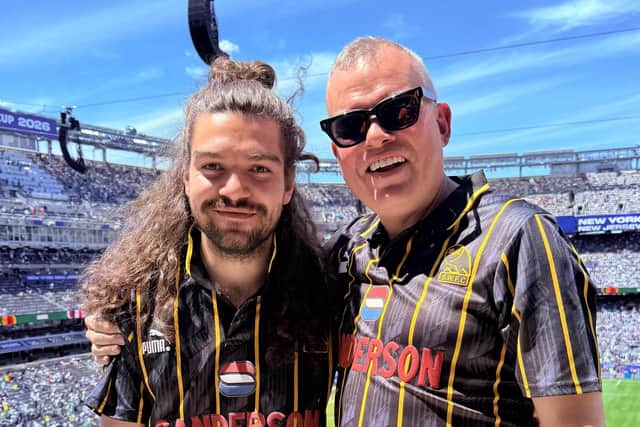

I used Claude’s audio function, so I put my earphones in and set off from Boston Common with a voice in my ear. At each stop I said two words, “I’m here,” and the history arrived, told like a thriller.
At the Granary Burying Ground it introduced me to Paul Revere and Sam Adams, lying a few feet apart. At the Old North Church it told me the famous two lanterns burned for less than a minute before being snuffed out, and that the man who hung them was Robert Newman, a 23-year-old church caretaker history forgot. The bells in that steeple, it added, were cast in Gloucester in 1744, the oldest change-ringing bells in North America; among the teenagers who once rang them was Paul Revere himself. On Copp’s Hill it showed me gravestones still dented by British musket balls, fired at a dead patriot’s defiant epitaph for target practice.
Best of all, I learned Revere never shouted “The British are coming.” The colonists were British. His actual cry: the Regulars are out.
I also discovered that Boston’s bells were not the only English casting in the story. The Liberty Bell itself, down in Philadelphia, came from London’s Whitechapel Foundry, its inscription spelling Pennsylvania with a single N. That was acceptable in 1752. Today it reads like a typo on America’s most sacred relic.
The same technology handled the rest of the trip. One prompt cast the AI as a corporate travel expert, comparing flights by on-time performance and aircraft comfort. Another played hospitality analyst, offering three hotels with a bull case, a bear case and the exact floor to request. A third, a cynical culinary critic, built a one-day itinerary with a Plan B for bad weather. Every recommendation landed.
I have spent much of this column’s life warning about what AI will do to white-collar work, and I retract none of it. But the ledger has two sides. This summer, anyone with a phone and a decent prompt has a private historian, a travel agent and a concierge on call, free, in their pocket. The trick is not the technology but the ask.
Give it a role, give it constraints, give it taste. Vague questions get brochure answers; precise ones get expertise.
Which brings me to tomorrow night in Miami, where England face Norway in a World Cup quarter-final. Get past Haaland and his Vikings, and the semi-final beckons in Atlanta. Beyond that, maybe, just maybe, a final on American soil in New Jersey, 250 years almost to the week since the Declaration was signed. Should it come to that, I know exactly what the cry from the terraces ought to be. Not the Regulars this time. The English are coming.
David Richards MBE is managing partner of Yorkshire AI Labs