
How Iran war will affect UK house prices as Lloyds reveals interest rates prediction
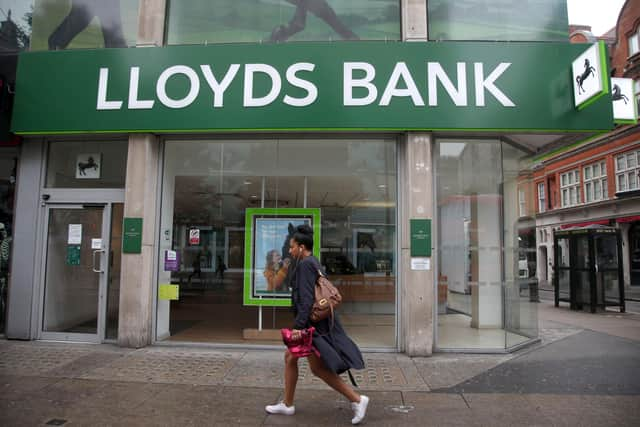
UK interest rates will remain unchanged from their current position for more than a year as the Middle East conflict prevents previously-expected cuts, Lloyds Banking Group has projected in its latest results.
The company has revealed its current assumption is that interest rates will remain at 3.75 per cent until the third quarter of 2027, when it anticipates a drop to 3.50 per cent.
William Chalmers, chief financial officer for Lloyds, told reporters: “We’ve seen the inflationary impact of the Middle East conflict that in turn feeds into the flexibility the Bank of England has to manage the economy. That’s what leads to the slower decline in rates versus what we had expected at the end of last year.
"The market is increasing some increases over the course of this year, we are not expecting that. We think it is unlikely that will necessarily happen because we think the demand picture will be weaker and as a result the Bank of England will not need to raise rates in order to attentuate inflationary pressures.

"We see rates stable through the course of this year, coming down in quarter 3 of 2027.”
Lloyds is projecting house price growth to fall as low as 0.2 per cent by the third quarter of this year, rising to 1.4 per cent by the same point in 2027.
Mr Chalmers said: “We’ve shaved down our expectations over the course of 2026 and going into 2027. We are now just fractionally below one per cent in the context of expected house price inflation for this year.
"It is in part a function of that rates pictures. That makes it a little more expensive in terms of mortgage rates even though our margins are very low within mortgages.
"That in turn will impact levels of activity and may impact levels of confidence a little bit in the market. Having said that, our mortgage book has gone up by £1.6bn over the course of this year. There is plenty of activity right now. Nevertheless, we are taking a view that is a bit more cautious for the housing market over the course of this year.”
Lloyds is also forecasting a slower increase in gross domestic product (GDP) and a rise in the unemployment rate and higher energy prices leading to renewed inflationary pressures.
New economic forecasts published by the bank reflect the possible “stagflationary consequences for the global and UK economies” of recent events including the war in the Middle East.
Its revised outlook includes GDP being halved to 0.5 per cent for 2026 from the more than 1 per cent it was previously forecasting. Unemployment is projected to rise to 5.6 per cent by the second half of the year, while Consumer Prices Index (CPI) inflation could hit 3.9 per cent by the final quarter.
Mr Chalmers said: “This is not a recessionary environment, to be clear. This is a slowdown in growth expectations versus where we were at the beginning of the year, caused by the Middle East conflict.
“It is against an expectation that that conflict de-escalates over the course of the year, which is essentially the same as the markets are assuming. In the event that that changes, obviously, we’ll need to look at it at the time.”
It comes as the group has revealed its earnings jumped by a third in the first three months of 2026. The banking group reported a pre-tax profit of £2 billion for January to March, up 33 per cent compared with the same period last year. The earnings figure also came in ahead of the £1.8 billion that most analysts had been forecasting.
Mr Chalmers defended the bank’s higher profits in the context of the weakening economic outlook, saying that the “profitability of banks is an incredibly important component of a successful economy”.
“You will see that, no matter what geography you look at, the most successful economies have profitable banks,” he said.