
How the FCA in Leeds is providing a guiding hand through regulatory maze

Nobody loves red tape. Some companies regard it as the bane of their existence, even if they acknowledge that some regulation is needed to stop misconduct and protect consumers.
The Chancellor Rachel Reeves has declared war on pointless paperwork because she wants to make it easier to do business in the UK. The Government’s self-described “crackdown on needless form-filling” will see more than 100,000 firms qualify for simpler corporate reporting rules, freeing up businesses to focus on growth. But what does this approach mean for financial regulators?
The Financial Conduct Authority (FCA) aims to support companies as they enter a high growth phase, without reducing standards. Sheree Howard, Executive Director of Authorisations at the FCA, is keen to highlight the work that protects us all which is being carried out in the regulator’s fast growing office in the heart of Leeds.
“We opened the office in Leeds in 2022 and we’ve grown it massively from just one employee to what it is today,’’ she said.
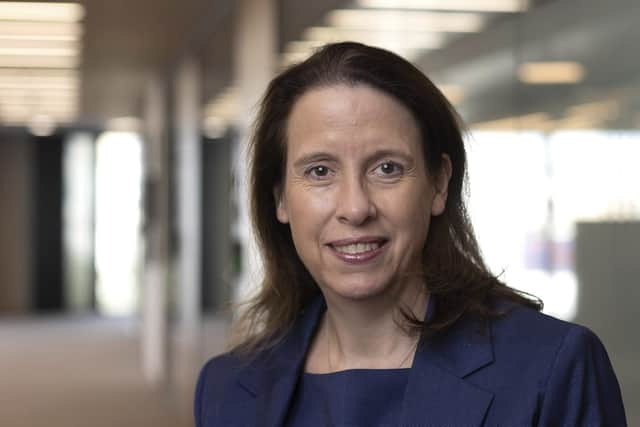

“We’re seeking by the end of this strategic period, from 2025 to 2030, to have 1,000 colleagues outside of London, recognising the fact we are a national regulator.”
“We are ‘location agnostic’ so a whole range of roles will be in Leeds. We will have 350 staff based in Leeds by next year and plan to keep hiring. We’ve managed to access great talent and reflect the fact we’re a national regulator."
Ms Howard, a maths graduate who joined the FCA eight years ago after working as the head of the compliance and conduct advisory team at Royal Bank of Scotland, is running a project to digitise the FCA’s authorisations gateway; converting its largely analogue forms to digital. The days of physical documents may be numbered.
"The unit that is supporting and developing the digital product is based in Leeds,’’ she said. “The team members were all recruited externally to deliver that project working in partnership with suppliers with presence across both our Leeds and London locations.
"Some of our forms are still PDFs or word documents; we’re looking to completely digitise so we can validate information we’re given and use it in future.
“They also have a user-centred design hub in Leeds, we are doing research on users’ needs in order to inform the development of what we’re delivering,’’ she added.
“We’re taking feedback from firms about things that don’t work well for them and where we aren’t explaining things as we should. We consider how we can make that application journey more straightforward for firms seeking authorisation to operate in the UK.”
After holding roundtables in Leeds, Ms Howard said that “one of the reflections I’ve had is that some of the services that we already provide are not well understood”.
“We want to showcase things like our pre-application support service where we will meet with a firm before it applies,’’ she said.
"This is available to all wholesale crypto and payment firms, reflecting again some of the focus for the region.
“The aim is that firms can understand the regulatory journey and expectations more so they can put in a better application and the process will be much smoother and faster.”
The FCA has also developed a “sandbox” which helps firms test new products live in the market with real consumers.
"We have a huge range of innovation services; we were the first to launch a regulatory sandbox in the world and explain how they can support firms as they scale up,’’ said Ms Howard
"We have a variety of sandboxes; our regulatory sandbox helps firms test safely to see if a product new to market is in keeping with regulatory activity. We’ve recently launched a super-charged sandbox where they can test and experiment with AI in partnership with Nvidia.
“Some of the sandboxes give people access to pseudonised data so they can test their service or their product.”
The FCA also has an early and high growth support oversight function which supports firms that are new to regulation or undergoing rapid growth.
"It offers enhanced and tailored supervision and guidance to help them grow with confidence,’’ she said. “We’ve also started to indicate to more firms that we’re minded to authorise. The fact that they get a letter from a regulator saying that, if they do the following things they’re likely to get a licence, really helps them access funding and skills. People might otherwise be reticent about joining a firm that doesn’t have a licence. We’re very clear that this isn’t about reducing standards. But we are committing to faster time-lines for authorisations.
"It means that firms can get authorised more quickly, which also means they spend less capital starting up so they have less of a deficit when they start to earn money. So that supports growth because they are much more likely to become profitable faster.
“We’ve also done a huge amount in the mortgage space over the past nine to 10 months. You can see that’s starting to help first time buyers get onto the housing ladder. We set out a three stage plan; the aim was to go quickly but in a controlled manner. It is having a real effect on helping first time buyers get on the housing ladder. People also want to test AI (artificial intelligence) solutions in a regulated context. We’re launching that testing soon.
“That helps efficiency and effectiveness. It supports growth.”
With the FCA committed to hiring more staff outside London, Leeds is set to become a regulatory powerhouse.
"If you talk to firms that have seen significant growth and are still growing, they would still say they face challenges,” said Ms Howard. “We’re trying to understand how we can support them to be able to scale even faster.”