
How to disguise an 'ugly' heat pump in your garden
Converting a home heating system to a more efficient sustainable air source heat pump is something that more and more households are considering.

With lower energy bills and efficient heating it seems a no-brainer. But even though there is money to be saved, many people worry that a heat pump will affect their home’s aesthetic.
Air source heat pumps are installed on outside walls to ensure maximum efficiency, pulling air from outside and extracting heat energy to heat homes. They are easier to fit outside but the units can look bulky.
There are thousands of online searches each year relating to disguising ‘ugly’ heat pumps, including ‘are heat pumps ugly?’, ‘hide my garden heat pump’ and ‘plants to hide heat pumps’.
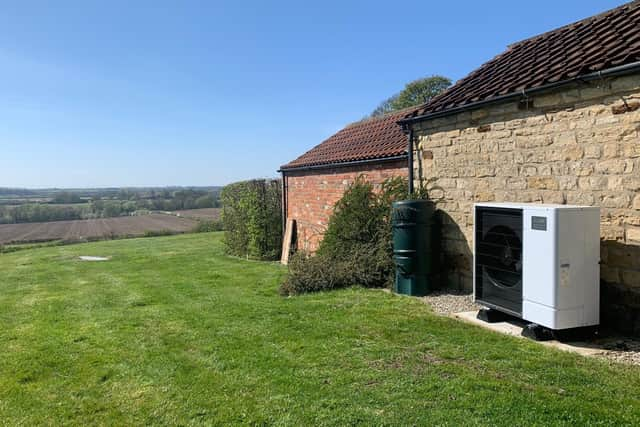

Adam Raw, co-founder of dwellow, which installs heat pumps, boilers, solar panels and batteries, has a range of tips to conceal your heat pump and enhance the look of your garden.
He said: “It’s imperative you maintain adequate air intake around your heat pump as blocking ventilation will make it work harder and less efficiently. However, there are lots of ways you can disguise a heat pump.
"With more and more of us maximising our outdoor space as an extension to our home entertaining, we understand that families want to create an inviting space and having a heat pump doesn’t have to detract from that.”
Where will my heat pump need to be situated?
Heat pumps are typically installed on an outside, ground floor wall of a house, which can be frustrating for garden-lovers if it happens to be in the middle of a flower bed or on a patio. It is possible to locate some heat pumps away from your home if you’d like them to be positioned more out of view. This does come with the need for burying pipework but it is possible. Speak to your installer if you’d prefer that option.
The external heat pump will typically blast out cold air, likely making the area immediately around the heat pump cooler and drier than the usual microclimate of the rest of the garden.
Another location point to consider is that the heat pump will typically need a metre and a half free in front of it to allow air flow. It will also need to be accessible, so holly trees and thorny roses around it are not ideal to enable a servicing engineer to get through if needed, without risking injury.
Innovative ways to help your heat pump blend in with your garden style:
● Create bespoke wooden slatted housing for your pump to match your home’s exterior. Some off the shelf screening can be bought, but you will probably be able to get a better fit or style if you create something bespoke. Just be sure to make sure there’s plenty of room for air to circulate/escape as otherwise you risk lowering the efficiency of your unit or even malfunctions. However make sure you always follow manufacturer’s guidelines.
● Similar to the trend for hiding unsightly wheelie bins, install a decorative fence, trellis or even a faux plant wall panel in front of the pump. If it’s freestanding it will allow for easy access, and you can create something which blends in with the general look of your garden. Reed or bamboo screens can look nice, but quality faux plants can also work well.
● Vinyl wrap your heat pump for a hardwearing weather proof option. Vinyl wraps come in a variety of designs – from subtle and stylish botanical, stonework or wood options, to something a bit more visible. You could even make a feature of it. If using vinyl, make sure you don’t cover any air vents.
● If you have a sizeable area to work with you could plan a lovely deep border to disguise the whole thing with evergreen shrubs such as Sarcoccoca, Bay, or Lavender, along with perennials such as Gaura Whirling Butterflies or Phlox Blue Paradise for some summer interest. Make sure leaves and branches are well clear of your heat pump and shrubs should have at least a three-foot separation from the heat pump.
● If plants are going to be relatively close to the heat pump, and therefore more effected by the cold, dry air, there are certain types of plants that will be better suited.
Consider Bergenia Baby Doll (also known as Elephants Ears) – which is fully hardy, evergreen and essentially bulletproof. It will give you large pink flowers in the summer with big evergreen leaves in the winter.
Alpine plants are also well suited for cold, dry environments, having evolved on the sides of mountains. These could include Saxifrage ‘Flower Carpet’, which as the name suggests, is a mat-forming evergreen which blooms delicate pinky-white flowers in spring and summer.