
How we took Aagrah from Yorkshire restaurants to national supermarket shelves: Shezad Aslam
Moving from restaurant kitchens into supermarket aisles is not simply a change of channel, it’s a shift into a different industry, with different economics, disciplines and risks.
For decades, Aagrah has been synonymous with hospitality in Yorkshire - bustling dining rooms, celebratory meals and recipes honed over generations. So when we made the move into large-scale retail, many people understandably asked: why?
We saw an opportunity to create artisan, restaurant-quality products for local distribution, including jars and sauces that captured the flavour of our kitchens and made them accessible at home. It was never about abandoning hospitality, it was about complementing it.
What surprised us was the response - the feedback from customers was phenomenal, and, almost immediately, we realised there was a much larger opportunity than we had first imagined. Retail, unlike hospitality, offers scalability without the need for vast external investment in bricks and mortar.

To double the size of a restaurant group requires significant capital, sites, staffing and infrastructure, however, in retail, scale can come far quicker if you get it right.
That ‘if’ is crucial and one of the most common mistakes hospitality brands make is underestimating how different retail really is. The two sectors may both involve food, but commercially they operate in entirely separate worlds. Marketing strategies that fill restaurant tables do not automatically shift products from supermarket shelves - in fact, they rarely translate directly.
In hospitality, your location, reputation and word of mouth are powerful drivers whereas in retail, you have seconds, sometimes less, to capture a shopper’s attention as they pass a shelf.
Brand visibility, packaging design and promotional investment suddenly become decisive, and the investment required to support a retail listing is significantly greater than many anticipate.
On paper, restaurant gross margins can look attractive. A £2m-turnover restaurant with a 70 per cent gross margin might sound enviable, but staffing costs of 20-25 per cent quickly narrow the picture. In retail, you might see a 40 per cent gross margin on similar turnover, but staffing could sit closer to 10 per cent. The cost bases are fundamentally different, making direct comparisons misleading.
Operationally, the transition demanded an entirely new mindset. We made a conscious decision not to produce retail products in-house, as manufacturing for supermarkets requires rigorous quality control, procedural systems and consistency at a scale that differs dramatically from restaurant kitchens.
Instead, we partnered with experienced manufacturers who worked closely with us to replicate our recipes as faithfully as possible. That collaboration allowed us to scale quickly while protecting the authenticity that defines our food.
Interestingly, our recipes changed very little, as our key priority was to remain true to our heritage, making only the adjustments necessary to ensure shelf life. Branding, however, was another matter entirely.
Our traditional brand carries enormous heritage in Yorkshire and it resonates locally because of decades of history. But on a supermarket shelf, heritage alone is not enough.
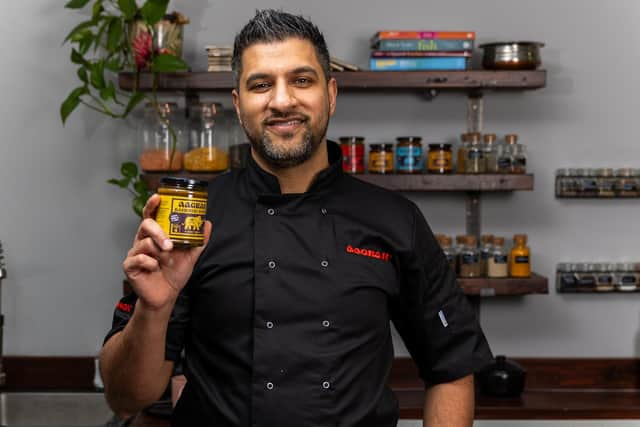
We undertook a complete visual overhaul, introducing a brighter colour palette and placing Lulu, the elephant who stands proudly outside our Midpoint restaurant in Thornbury, front and centre. In retail, your packaging must interrupt, attract and persuade in moments in order to do the selling.
The biggest commercial risk? Underestimating the investment required beyond Yorkshire. At home, brand recognition gave us momentum, but beyond our homeland, we were effectively starting from scratch. Building national recognition has taken years and considerable investment.
Looking back, I would make the move earlier, as we debated retail for several years before taking the plunge. In hindsight, we could have accelerated, but that is easier to say with experience.
For Yorkshire food producers contemplating a similar path, my advice is simple: go in with your eyes open. It is tempting to see other hospitality brands succeed in supermarkets and think, ‘Why not us?’, but retail demands capital, focus and a dedicated strategy - it’s not an add-on; it is a separate business model.
Done well, it can amplify everything your brand stands for, however, done casually, it can dilute it, so while the opportunity is real, so are the risks.
Shezad Aslam is founder of Aagrah Foods