
'I pretended to be three old men to start my auction business - now we are one of Europe's fastest-growing firms'
Emma McSkelly’s Doncaster business NCM is helping blue-chip clients make money from their surplus products. She tells Chris Burn about her unique journey as an entrepreneur.
The world of commercial auctioneering can be a rather traditional one – so much so that when Emma McSkelly set up her company she chose a name designed to appear that the organisation was run by “three old men”.
She called her new company Nathaniel Carter & McSkelly Auctioneers in an attempt to give it a better chance of getting a foot in the door with potential clients.
"There was no three old men, there was just me,” explains McSkelly of her firm, which has operated from her home city of Doncaster since 2012 and now has a host of blue-chip customers on its books following sustained rapid growth.
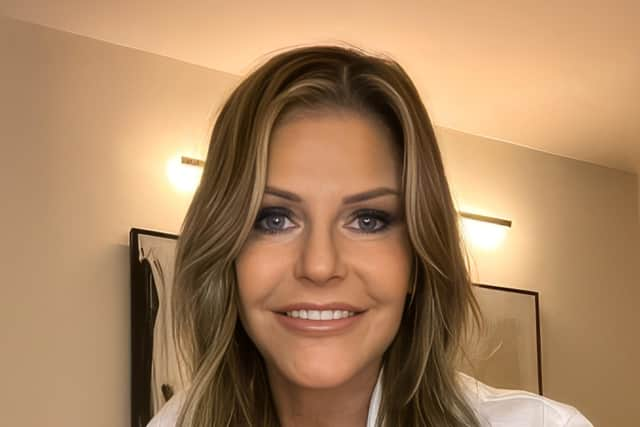

While the company’s initial name sought to match industry expectations, its operating model was designed to be different. Instead of targeting the already well-served area of auctioning off assets belonging to recently-collapsed firms, McSkelly spotted a gap in the market to help successful businesses make money from selling surplus products and machinery.
Now known as NCM, the firm has appeared twice in the Financial Times’ list of Europe’s 1,000 fastest-growing companies with its most recent appearance in this year’s list highlighting how revenues rose from £3.6m in 2021 to £9.6m by 2024. The company’s impressive client list includes the likes of Asda, X, Kodak and Frasers Group to name just a few, with a strategy of building long-term relationships with major businesses in different sectors.
McSkelly says one of the moments she realised the business could be a genuine success was dealing with a well-known hotel that had a range of unwanted products it valued at about £70,000.
"We could have bought that for £80,000 and made a ton of money. But we told them we think this is worth considerably more. We ended up generating over £700,000 for them.”
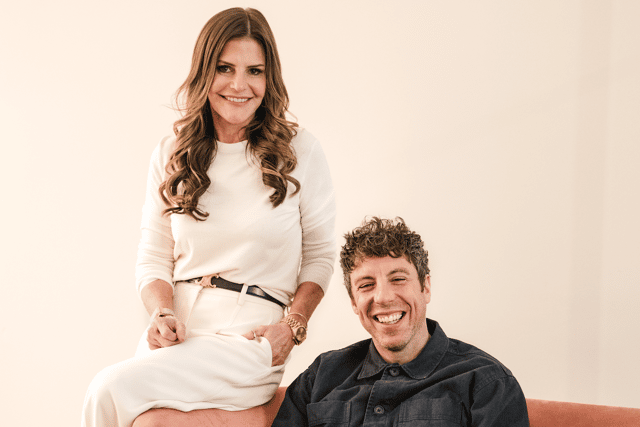
McSkelly has an impressive CV in sales jobs around the world, culminating in becoming head of sales for Sheffield United in the late 2000s and early 2010s before starting her own company.
But two years ago, she revealed her personal story publicly for the first time in a TedX talk entitled ‘Turning Childhood Loss and Trauma into a Superpower’.
McSkelly revealed she was seven when she witnessed her mother die from a heroin overdose then left the UK as a teenager to first become an au-pair in Norway before moving to Australia to start a new life. After further global travels and jobs, she moved back to the UK at 32 and got to know her estranged father again before his death four years later. She went onto start NCM 12 weeks after his passing.
“I believe that each and everyone of us has the power and agency to decode our own fears and turn them into a force for positive change,” she tells the audience during her powerful talk, which has since been viewed more than 1.2m times on YouTube.
She reflects today: “People see the end product and the spoils of success. It was about taking off the veil and going I didn't just wake up one day and become a successful businesswoman, there's a lot of stuff that happened before. It was quite liberating in lots of ways and quite exposing in other ways. I felt like I wanted to go and hide under a rock for about six months.”
She admits she is conflicted about the subsequent attention her story has received. “I never set out to be a speaker, I never set out to spend my life talking about my childhood, it's just part of me.”
McSkelly says there is a similar nuance around the decision to base the business in Doncaster.
"If you picked my business up and put it in the M25 it would have grown far faster, and that is just the truth,” she reflects. “But I was born and raised here, and without the all the tribulation and tragedy that Doncaster has afforded me, I wouldn't have a business. Growing up during the Miners’ Strike in the villages I grew up in, it has built grit and resilience, it has created hunger and drive that there would be no NCM without.”
She says her father’s death “was a real line in the sand moment of wanting to change my life” leading her to set up a business.
"Auctioneers mainly work with insolvent or distressed businesses and there’s no repeat business – we work with thriving companies. We are essentially a hidden revenue engine within bigger businesses. We are a long-term partner.
"Every house in the UK has a piece of fitness equipment gathering dust and every business is exactly the same. They all have surplus, and when you put into that acquisitions for growing businesses, that is multiplied, it is on steroids.
"Depending on what the asset is, buyers are typically smaller businesses who are able to buy assets at a cheaper price than they would than they would normally. For instance, if a huge chain of gyms are upgrading all of their equipment, then a smaller gym might buy what they don’t want anymore.”
The company particularly works with industrial businesses, where AI developments mean machinery upgrades are becoming increasingly commonplace.
NCM has recently announced a new ‘surplus strategy’ proposition building on its assessment that for every £100 million in turnover, a business typically has over £1 million in surplus assets. The model offers clients a chance to review potentially under-valued and unneeded assets and a way to easily sell them.
McSkelly now wants to make NCM a £50m revenue firm in the next five years. Doing so would put her amongst a very select band of UK female founders, with only 144 having previously achieved the milestone.
“In my head, I'm nowhere near where I need to be. We are still very much on a mission. Our new strategy has made us really proud of our difference. One of the biggest bits of feedback we got was ‘We didn’t know a service like this existed’. Now everybody does, it talks to who we are.
“If I could go back and change anything, I would not hide behind a name and pretend I was three old guys. Now we don’t have to pretend to be like the rest of the industry anymore.”