
'I shouldn’t have to downsize a successful business': Aston Springs Farm cuts staff and opening hours
An entrepreneur has blamed rising operating costs, VAT and taxes for her decision to cut staff and opening hours at a Yorkshire tourist attraction.

Emily Swain, director at Aston Springs Farm said some businesses feel they are being penalised for growing, “with so much of the money coming in going straight back out in tax and rising costs”.
The farm, which opened in 2013 near Rotherham, includes pigs, chickens, peacocks, sheep, goats, rheas, alpacas, llamas and red deer along with a nature trail.
"Sadly I’ve had to let three members of staff go, which was honestly one of the hardest decisions I’ve had to make,’’ said Ms Swain. “We’re now down to just three members of staff, all working part-time. We’ve always opened seven days a week, but from 23 November we’ll be closing on Mondays and Tuesdays. Then from 4 January until the end of February, we’ll only be opening at weekends only. From March through to October, we’ll be opening Wednesday to Sunday.”
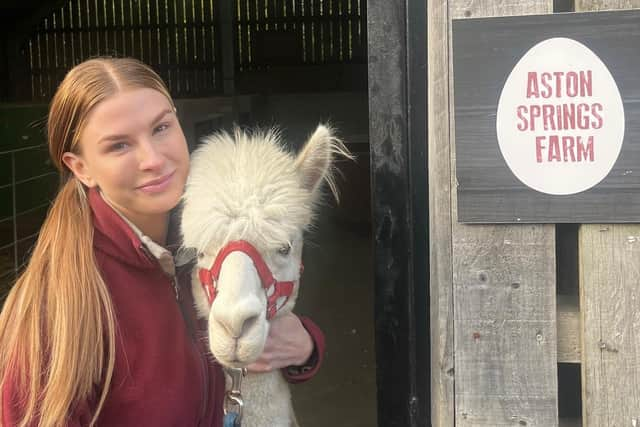

“I shouldn’t have to downsize a successful business, let three local members of staff go, and reduce what I can offer visitors, only to end up in the same, if not a better, financial position by staying below the VAT threshold. And I’m certainly not the only small business owner facing this dilemma.
"More and more businesses are finding that it’s financially more beneficial to stay small rather than grow,’’ she added.
"Ultimately, nobody wins. Local jobs are lost, businesses stop expanding, customers have less choice, and the Government loses out on the VAT revenue it would otherwise receive.
“If the VAT threshold were raised, I could reinvest that money into employing more local people, improving the farm and offering more to visitors. I want to grow my business, not shrink it. But the current system makes downsizing the more sensible financial decision, and surely that can’t be right?”
Responding to Ms Swain’s comments, an HM Treasury spokesperson said: “We are giving small businesses more breathing space.
"This Budget means that over half of the high street do not pay business rates, (it) cuts red tape and keeps Corporation Tax capped at 25%. The UK already has a £90,000 VAT registration threshold, higher than any EU country and joint highest in the OECD, meaning the majority of businesses do not have to register for VAT.”
The spokesman said the Budget 2026 took around 70,000 additional retail, hospitality and leisure properties out of business rates altogether, with newly eligible businesses saving around £6,000 on average.
From April 2027, Small Business Rates Relief provides 100% relief for eligible RHL (Retail, Hospitality, and Leisure) properties up to £18,000 rateable value, tapering to £21,000. Half of RHL properties will pay no business rates, the spokesman said.
The statement added: “Other RHL properties get a two-year real-terms freeze, meaning qualifying increases are capped at CPI inflation. The Budget also delivers £641 million a year in administrative savings for businesses, as part of the drive to cut the regulatory administrative burden.
"For staffing costs specifically, the Employment Allowance was more than doubled to £10,500, and around 900,000 employers are expected to pay no employer NICs (National Insurance contributions) by 2030-31 because their bill will fall below the allowance.
"There are also employer NICs reliefs for under-21s and apprentices under 25.”