
'I walked along Yorkshire's stunning coast and experienced life-changing moment'
Gazing out to sea, we might believe we’re watching a scene which has not changed for centuries, but the ground is silently shifting beneath our feet. The British coastline is always in motion; devouring land in places and exposing it in others.

In his new book – The Restless Coast- the veteran travel-writer Roger Morgan-Grenville has written a love letter to Britain’s wild and seductive coastline, which has provided a livelihood and acted as a line of defence for our island’s inhabitants for millennia.
Mr Morgan-Grenville, a conservationist and former soldier who helped to set up the charity Help for Heroes, must have worn out plenty of shoe leather as he tried to find out what makes our coastal communities tick. His journey included almost 2,000 miles of walking, supported by hundreds of bus, train and ferry trips.
The travelogue focuses on the environmental challenges the coast faces and also shines the spotlight on the individuals and projects attempting to preserve it. Mr Morgan-Grenville who has previously walked from Lands End to Cape Wrath, said he had written this latest book in search of hope.
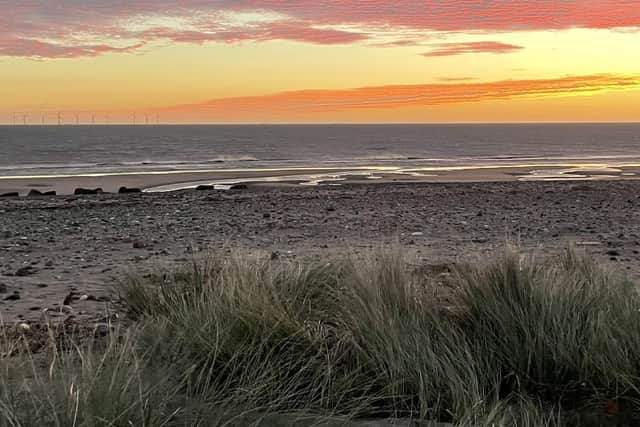

He added: "When you write about nature as I do it is tempting to see only decline. This trip was about finding hope, which could have come from chatting to scientists or dog walkers I encountered on the way. I began to think quite deeply about our status as islanders,’’ he added. “I was fascinated, for example, by what had happened to the coastal towns, which had been impacted by the Beeching cuts to the railway network in the 1960s, which affected places like Withernsea in East Yorkshire and the popularity of cheap flights.”
Britain has more than 10,000 miles of coastline, and because of our island’s shape, none of the inhabitants is more than 45 miles from tidal water. We may see ourselves as land creatures, but we are reliant on the waves around us, according to Mr Morgan-Grenville’s book.
In the book, he describes how he embarked on 13 different coastal foot journeys, over the course of twelve months, “to allow me to know a little better the thin liminal ribbon of sand, rock, mud, marsh and grass that separates our island from the ocean beyond, and the people who live and work there”.
He added: “A hundred million years ago, the spot on the earth’s surface where I am now standing was the southern tip of Greenland; a hundred million more, and it was Greenland’s northern tip, another hundred, this was water somewhere off Alaska, and finally, half a billion years ago, I would be treading water right in the middle of the largest body of sea the planet has ever seen.”
During his epic journey he found beauty in apparently the most mundane settings.
“At no point did I get bored, even when I was on places like Redcar beach which was surrounded by our industrial heritage,’’ he added.
"What excited me was the insight it provided into my own insignificance, particularly as I walked on a coastal cliff path, which might have been trodden by my ancestors, thousands of years ago.
"I wondered why we call it a coast 'line' when it is so dynamic?’’ he added. “The far North of Scotland is still rising while London and the South East is sinking into the clay. I was fascinated by the whole dynamic nature of the coastline. One day I was on a tidal salt marsh, the next on a long shingle beach and the next on a cliff walk.”
One stretch of his journey, which took him to Yorkshire's own version Lands End, left a deep impression.
"I experienced a life changing moment when I walked to Spurn Point at 5am one morning to watch the sun rise, he said.
"I saw ecological projects on my walk which showed people were doing great things to protect the natural environment. But then I saw large vessels full of stuff which would be ultimately destined for landfill via our homes. We have got to find a better way of doing things. I walked back that day feeling completely shorn of optimism,’’ he recalled. “But then I walked up the coast to Scarborough and saw other great environmental work. It showed that we need to give local people a lot more power in the decision making process.”
He has a deep affection for Yorkshire’s quirky coastline.
"At Whitby, I was fascinated by Jet, a stone which is only found on a small patch of coastline,’’ he added. “One of the best things about Yorkshire is the fish and chips, they blow the fish and chips down south out of the water.
"We need to fall back in love with the coast and the sound of seagulls and fish and chips. Seagulls and surf provided the soundtrack to my journey. I found utter delight in the work being done to protect seagrass, which prevents storms surges and provides a nursery for fish. The Solent Sea scape is repairing the sea bed in the south and the Thames Barrier is a work of genius.
"I loved watching the abundance of geese approaching the Norfolk coastline and the puffins in the Farne Islands,’’ he recalled. If you take your foot off nature's throat it recovers quickly.”
Above all, Mr Morgan-Grenville hopes the book will act as a rallying cry. It’s not enough to love the sights and sounds of our cliffs and beaches. We must roll up our sleeves and defend them from pollution and a host of man-made threats.
"We can't rely on the likes of Greta Thunberg; we must all become activists and make a stand. I hope this book makes people stop and think. When I got to the end of the walk I was less certain about things than I was at the beginning; which means I must have been listening. It was a life-changing journey. The coast is unbelievable. We need to be kinder to it.”
The Restless Coast – A Journey Around the Edge of Britain by Roger Morgan-Grenville is published by Icon Books.
For more information visit: www.iconbooks.com/ib-title/the-restless-coast/