
'It is simply reckless to carry on': MPs welcome Public Accounts Committee's call for clarity over loan charge
A powerful Parliamentary committee is calling on HMRC to reveal the ongoing costs of the loan charge, a controversial tax policy which has been linked with 11 suicides.

The Public Accounts Committee has written to John-Paul Marks, First Permanent Secretary of HMRC, demanding evidence that the loan charge is providing value for money. MPs and campaigners opposed to the loan charge have welcomed the move, claiming it would be reckless to carry on with HMRC’s existing approach which they say is leading to some taxpayers still facing unaffordable bills, despite changes implemented following a recent review.
The letter from Sir Geoffrey Clifton-Brown MP, chair of the Committee of Public Accounts, says: “On May 18, you appeared before the committee to give evidence as part of our inquiry into ‘large business tax compliance’. At this session, the ‘loan charge’ was raised, specifically, the costs involved in its administration, since it came into force in 2019. It would be helpful if you could clarify the ongoing costs of the loan charge.
“We also request further information on the number of settlements that have been reached to date, and how much HMRC has spent on these, along with how much you project it will cost to resolve the remaining 37,000 cases. It would also be helpful if you could outline how you are ensuring value for money in this process.”
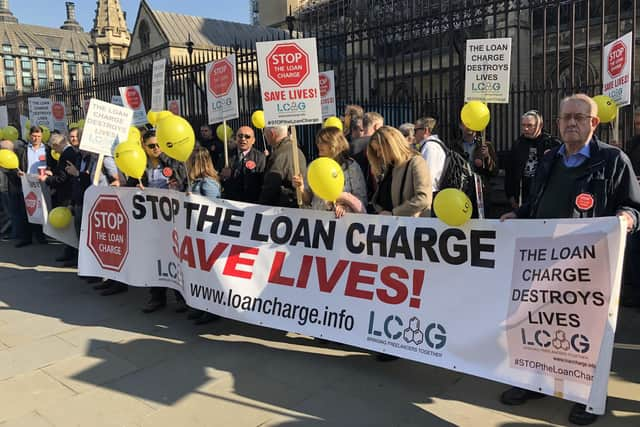

Greg Smith MP, co-chair of the Loan Charge and Taxpayer Fairness All Party Parliamentary Group, said: “It is very welcome that the Public Accounts Committee has written to HMRC asking for proper transparency on the costs of the Loan Charge and associated HMRC action.
“Considering how much the loan charge has cost HMRC so far, it is simply reckless to carry on with basically the same approach, without publishing a robust estimate of how the cost of resolving all remaining cases. We await HMRC’s reply to the committee with interest and to see whether they give this figure, one that should have been published already.”
Steve Packham, spokesperson for the Loan Charge Action Group, said: “The whole approach has been a costly failure.. With over 30,000 remaining loan charge cases and several thousand more related cases, the ongoing costs of dealing with these are likely to be huge. It also remains the reality that despite the changes to the level of HMRC demands, many people still face completely unaffordable bills, which means HMRC pursuing bankruptcies, all of which also has a cost to the taxpayer, as well as the impact on people that the Government acknowledges were victims of mis-selling.”
The loan charge, announced at the Budget in 2016, was introduced with the aim of tackling disguised remuneration schemes; tax avoidance schemes that seek to avoid income tax and National Insurance by disguising income as another form of payment, which is claimed to be non-taxable, typically as a loan.
There was an outcry when people on modest incomes faced large and unexpected tax bills due to the loan charge, after placing faith in their professional advisers. MPs uncovered evidence that, in some cases, workers were told they had to sign up to schemes which later became subject to the loan charge, in order to be paid.
A review in 2019 reduced its impact, and in January 2025, a further review of the loan charge was commissioned by the Government. The review was published at Budget 2025. The Government said it accepted all but one of the review’s recommendations and in some areas went further, including writing off £5,000 of each individual’s liability in addition to the review’s recommendations. As the report was being finalised, the review was advised by HMRC of a possible 11th suicide linked with the loan charge.
In his report, the independent reviewer, Ray McCann, said: “Thousands of individuals who say they were duped by the promoters into believing that these schemes were compliant were left with a mix of confusion, anger and anxiety.”
A Government spokesperson said: “Following the 2025 Loan Charge Review, the Government agreed a new settlement scheme, and we are working with our customers to help bring this matter to a close.”
The spokesman stressed HMRC has been open and honest with the Public Accounts Committee and Parliament about the loan charge and senior officials regularly engage with MPs to answer their questions.
It will be responding to the chair of the Public Accounts Committees letter dated 16th July in due course, the statement said.
“HMRC’s work to stop the use of disguised remuneration arrangements has enabled it to bring in an estimated £4.4 billion to fund essential public services.
“We encourage anyone who thinks they might be involved in a tax avoidance arrangements to get in touch with us as soon as possible for help to exit and to settle their tax affairs.
“Following the announcement of the Loan Charge Review in early 2025, we wrote to all disguised remuneration customers, told them whether we believed their situation would be considered by the review, and provided each customer a named caseworker who they could contact to discuss their case.
“The Government accepted all but one of the Review’s recommendations and has legislated a new settlement scheme, which for the vast majority of eligible customers will allow them to settle with us for a lower amount. This is now in effect and we are working with customers to settle their cases.”