
'It's like Formula 1': Inside the Yorkshire factory making 15 billion scratchcards a year
If you asked people to name impressive feats of engineering, the humble scratchcard would be unlikely to feature on too many lists. But a visit to the Leeds factory producing 800 of them per second in a seamless hi-tech operation puts the matter in a different light.
The Yorkshire Post was invited to the purpose-built 150,000 sq ft factory of Scientific Games in Hunslet to witness how the site’s 375 workers go about creating 15 billion scratchcards a year for customers in the UK and across the world – with assistance from huge printing presses, fine-tuned production lines and tight security processes.
The company doesn’t just print the games, it has designers and programmers to create them in collaboration with the international lottery companies they work with.
Going out onto the factory floor dominated by two vast printing presses involves donning ear protectors and passing by numerous huge rolls of tickets with 750,000 scratchcards each ready to be packed and distributed far and wide.
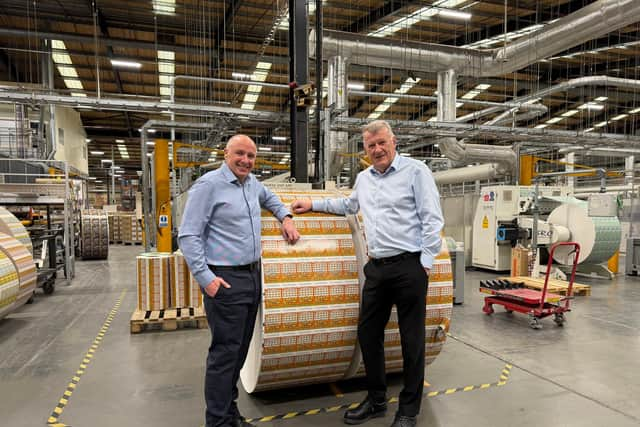

With millions of pounds of technology whirring away on creating products with a huge collective value of their own, a visit to the security room provides an unexpected insight into a more lo-fi part of the process. It entails the use of pouring vodka and running hot irons over test tickets to ensure winning numbers can’t be revealed before a game is properly played. It is all part of wider security processes to validate the integrity of each ticket in a similar way to passports and banknotes.
Site manager Steve Townend says the team see their products as a “piece of engineering” that customers can interact with.
“Playing a ticket is three or four minutes of entertainment as well as knowing you have a chance to win and are contributing to good causes,” he says.
“We need to produce something that will survive the printing process, go through a packaging and distribution process, be in a retail outlet and come out of a dispenser in perfect condition. Then when someone takes a fingernail to it, it scratches off. We are constantly adjusting the press and the product in real time to make sure we are achieving this.”
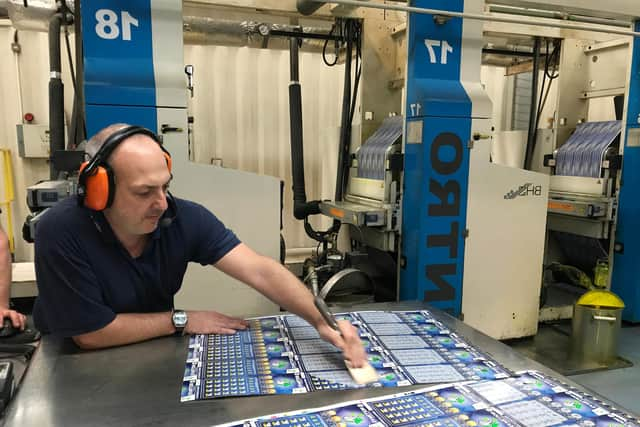
Andy Jackson, Vice President of Corporate Responsibility, adds:“You’ve got to control all the variables. You’ve got heat, you’ve got speed, you’ve got the ink, you’ve got the reaction of inks. We print one ink on top of the other and we’ve got to be able to dry that to the point where it sticks to it. On the scratch area, that’s really challenging. If we don’t get it right, there will be weaknesses in there and then we’ll end up throwing the product away.”
The volume and variety of games being produced at the site means what is being printed needs to be changed hundreds of times each year by ‘crews’ of seven workers – a process Townend likens to a Formula 1 pit stop.
“What we call the pit stop changeover is ensuring everything is where it should be at the right time. When they stop the press, the team are ready to take off those plates, they know where they are going, all the elements in place for the next game are there ready to load, that the inks are premixed at the right temperatures and ready to go.”
The Leeds factory is just one part of the huge international operation run by the US-headquartered Scientific Games, which itself is owned by Canadian private equity giant Brookfield. But the company’s roots in Yorkshire stretch back a century to Leeds print machinery company Norton & Wright.
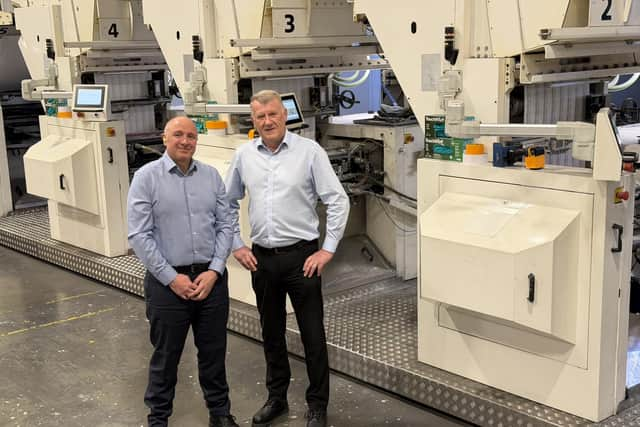
Mr Townend explains the company went from refurbishing print machinery to producing bingo tickets and community lotteries from its base in the former Imperial cinema on Kirkstall Road. By the 1990s, the firm, which had been through a series of name changes, was printing pre-paid cards for the growing mobile phone market and was acquired by Scientific Games after the latter company won the contract to produce scratchcards for the fledgling UK National Lottery.
The company moved into its purpose-built Hunslet factory in 2000, with a major new printing press introduced in 2005 that opened the door to creating scratchcards at high volume for lotteries across Europe. That press is still in operation, with a more advanced model added alongside it around five years ago.
The company’s latest accounts show the strategy is succeeding, with turnover of £135m and profits after tax of £23.6m in 2024.
Recent research demonstrates the global scratchcard market is huge business – worth an estimated $15bn in 2025 and projected to grow to over $23bn by 2031.
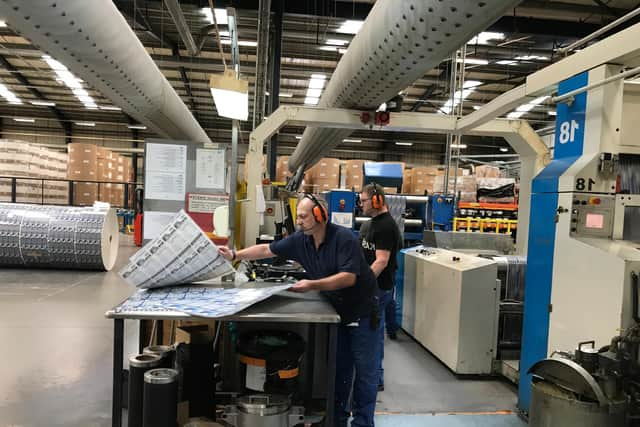
Mr Jackson was part of industry efforts to introduce agreed responsible gaming standards for suppliers. He says it is an issue that Scientific Games takes very seriously.
"The ultimate aim is player protection. The maximum ticket price in the UK is £5 at this present moment. When it comes to ticket design, we do a risk assessment to look at a ticket and make sure there is nothing misleading with clear odds. We are also looking at designs that are not appealing to children.
"The main thing is you want to create a game that enables safe play and prevents or minimises potential harm. In the population as a whole, there’s a percentage that won’t play, there’s a percentage at the top end who play a lot and there’s a big band in between – about 70 per cent. That’s the market we are really aiming for; for players to enjoy a game but not go down a road that might lead to some form of overplay."
The UK National Lottery alone raises more than £30m each week for good causes – and local donations including £100,000 for Leeds Older People’s Forum and over £870,000 for domestic abuse charity Behind Closed Doors.
“Every product feeds into good causes,” Mr Townend reflects. “There’s a huge amount of pride in what we do here. People are proud to work for Scientific Games, they are proud to do what they do here in Leeds and to go out and see the product they’ve made in the shops – from the artist who has designed the ticket to the programmers who have written the software to the people who have packaged it. This is a great place to work.”