
Leeds United: Borussia Dortmund example to inspire £1bn regeneration plan linked to Elland Road expansion
Plans for a £1bn redevelopment of the area around Elland Road linked to the expansion of Leeds United's stadium are set to take inspiration from German giant Borussia Dortmund, The Yorkshire Post can reveal.
Leeds United is planning to expand its stadium from its current capacity of 37,645 to more than 53,000, with Leeds City Council currently looking at transforming 30 acres of brownfield land it owns by the stadium which is currently used as a park and ride facility for associated regeneration work.
A council spokesperson told The Yorkshire Post that what has been done in Leeds’ twin city of Dortmund has been cited as a “perfect example” of what can be achieved with regeneration work around football stadiums.
A recent council report has recommended new plans for the use of land around the stadium are drawn up and suggested the redevelopment of the stadium and the neighbouring land could unlock more than £1bn of direct capital investment in the city. It is intended the schemes would link with the other ongoing projects in south Leeds such as the building of British Library North and the creation of a new mass transit network in the city.

The council report said they collectively provide “the opportunity to transform Elland Road into a thriving 365-day a year destination and bring enhancements to the existing neighbourhood within South Leeds”. It added: “Combined together, this presents a unique opportunity for the city to deliver upon its inclusive growth ambitions and help champion Leeds on a global stage.”
Leeds and Dortmund have long-standing links as twin cities since 1969 and at this week’s UKREiiF conference in Leeds, Borussia Dortmund’s director of internationalisation and commercial partnerships Benedikt Scholz will appear alongside Leeds United board member Peter Lowy at a panel event.
The session, chaired by senior Leeds councillor Salma Arif and also including the CEOs of Everton FC, Chester Racecourse and the Glasgow 2026 Commonwealth Games, will discuss how investment in sporting stadiums can be a catalyst for wider regeneration work.
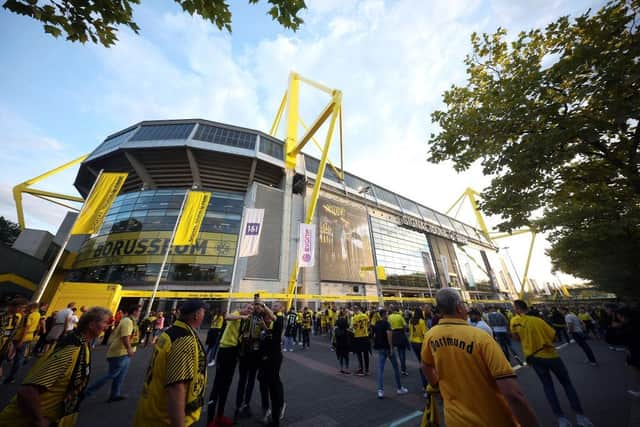
Dortmund’s Signal Iduna Park stadium is the largest ground in Germany with a capacity of more than 80,000 including the famous ‘Yellow Wall’, the largest terrace in European football. It has been the club’s home since the 1970s but underwent major expansion ahead of the 2006 World Cup and is currently engaged in a new project to add thousands of solar panels onto the roof of its ground.
A Leeds City Council spokesperson said: “We will hear more from BVB Dortmund at the UKREiiF session A Sporting Chance for Place on Wednesday, at which LUFC will also be represented.
“The city of Dortmund was cited as the perfect example for Leeds to learn from in developing its plans for Elland Road because of the regeneration taking place around the Signal Iduna Park.
"This includes the ‘Strobelallee sports and adventure mile’ dedicated to sport and entertainment, with huge benefits for Dortmund residents, visitors and the economy in general.”
A separate UKREiiF panel session on Wednesday discussing the plans for Elland Road and the wider regeneration around the stadium will feature West Yorkshire mayor Tracy Brabin, Leeds City Council leader James Lewis and Leeds United’s chief business officer Morrie Eisenberg.
Meanwhile, the deputy mayor of Brno – another city twinned with Leeds – will also take part in two UKREiiF panel sessions this week while the council says it is developing plans for similar involvement by other partner cities including Lille for next year’s UKREiiF.
Deputy Leader and executive member for economy, transport and sustainable development Councillor Jonathan Pryor, said building positive international partnerships is a key part of the council’s “city diplomacy” strategy.
“The international relations function in Leeds City Council is vital to our continued development as a global city, a leader in city diplomacy, which is key to attracting inward investment.
“City diplomacy is how Leeds represents its interests and those of its residents on the global stage and ensures that our priorities are reflected in both national and international policy.”